Florida - Key West and the Everglades - January 2026
Posted February 22, 2026 - 75 Photos. We finally made it to Key West, Florida and the Everglades National Park, places that we have been talking about visiting for quite some time. When we arrived in Miami in late January, the weather was quite hot and humid, but that changed after our second day. A cold front came through, and the temperatures dropped significantly for the rest of our visit. There was minimal rain, though, and although we were sometimes chilly, we still had a great time seeing the southeastern-most portion of the continental USA.
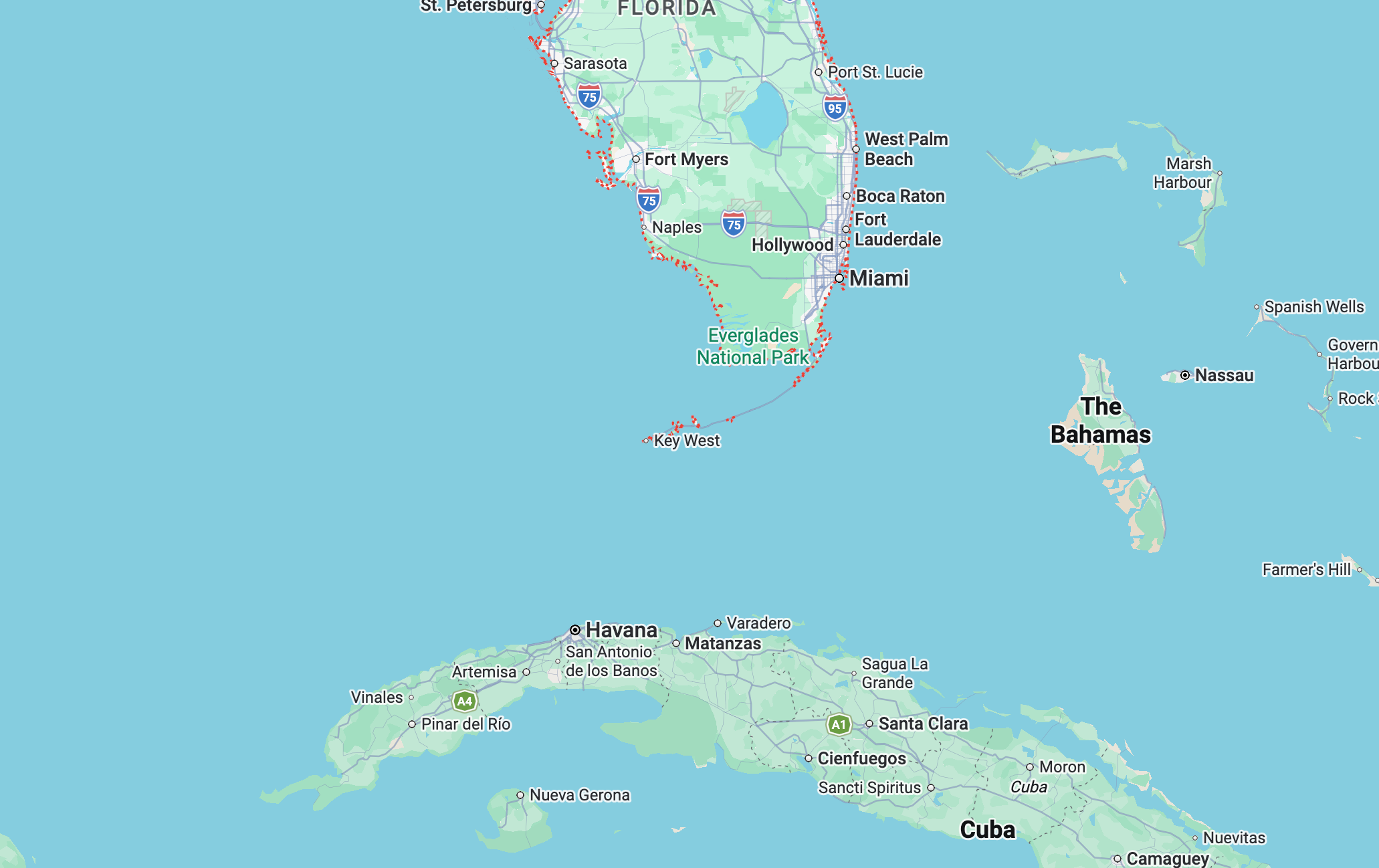
01 - We flew 4 hours from Denver to visit Southern Florida. Key West is at the end of a string of islands running east-to-west off Florida's southern coast.
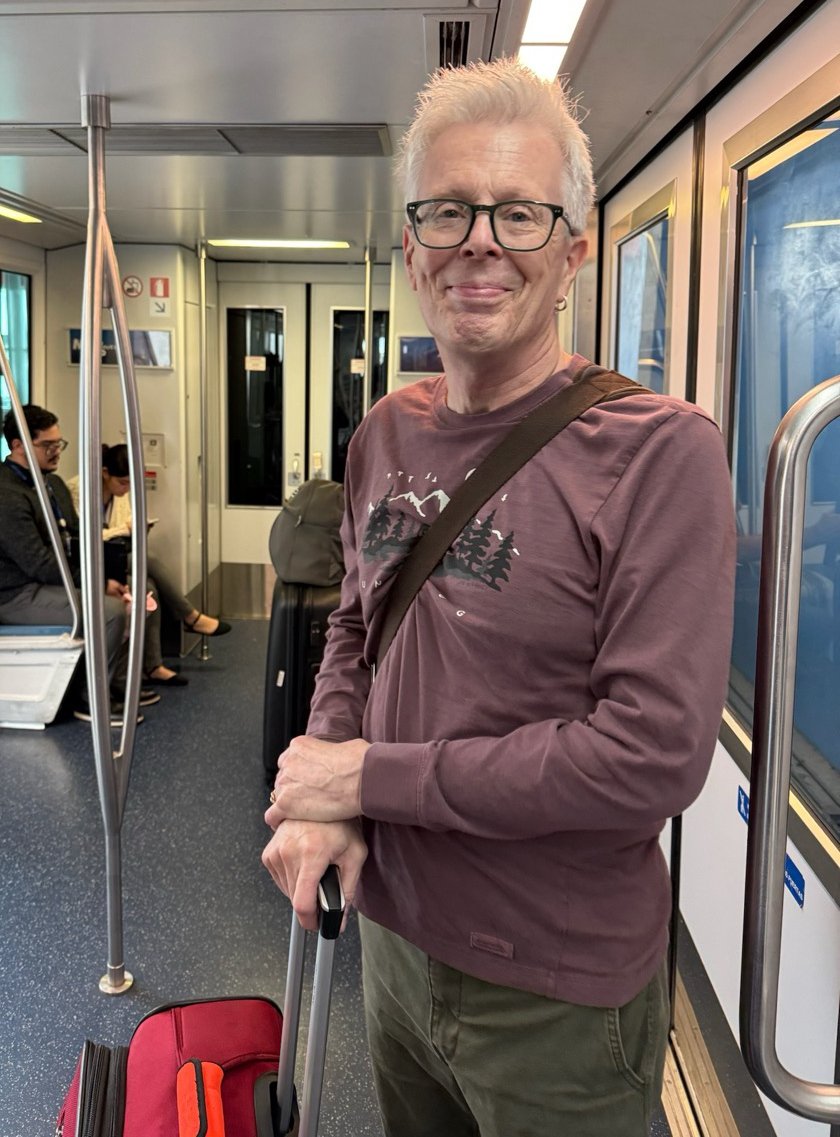
02 - Rick, riding the tram at Miami International Airport. It's the 10th busiest airport in the US, with nearly 27 million passengers in 2024.
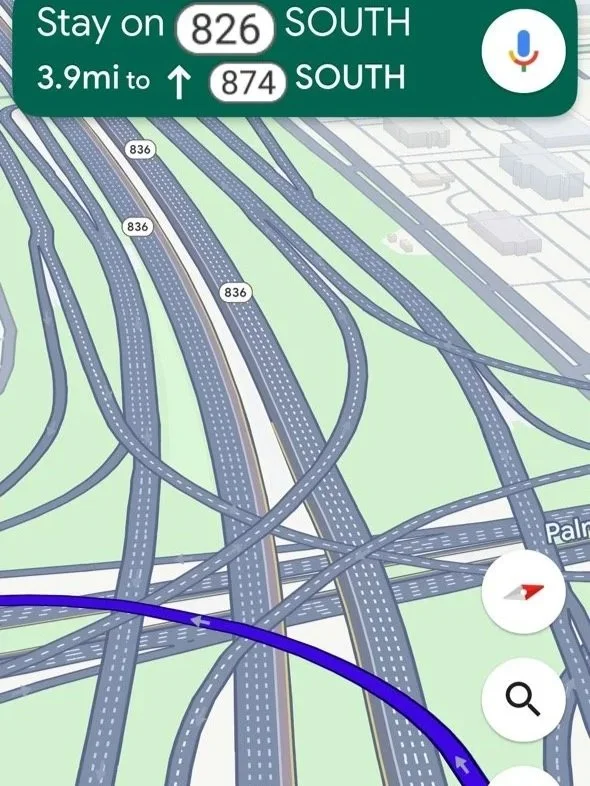
03 - As Google Maps shows, Miami traffic is kinda crazy. Miami’s car-dependent culture and suburban sprawl have led to gridlock, with the average commuter spending 3.2 hours per week in traffic jams -- over 6 days per year!
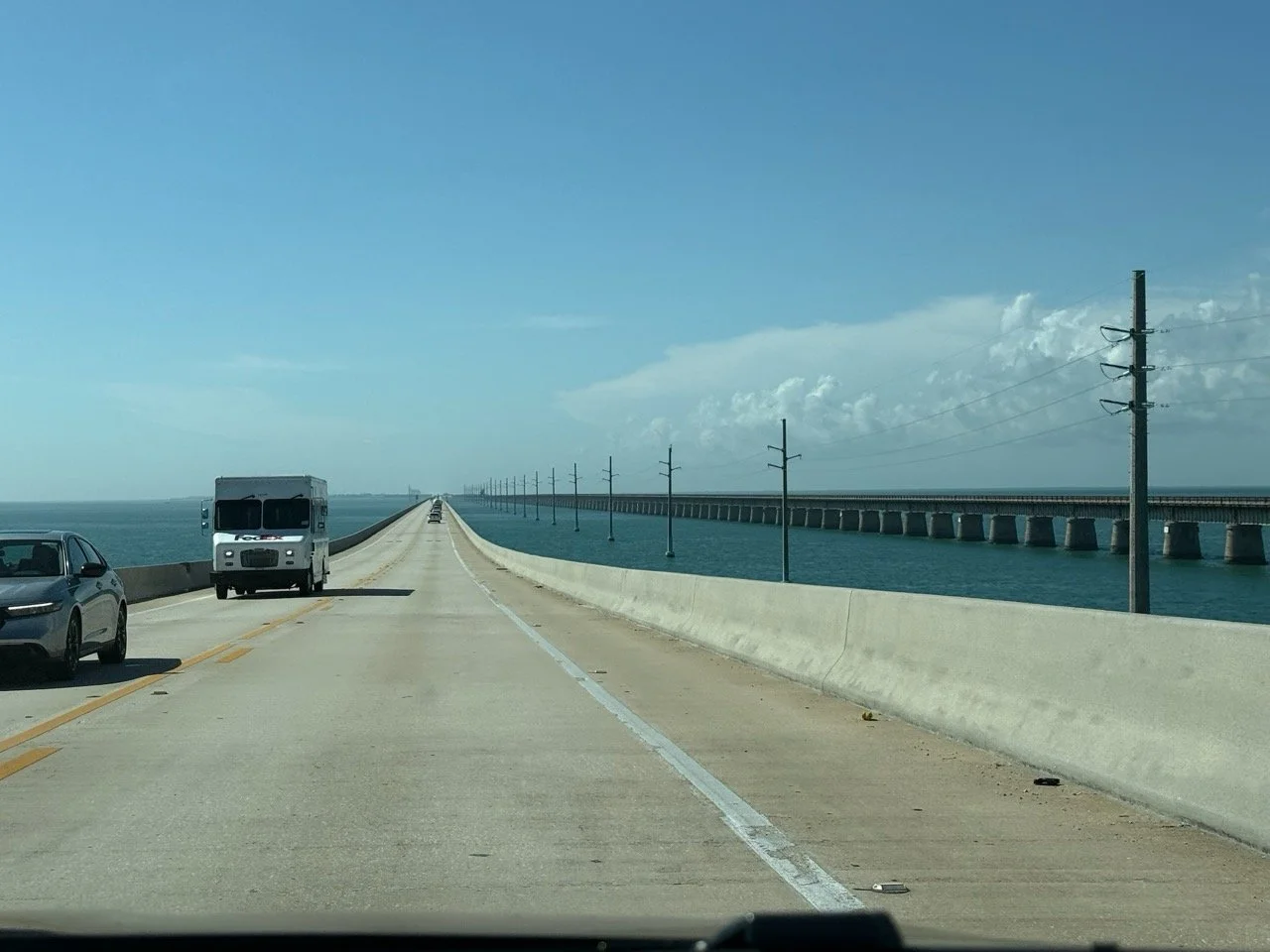
04 - After spending the night in Miami's suburban sprawl, we hit the road the next day for Key West. This is the iconic Seven Mile Bridge on the 113-mile Overseas Hwy.
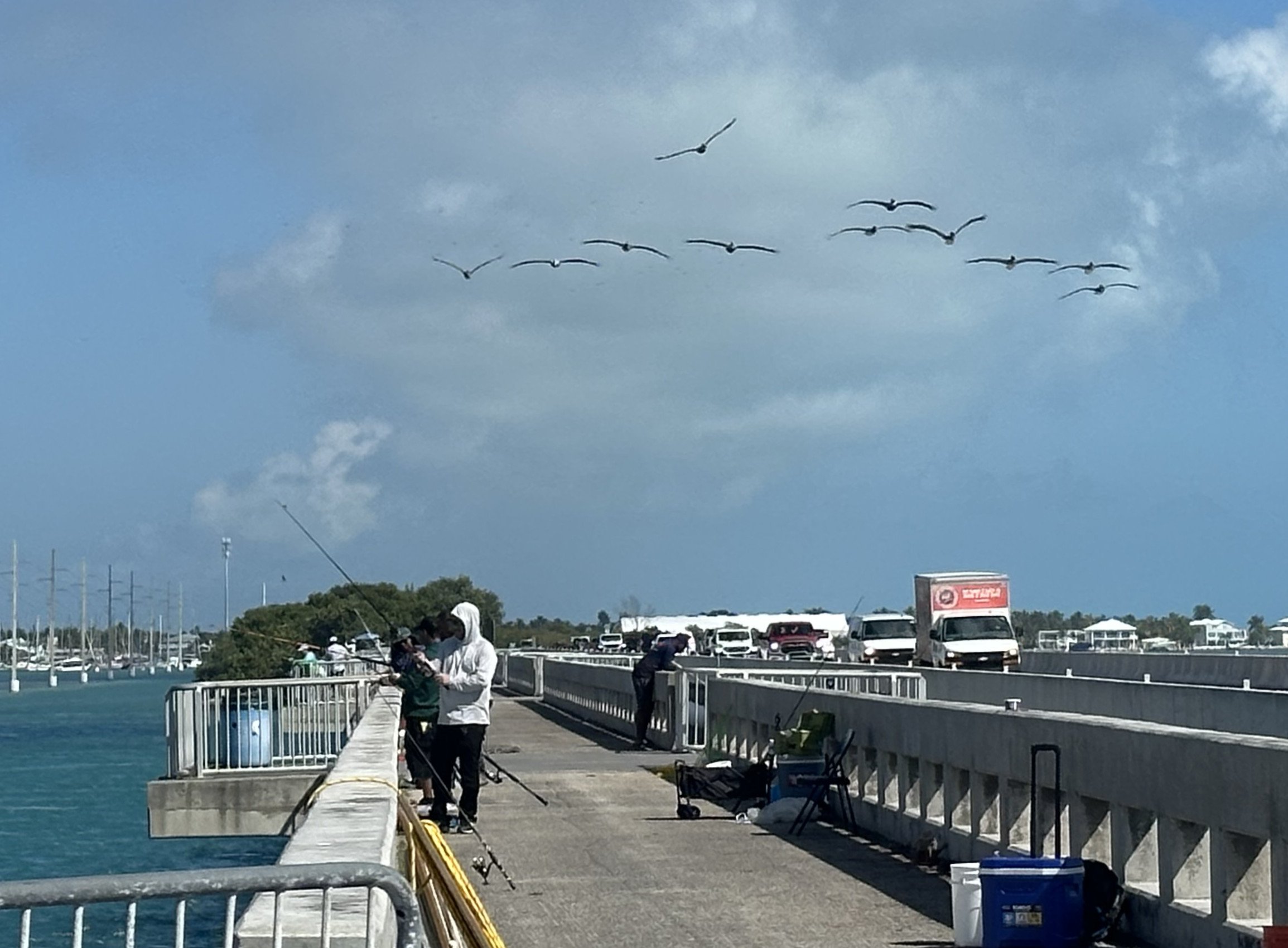
05 - There are places along the Overseas Hwy for people to fish. That's a flock of pelicans flying overhead!
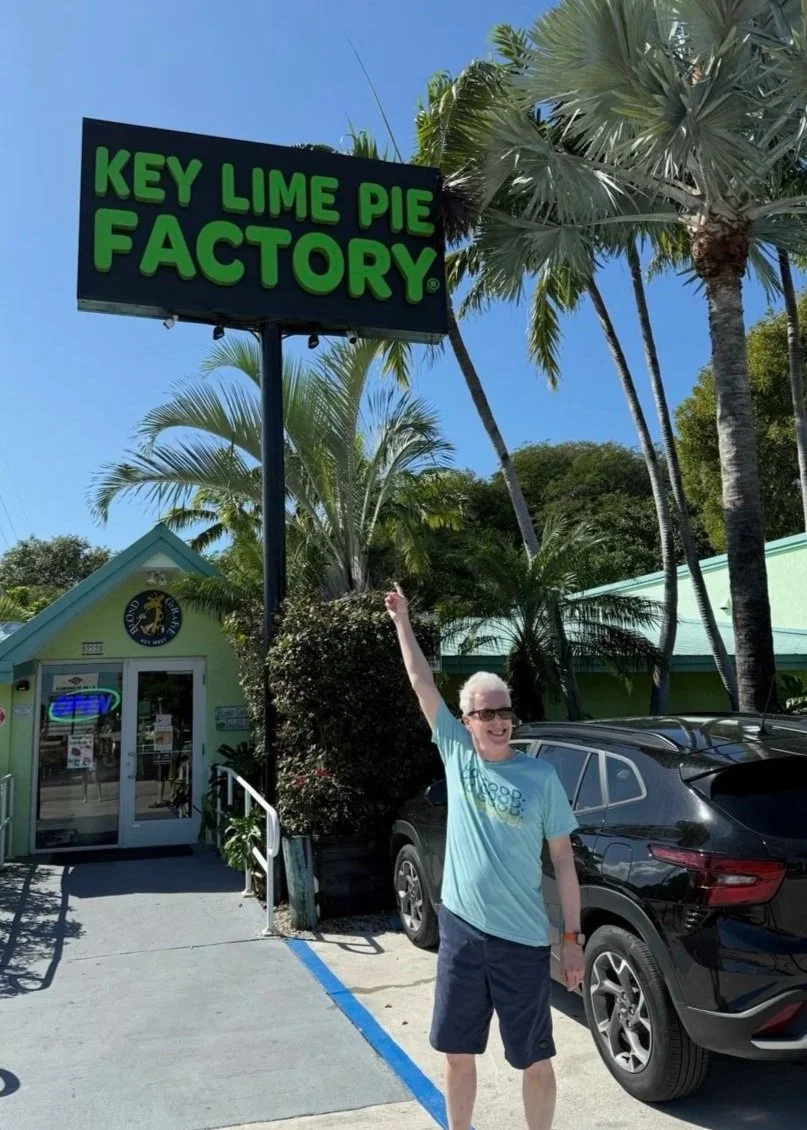
06 - We had key lime pie, while driving the highway. Dang, it was good!
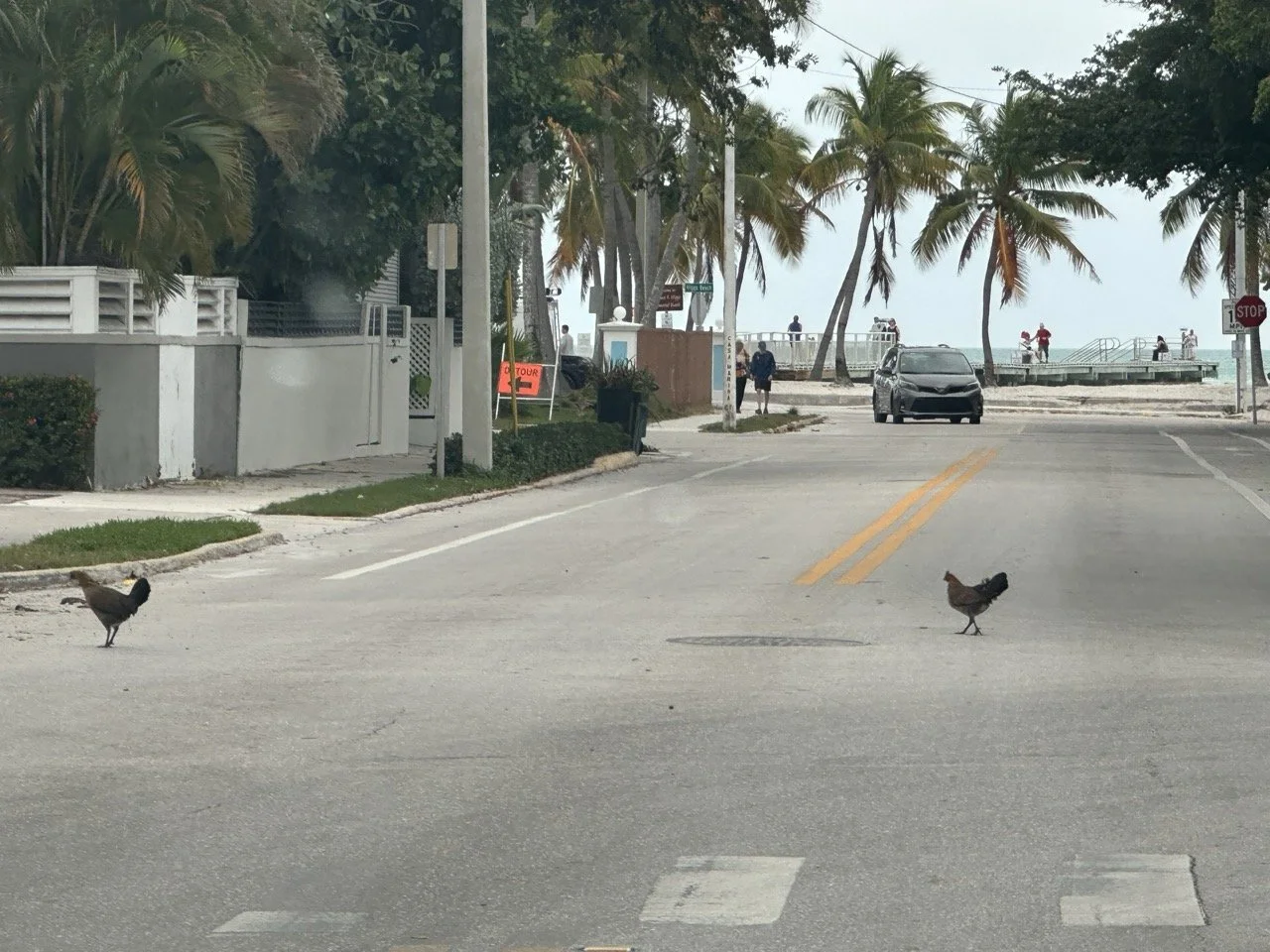
07 - When we arrived to Key West, we encountered chickens, which is a pretty common sight on any tropical island we've ever visited. Chickens were introduced during colonial times, likely brought by European settlers as a source of food. However, over time, many of the chickens were allowed to roam free, and their populations flourished in the warm climate and abundance of food.
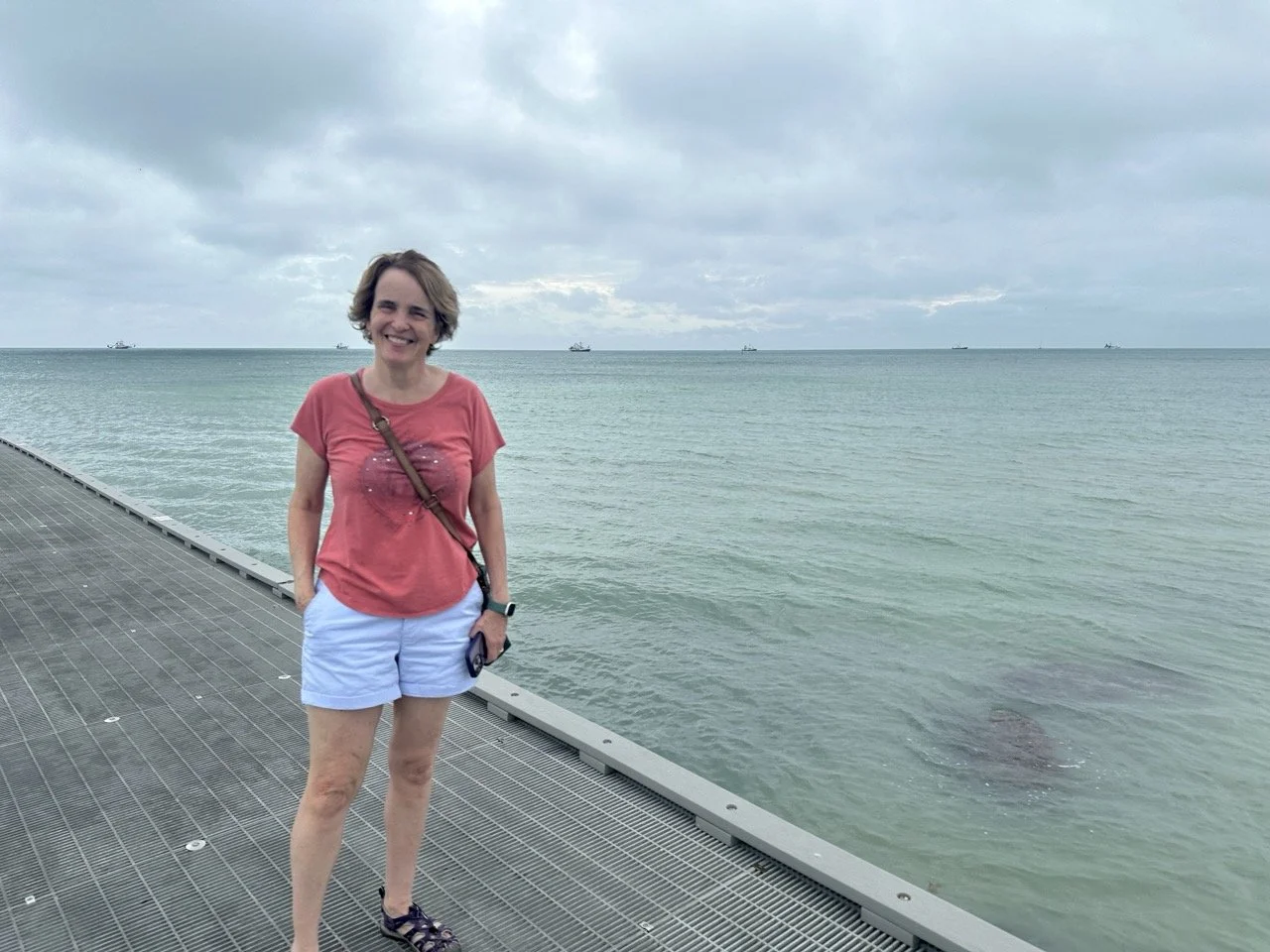
08 - Julie, overlooking the Gulf of Mexico. Those are shrimp boats in the distance.
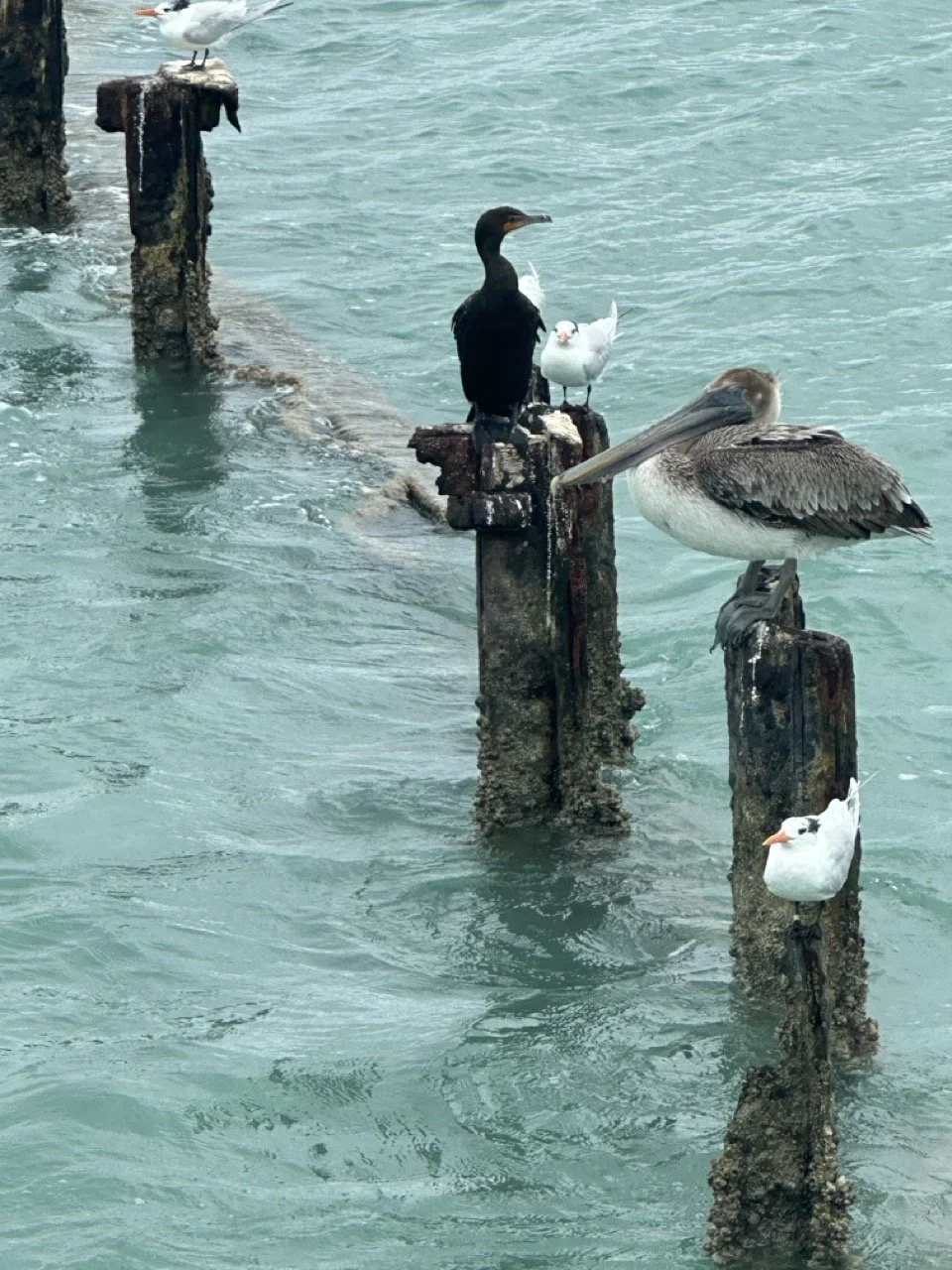
09 - We saw lots of birds that one doesn't see in Colorado! The largest bird is a pelican and the dark-colored one is a cormorant.
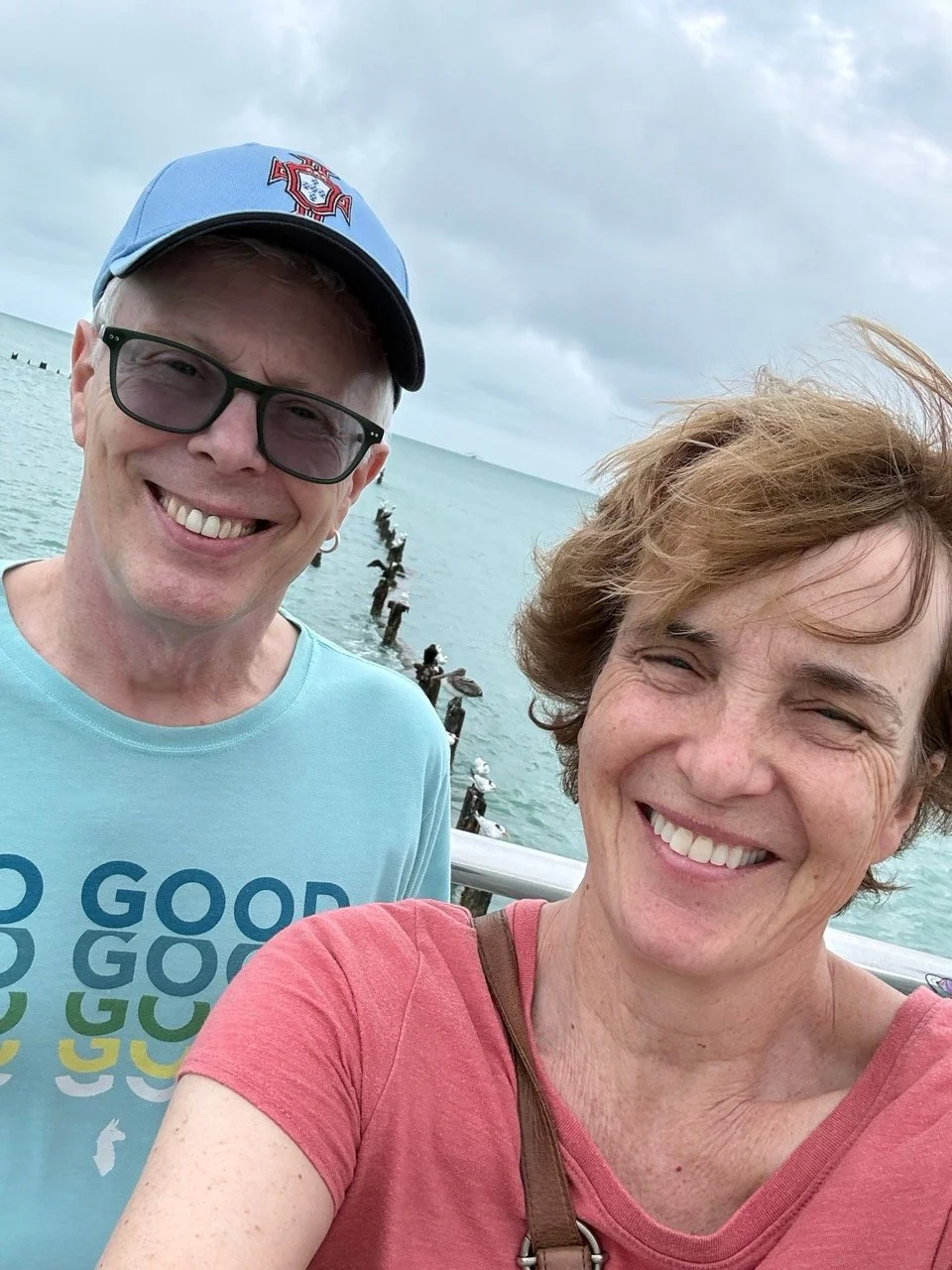
10 - The two of us, with the Gulf of Mexico behind.
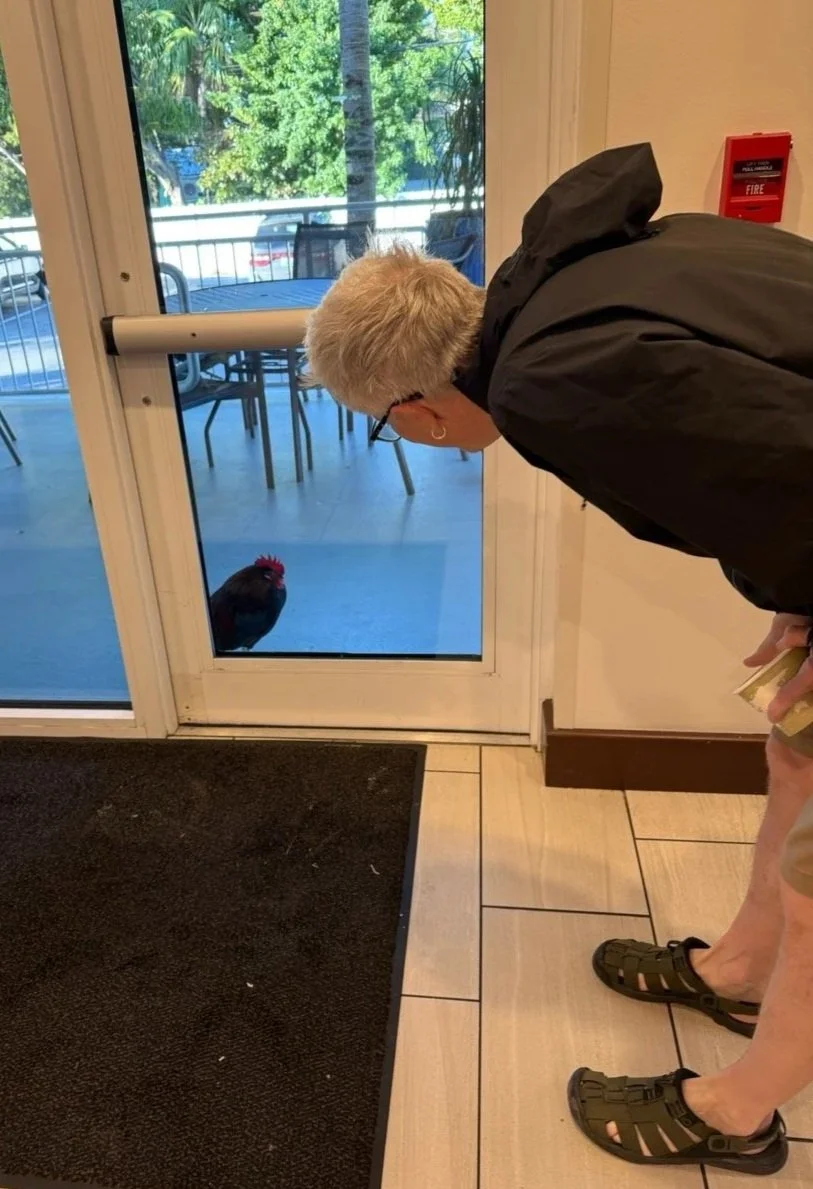
11 - Rick chats with chicken that wanted to enter our hotel.
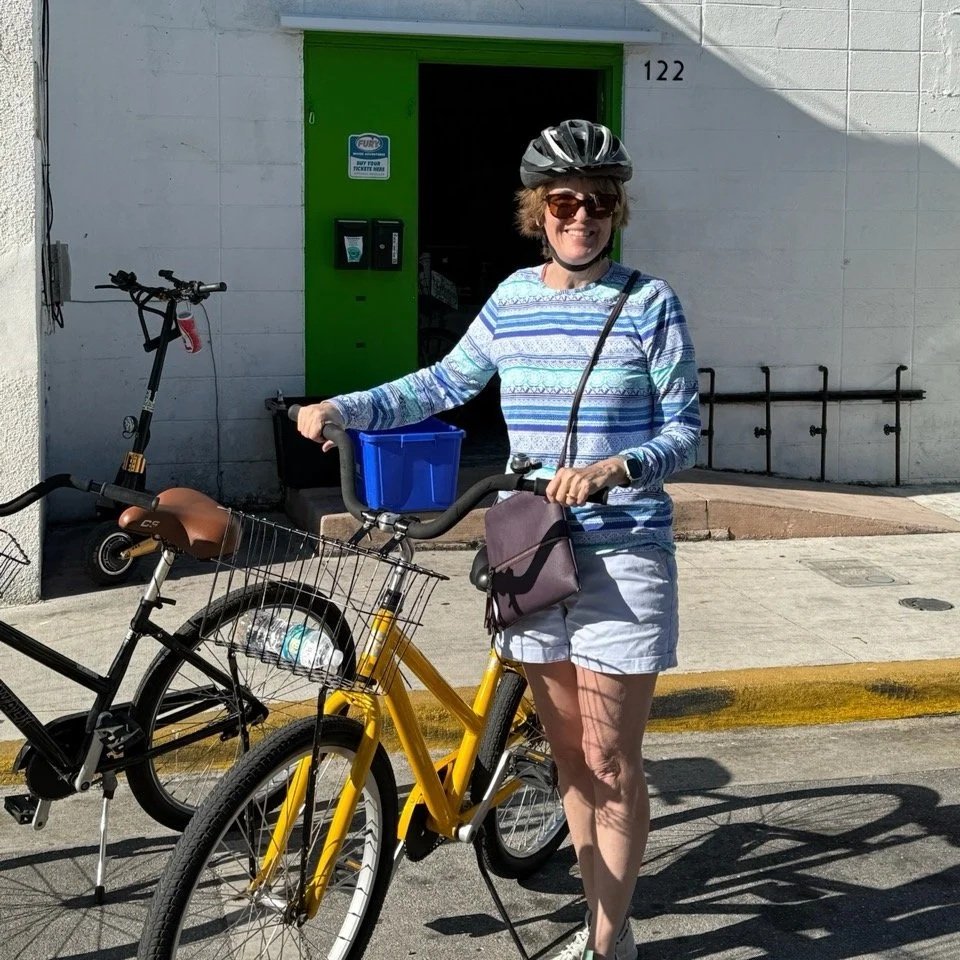
12 - We had a nice bike tour around Old Town Key West and along the coast.
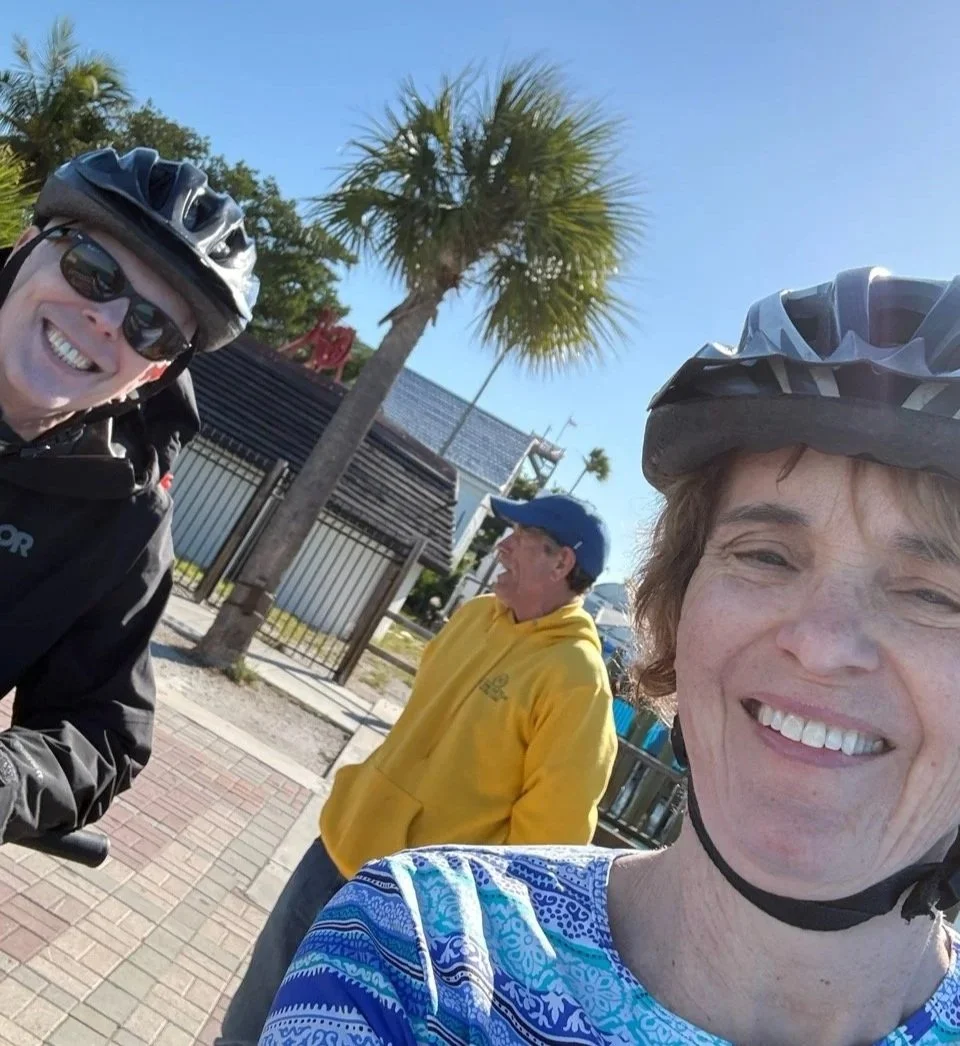
13 - Our tour guide, in between us, was quite the character, with plenty of interesting and entertaining stories to tell.
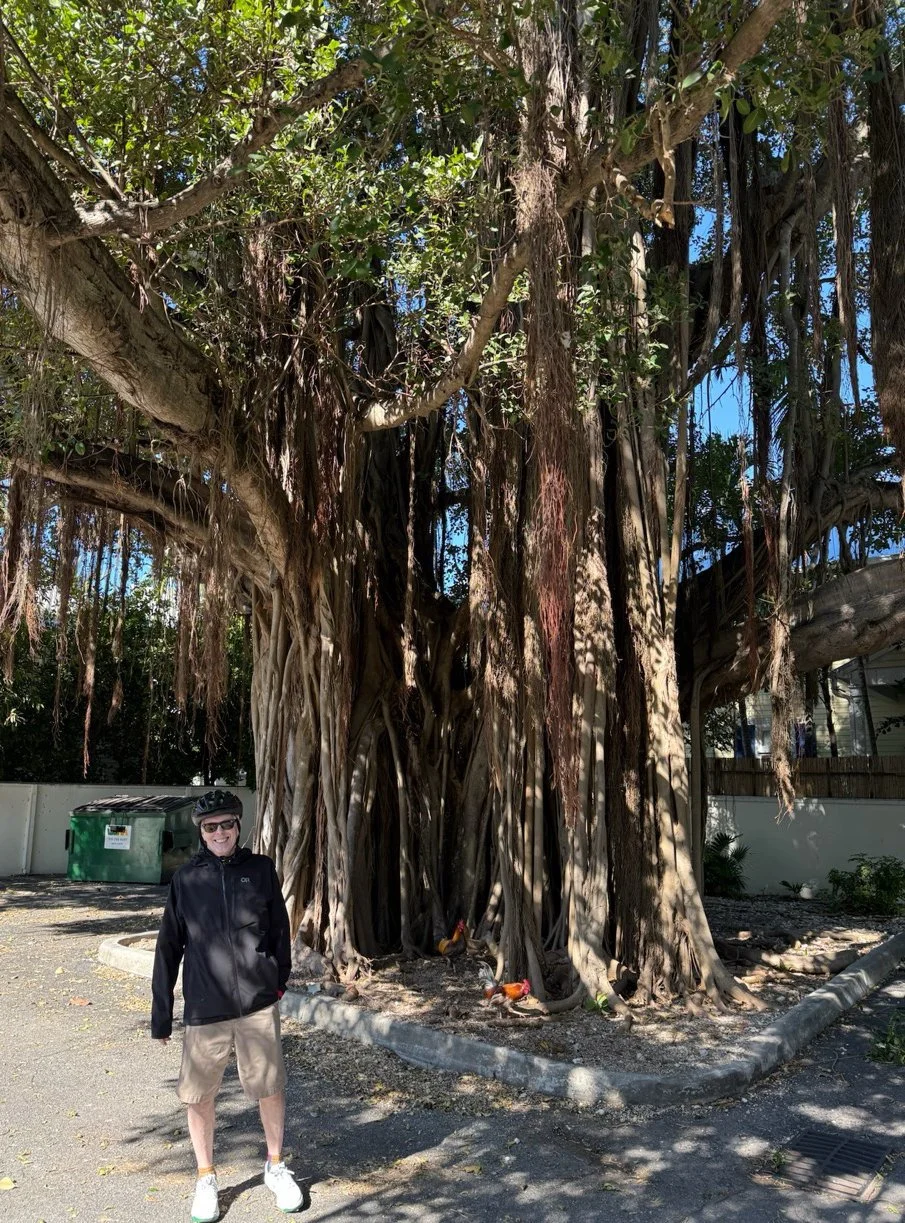
14 - Rick and a couple of chickens enjoy the shade of a large banyan tree.
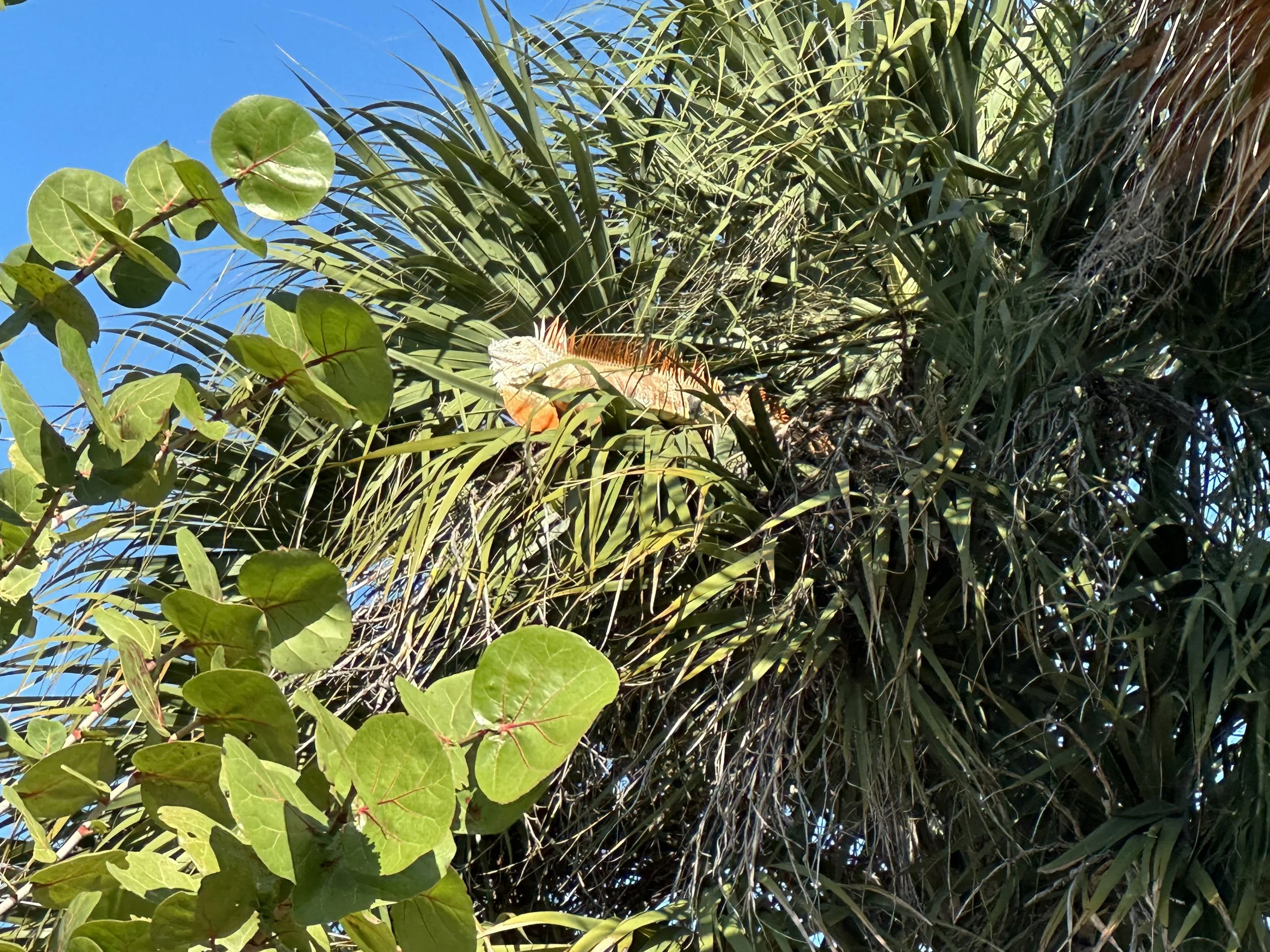
15 - We saw a colorful iguana sunning in a tree. A lot of Floridians aren't too crazy about the lizards, so they were likely quite happy later in the week when the night-time temperatures were in the 30's and the lizards were dropping from the trees.
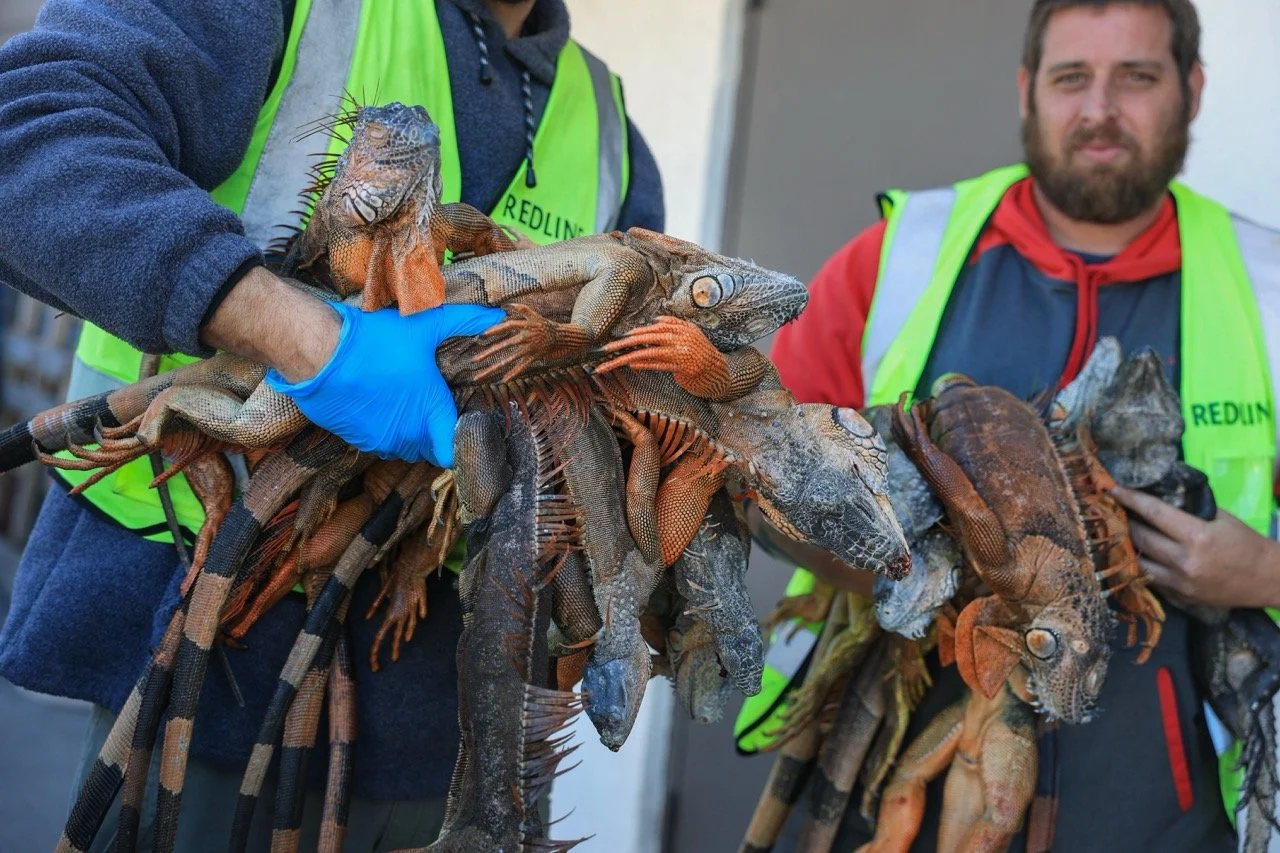
16 - From a news source ... these guys collected iguanas during the Florida cold spell, and made tacos with the lizard meat -- no thank you.
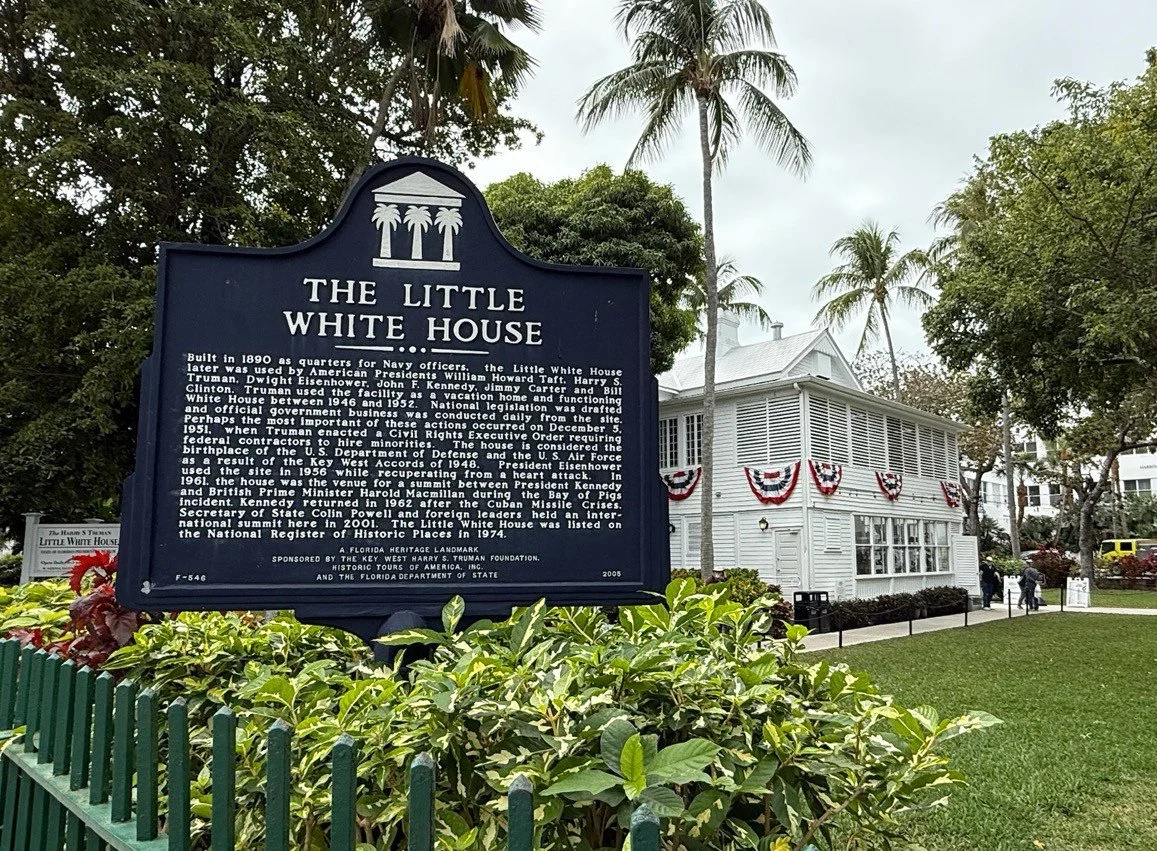
17 - President Harry Truman loved to spend time in Key West, where he often mingled with the locals. This was his home and the de facto "White House" when he was present.
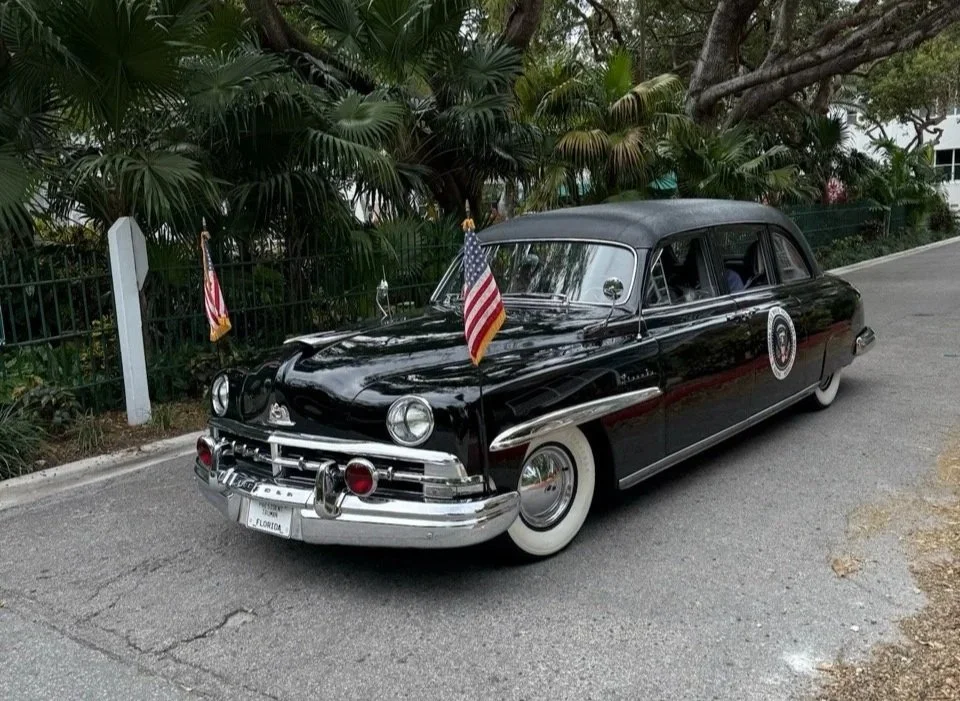
18 - And this is the 1950 Lincoln Cosmopolitan limousine that Truman tootled around town in.
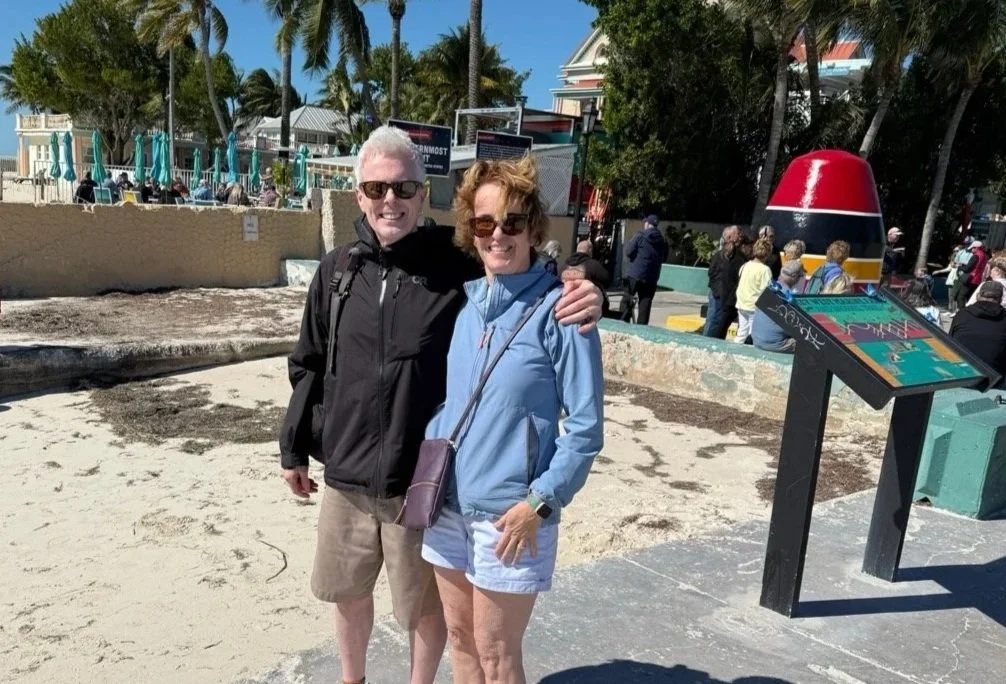
19 - That red, black, and yellow "buoy" in the background is the southernmost point of the continental US. Well, that's not exactly true -- the actual buoy (and southernmost point) is behind us to the left a couple hundred meters, but it's currently under repairs. So, Key West stuck a replica buoy nearby for photos until the original one is fixed.
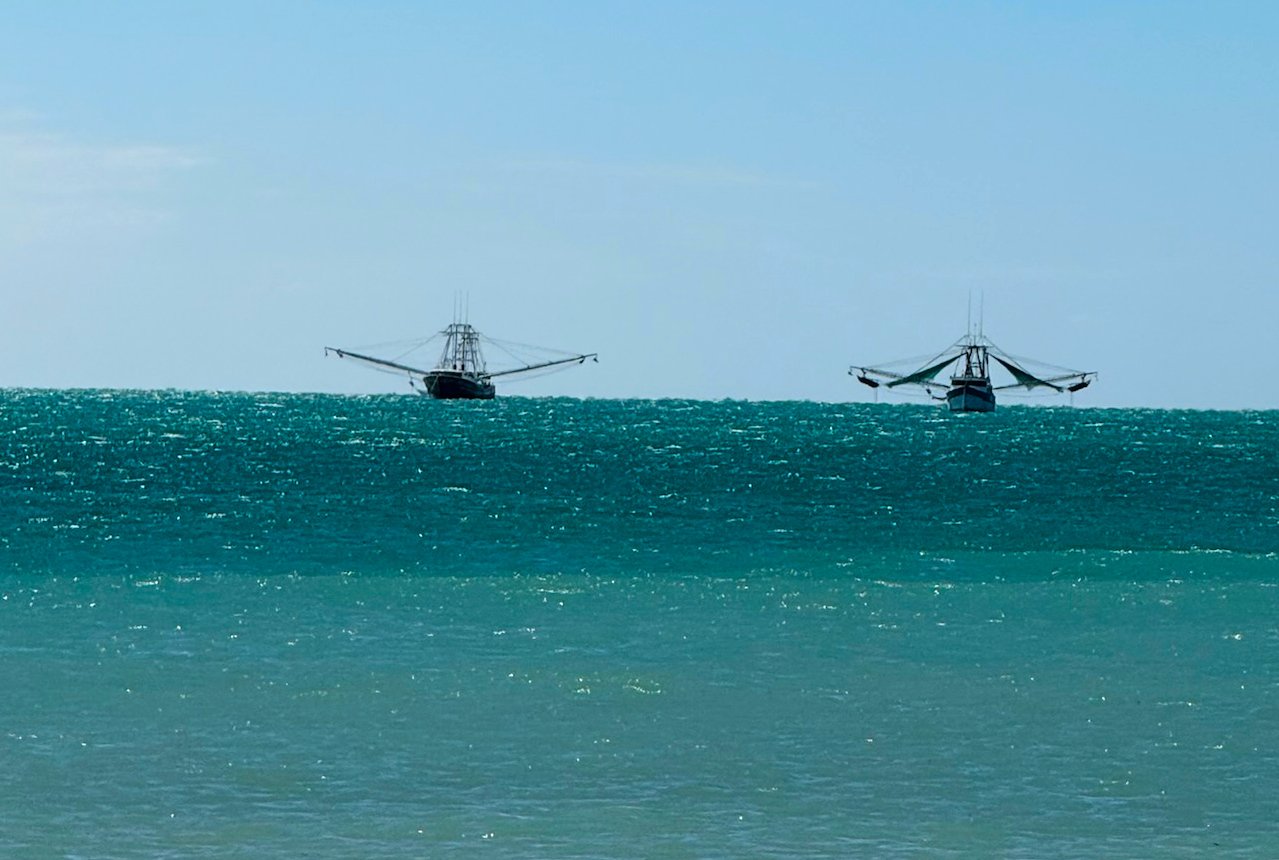
20 - Here's a close-up of the shrimpers we saw the day before. They're hanging around out there for a day or two until the shrimping conditions improve, and then they'll go shrimp hunting with their huge nets.
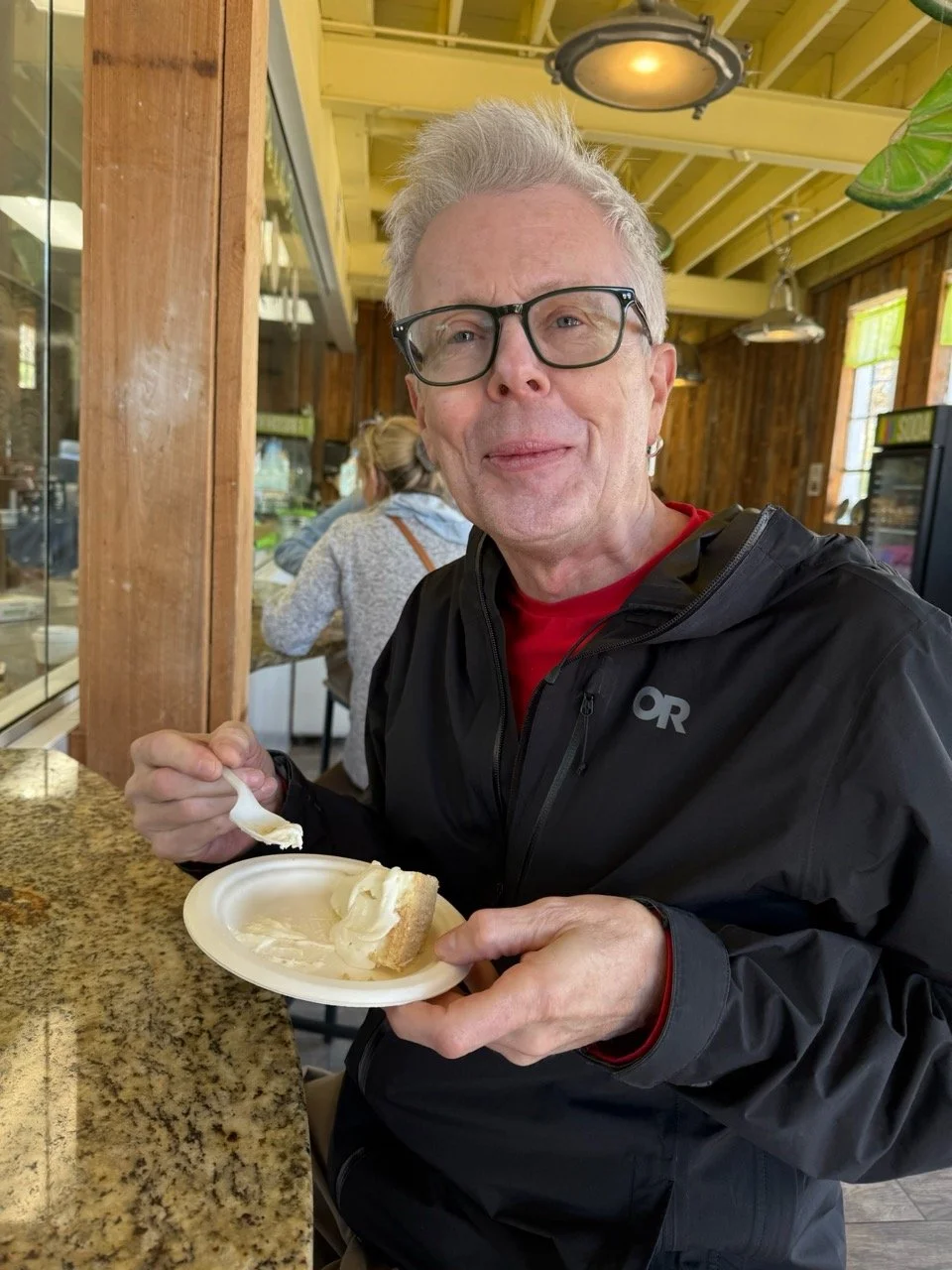
21 - We were treated to key lime pie after our bike tour.
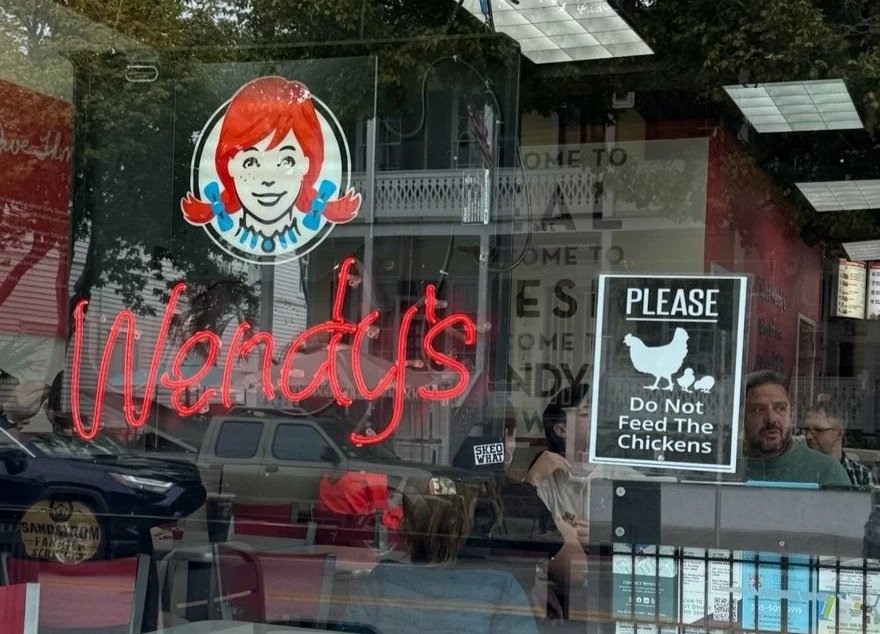
22 - While roaming the sidewalks of Old Town, we came across this horrible, anti-chicken sign.
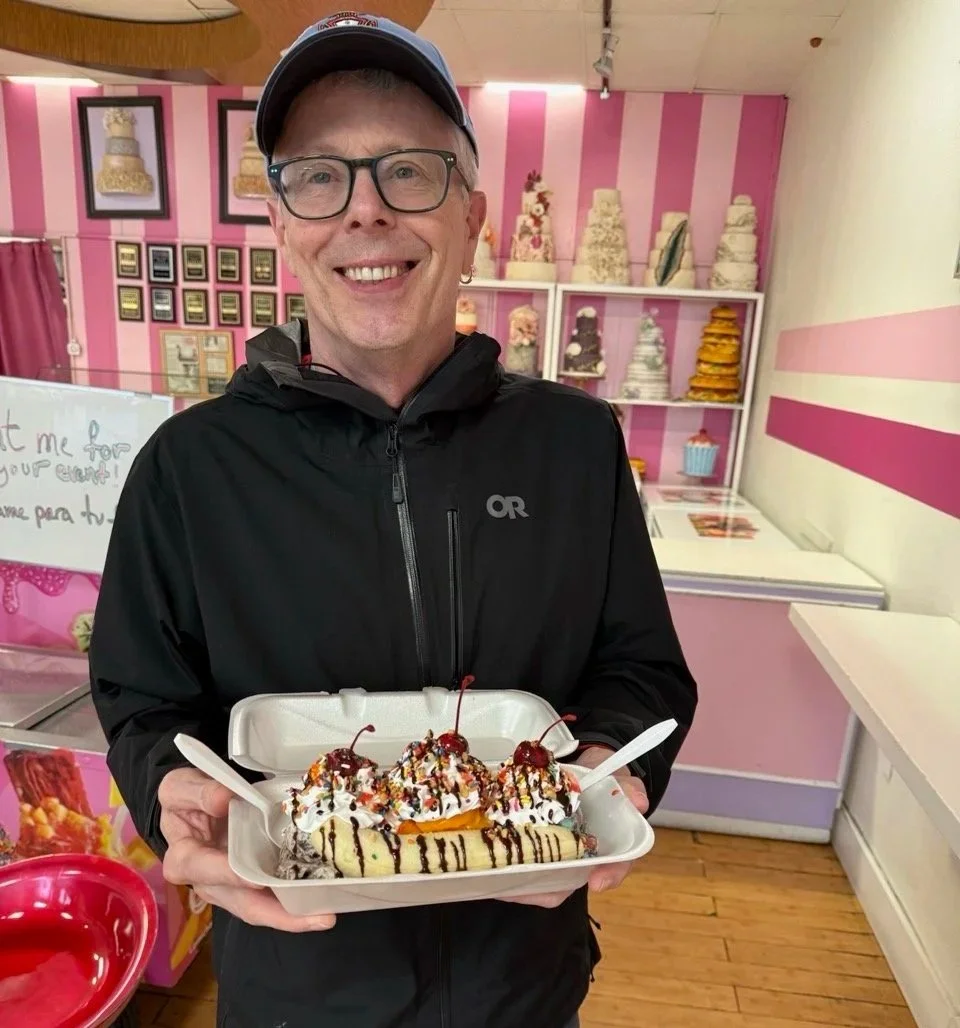
23 - Obviously, key lime pie can only go so far in satisfyng a craving for sweets. For dinner, we visited La Michoacana Key West Mexican Ice Cream, and feasted on a delicious banana split.
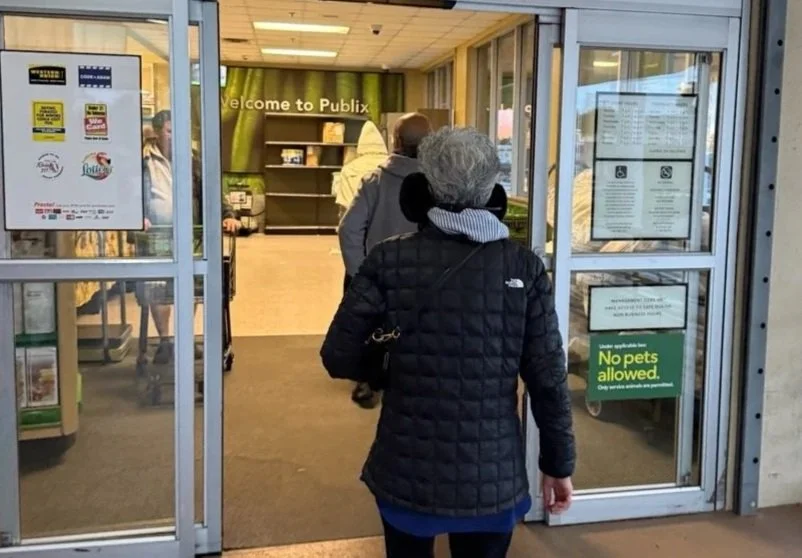
24 - We wandered over to a nearby Publix (grocery store) and saw this ear-muffed woman at the entrance butt ahead of us to escape the bitter cold.
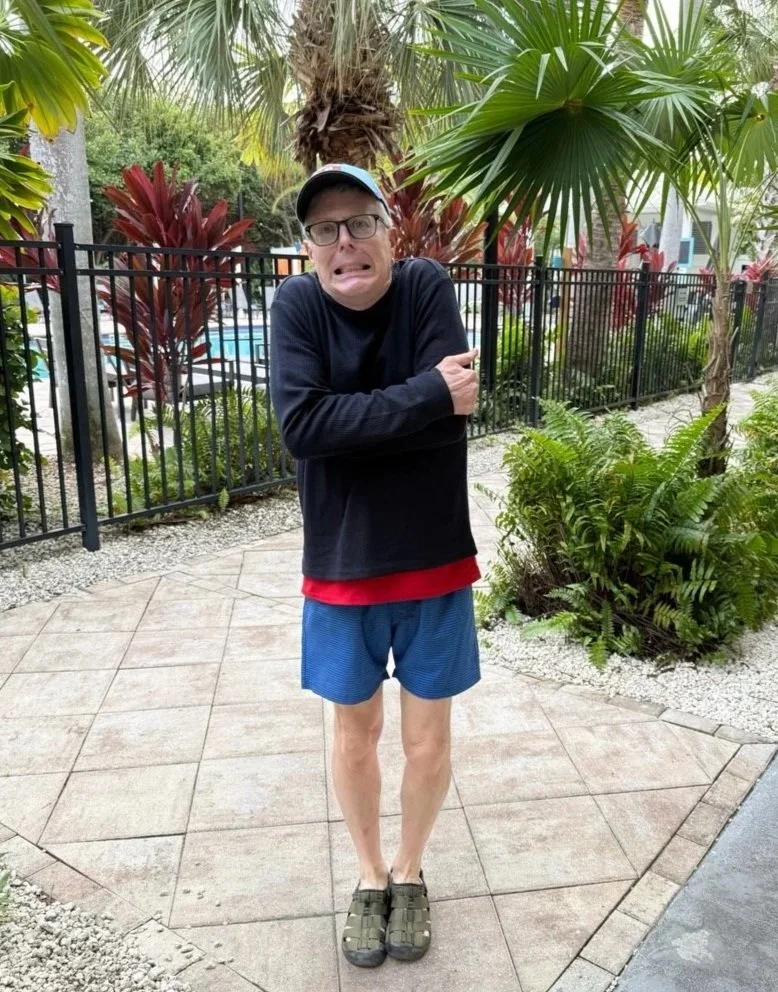
25 - We woke-up bright and early the next day for snorkeling at Dry Tortugas National Park, 75 miles west of Key West. As Rick demonstrates, it was really chilly -- "muff weather," as the locals call it.
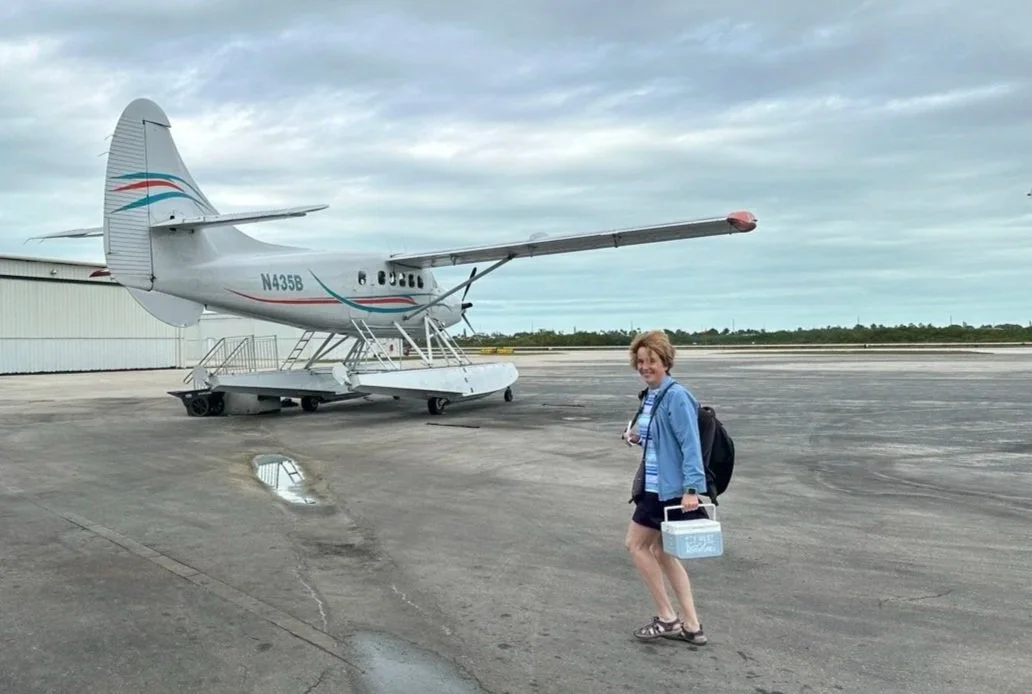
26 - Dry Tortugas is only accessible by boat or seaplane. The 100-square mile park "is known the world-over as the home of magnificent Fort Jefferson, picturesque blue waters, superlative coral reefs and marine life, and the vast assortment of bird life that frequents the area." (From the Park's website)
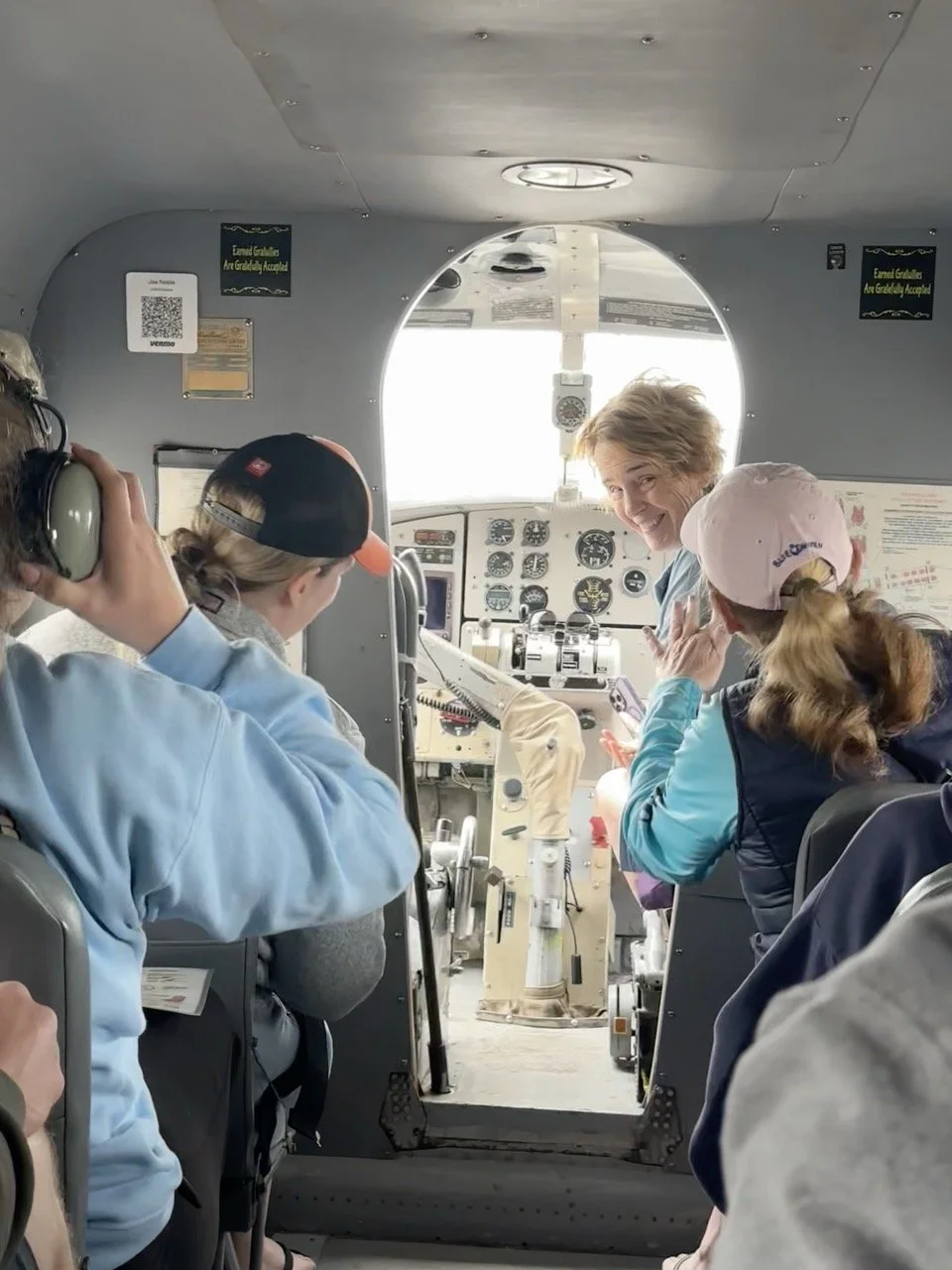
27 - Despite her lack of any experience flying a plane, Julie quickly claimed the co-pilot seat before anyone realized what was happening.
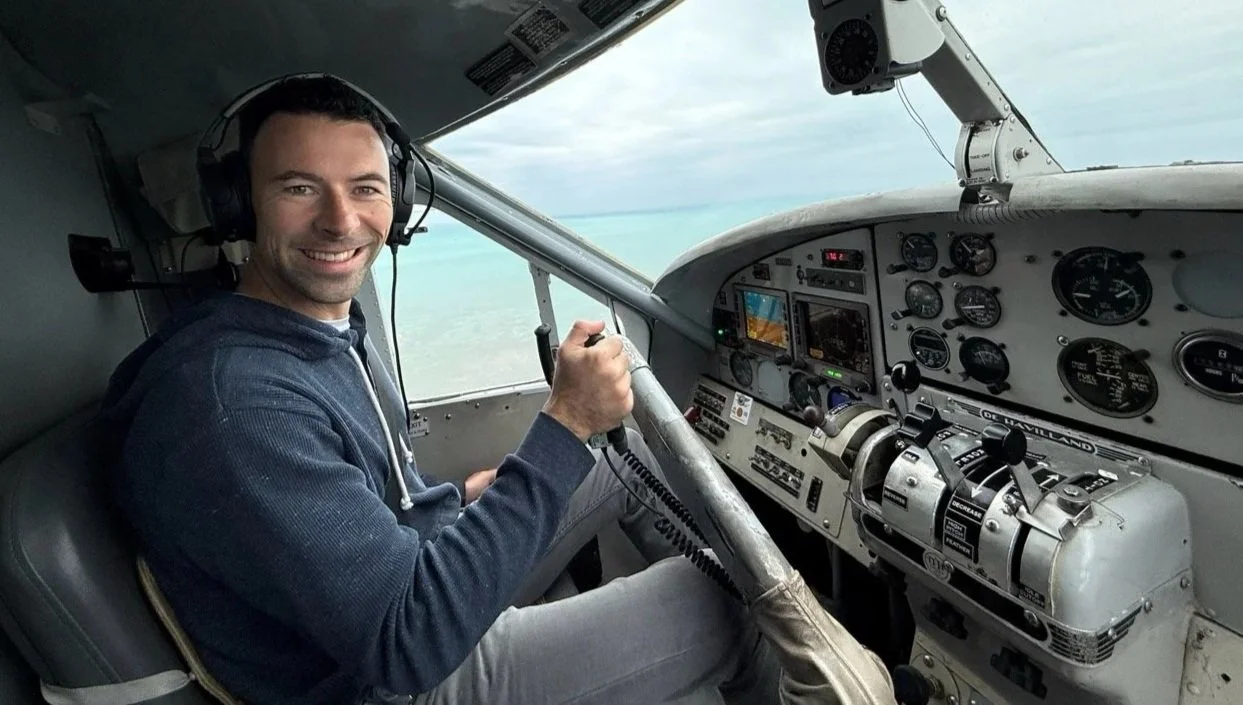
28 - Our pilot was thrilled to have Julie beside him, instead of some grumpy-old man.
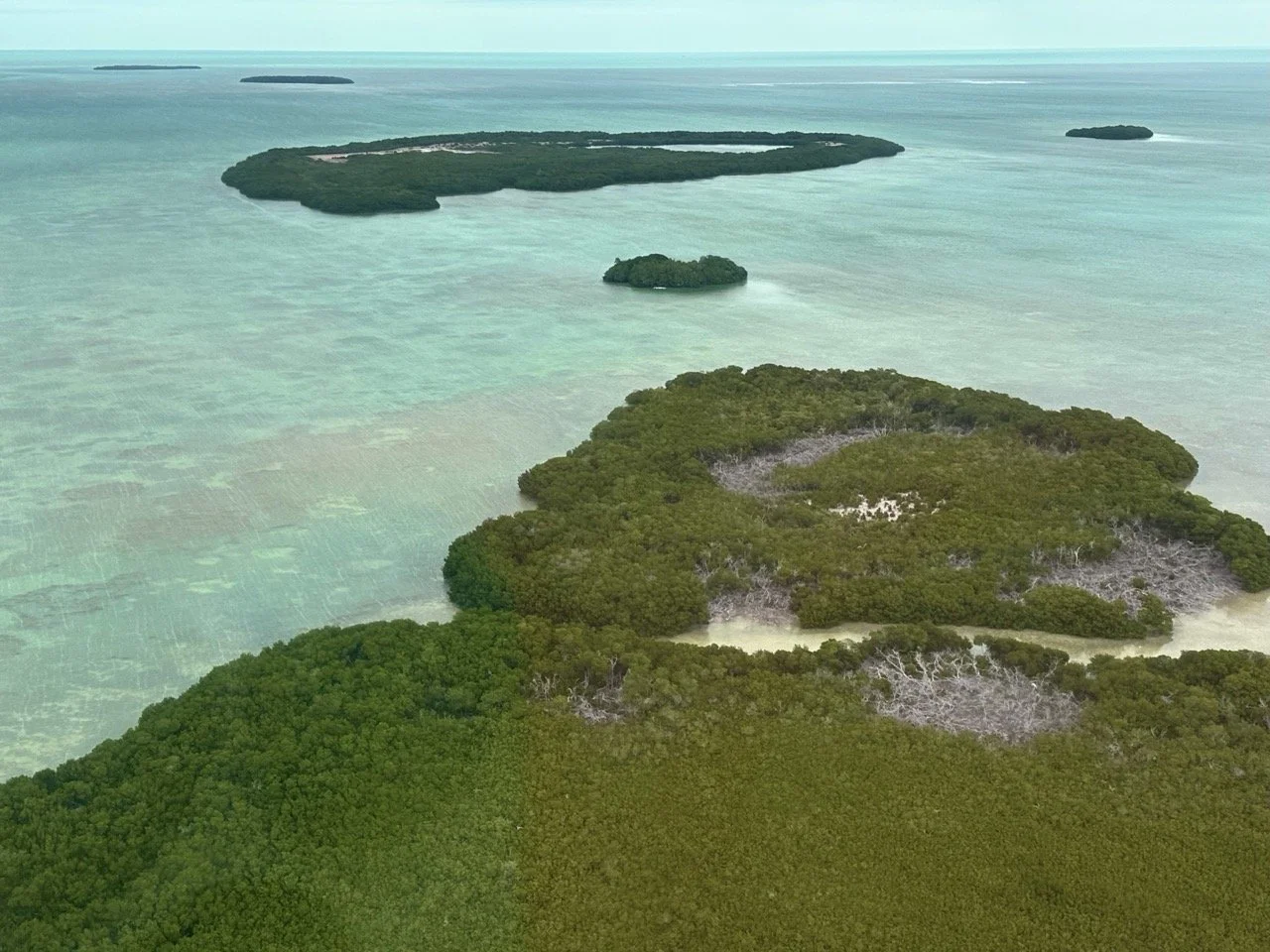
29 - Our seaplane flew at an altitude of 400-500 feet, so there were great views of dozens of keys. While the views were a plus, it was particularly comforting to fly so low because our plane was older than Rick.
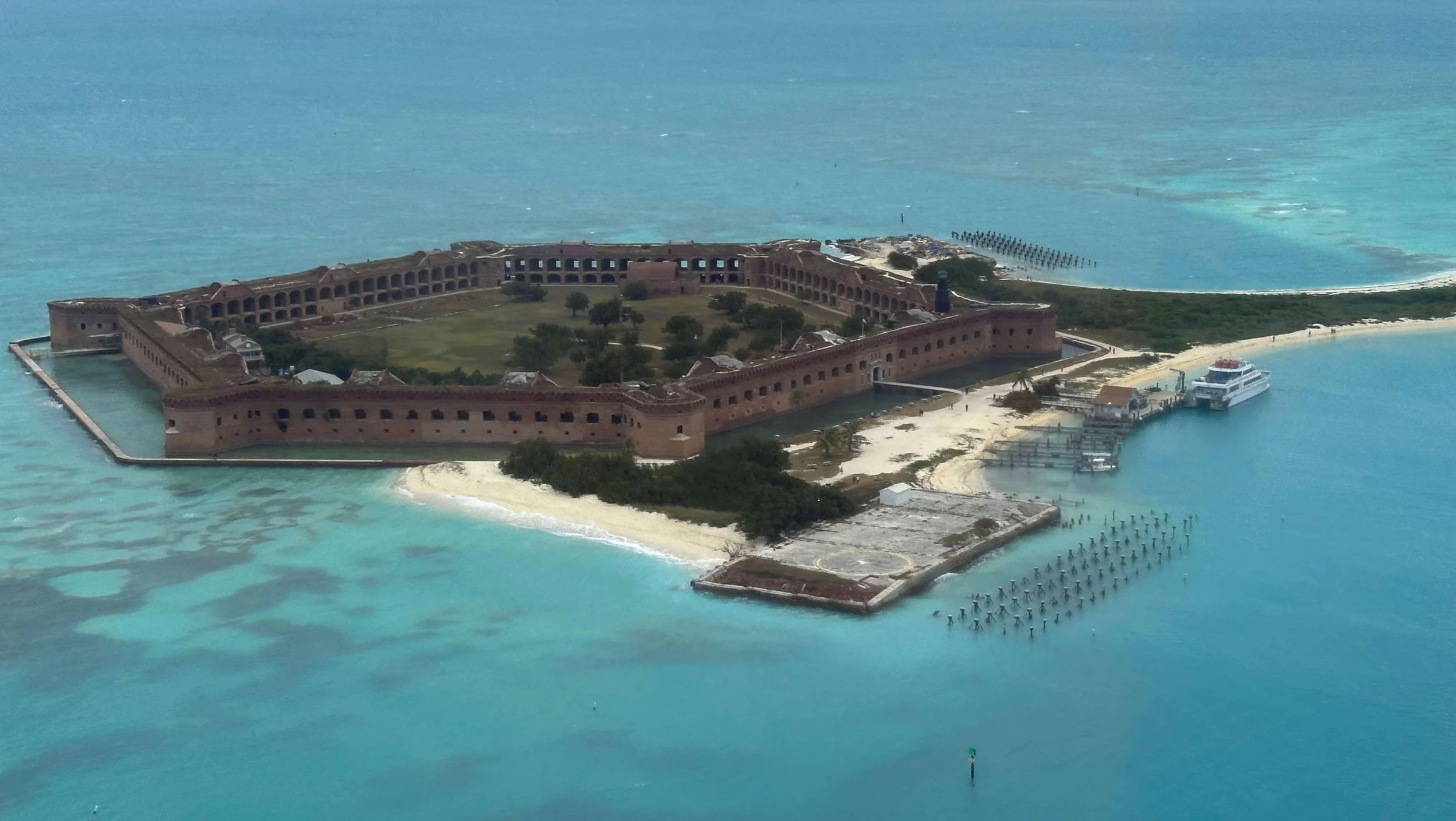
30 - Approaching Ft. Jefferson, located on Garden Key, within the national park. The Fort, a former U.S. military coastal fortress, is the largest brick masonry structure in the Americas covering 16 acres. It's also the 3rd largest US fort.
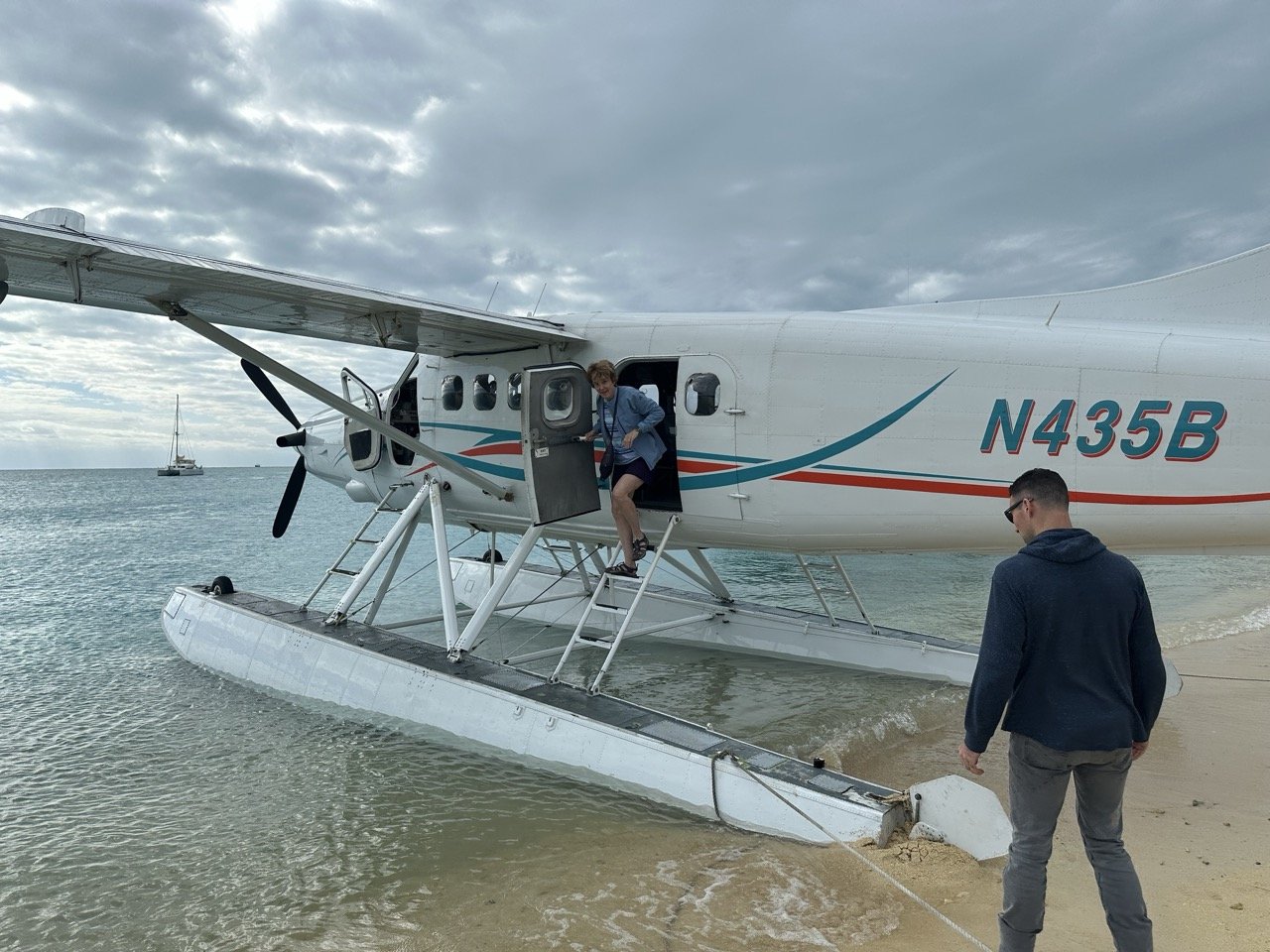
31 - After a 45-minute ride (the ferry takes over 3 times as long), Julie disembarks from our jalopy onto dry land at Isla de las Tortugas. In very unpoetic English, that means "Tortoise Island."
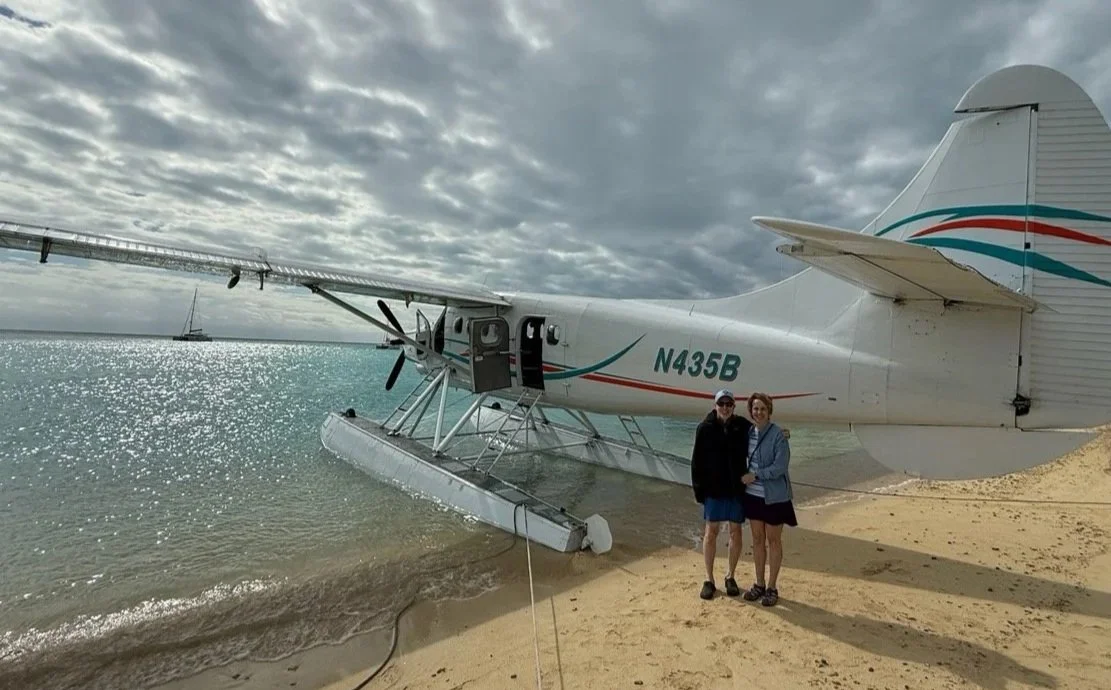
32 - The water-landing was smoother than any land-landing we've ever hand. Unfortunately, it was just as cold on Tortoise Island as it was on Key West.
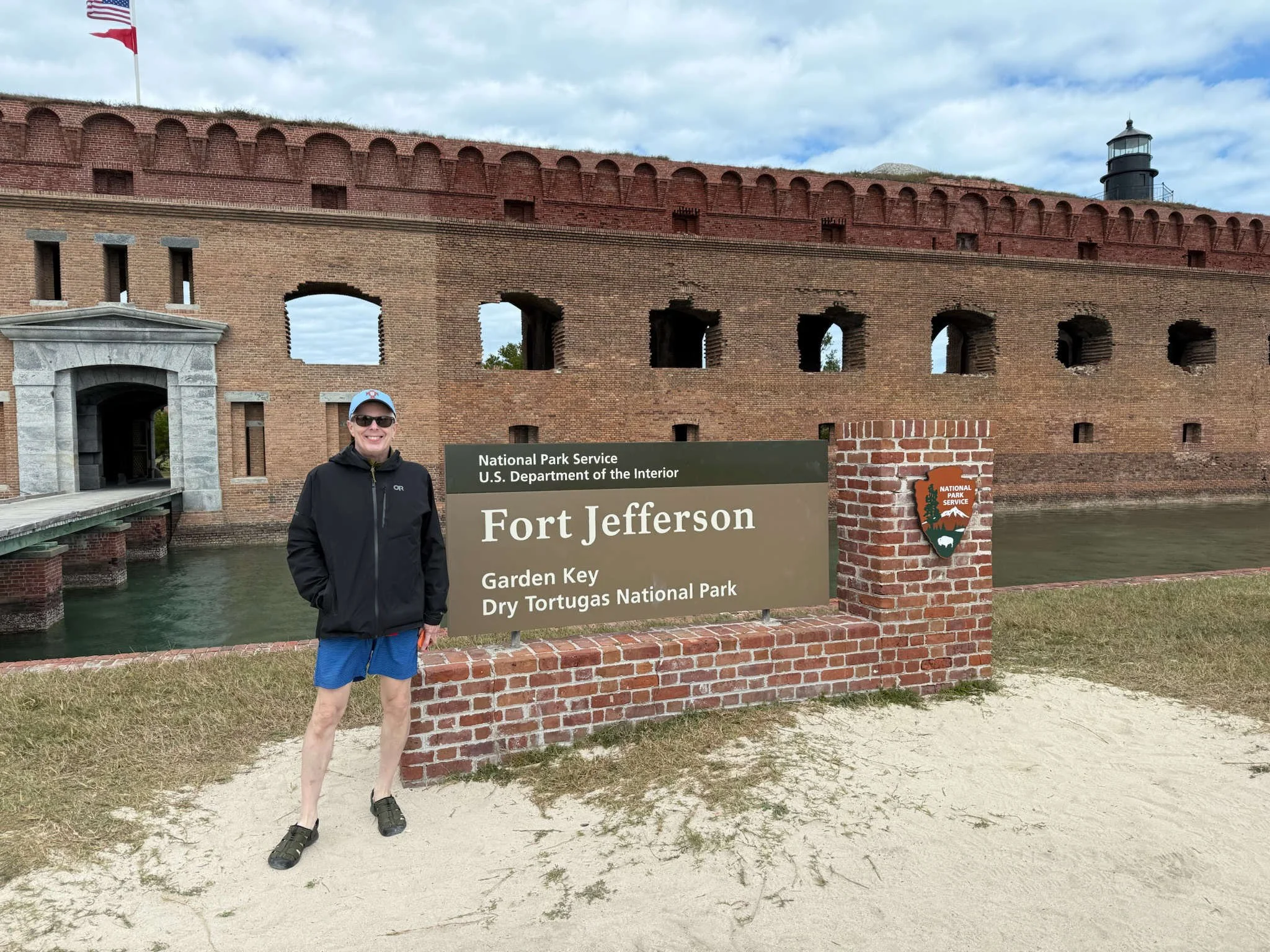
33 - During its peak, over 1,700 soldiers were stationed at the Fort, but it was plagued with construction problems and Yellow Fever epidemics. Construction was never completed.
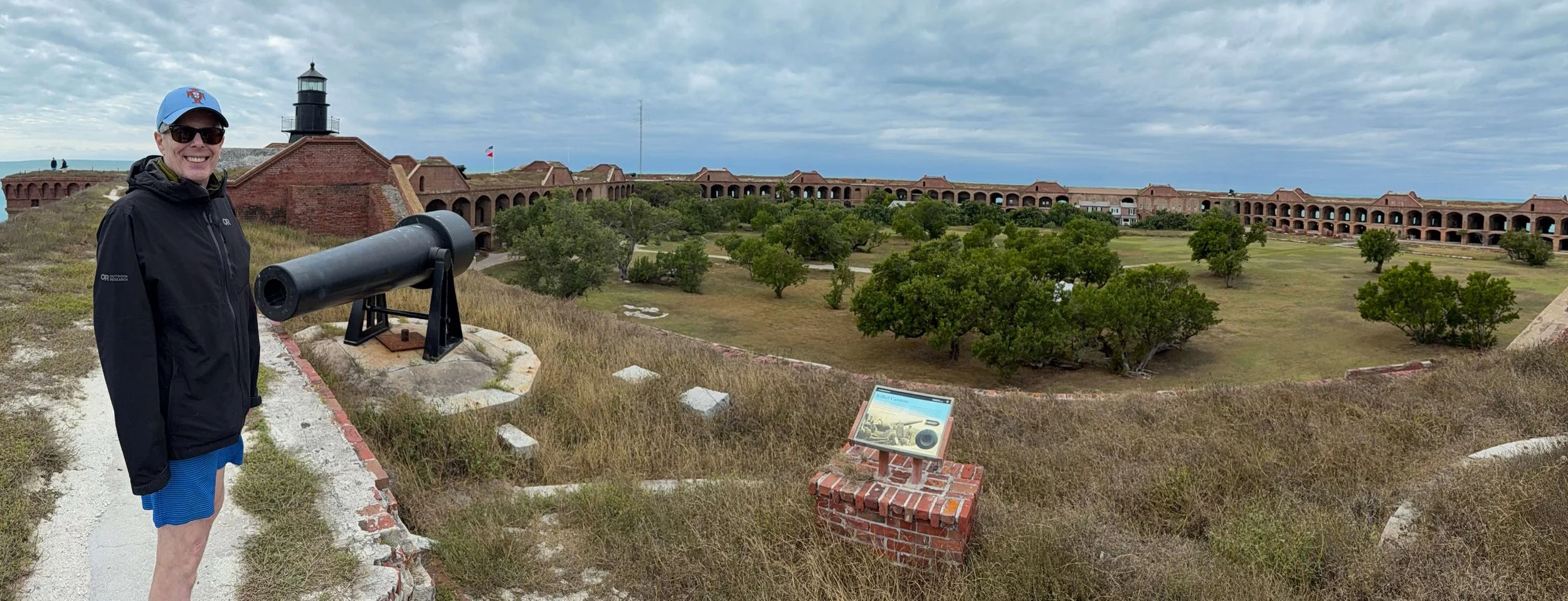
34 - The Fort actually crumbled under its own weight, cracking the rain-water cisterns and allowing salt water to penetrate into the precious drinking supply. The Army abandoned Fort Jefferson in 1874.
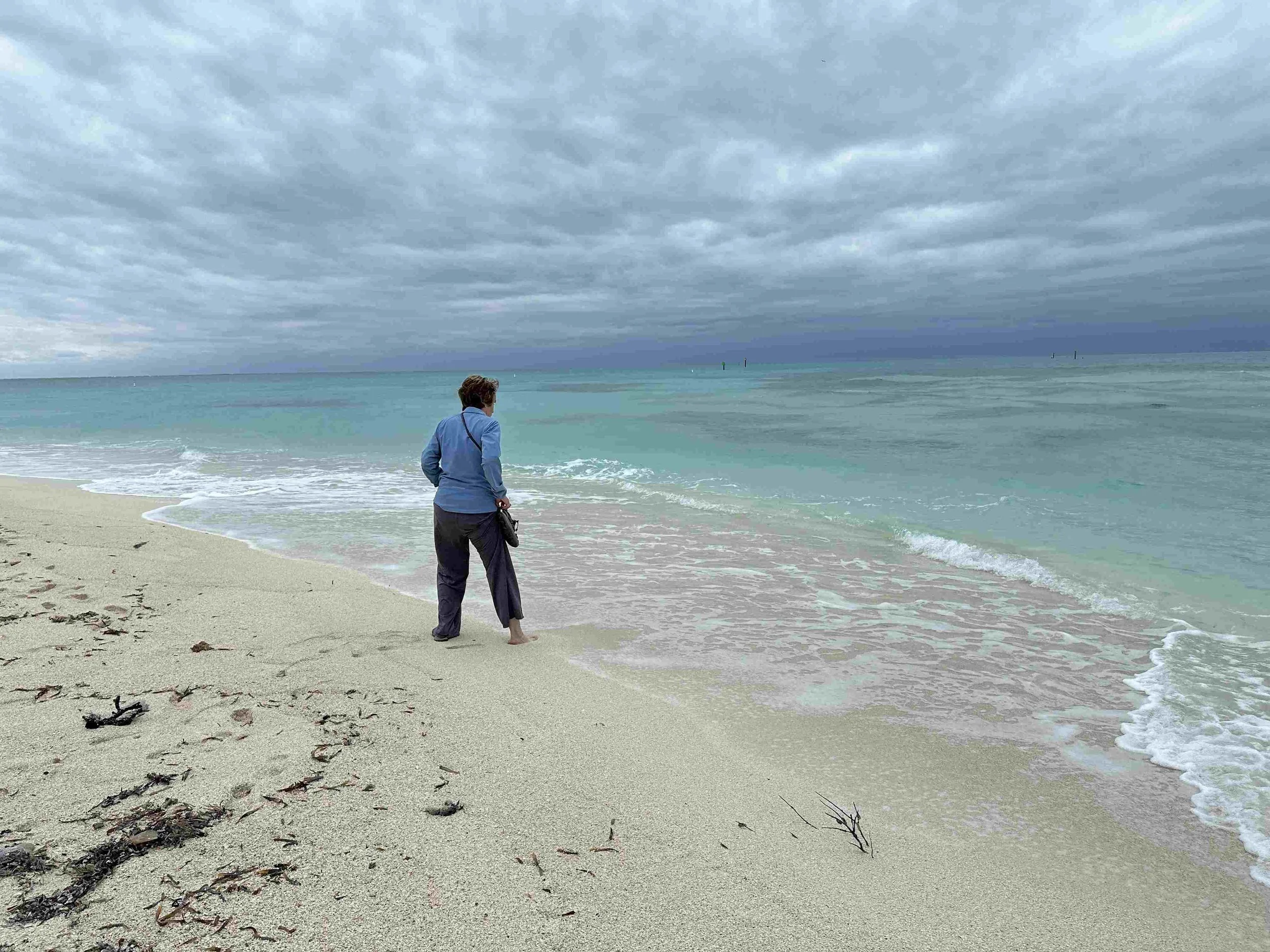
35 - Julie tests the water and proclaims it's just too darn cold for snorkeling. Disappointing, since Dry Tortugas is a snorkeler’s wonderland and home to some of the most vibrant coral reefs in the United States. Oh well...
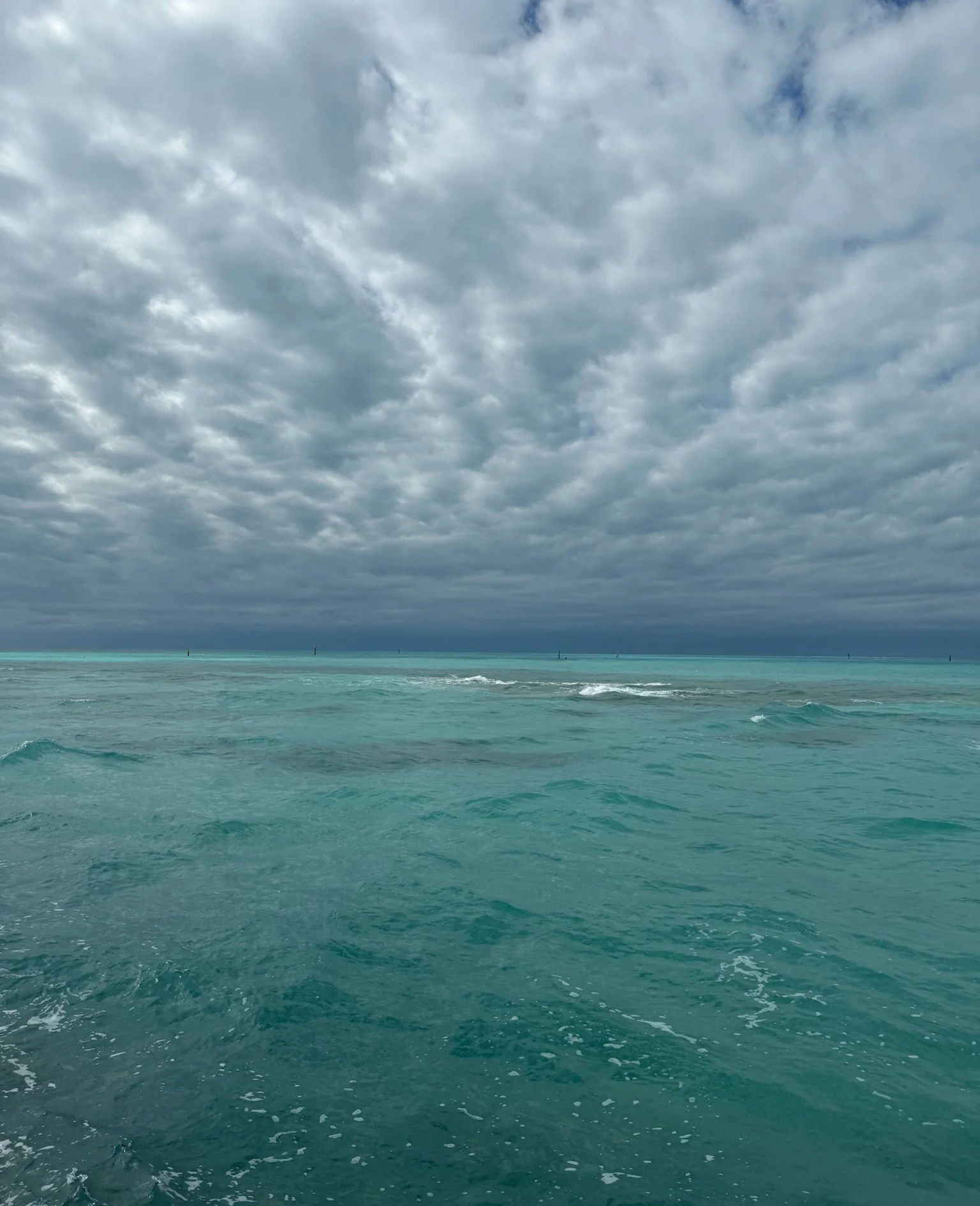
36 - Unfortunately, 98% of the Park is underwater, but we still had fun exploring the parts above water!
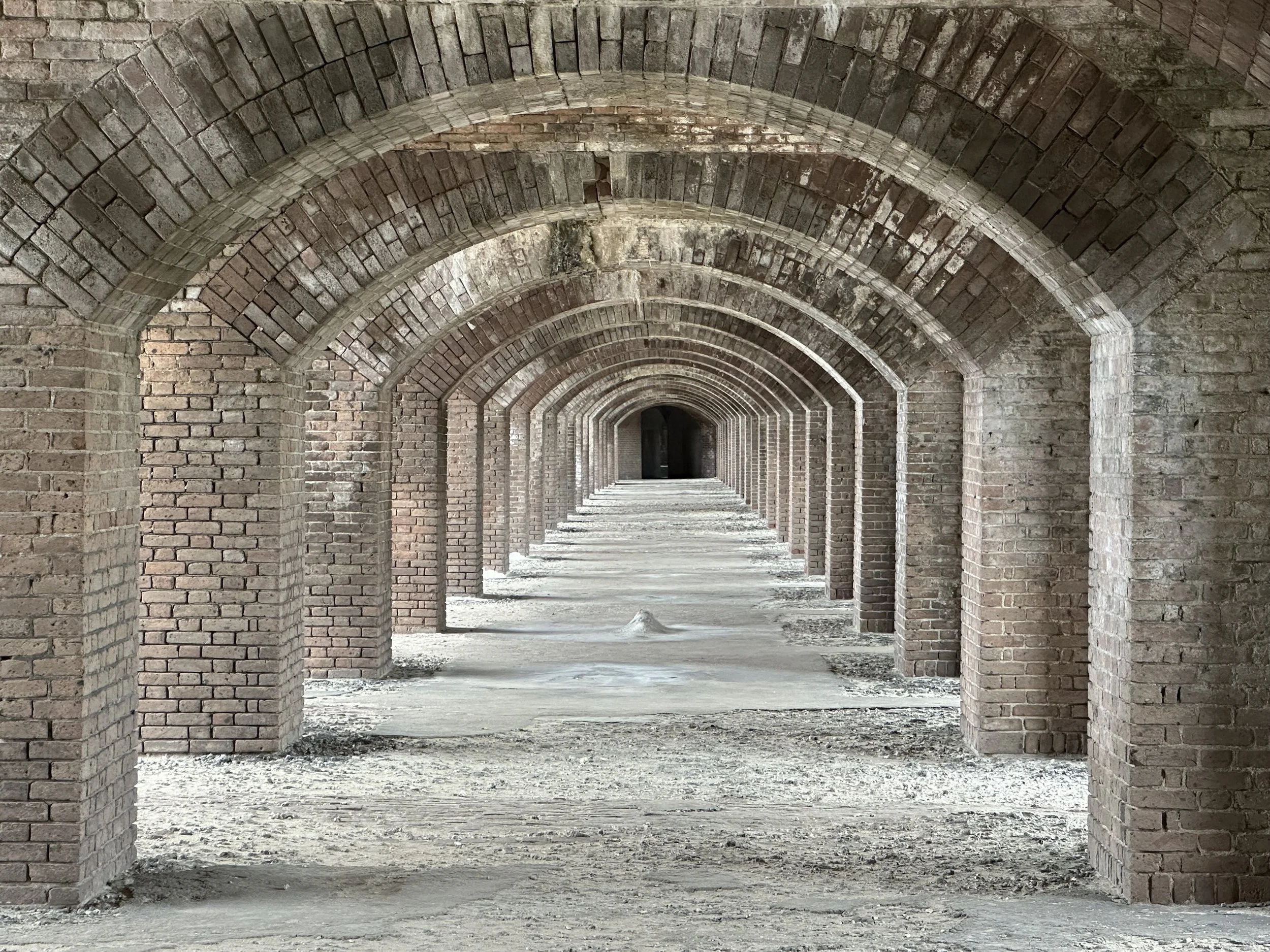
37 - This honeycomb of masonry arches serves as the backbone of the fort and allowed it to be constructed with 45-foot-tall walls. Most of the Fort consists of gunrooms known as casemates, but they never received the armament they were designed for. Instead, many casemates became homes to soldiers and prisoners.
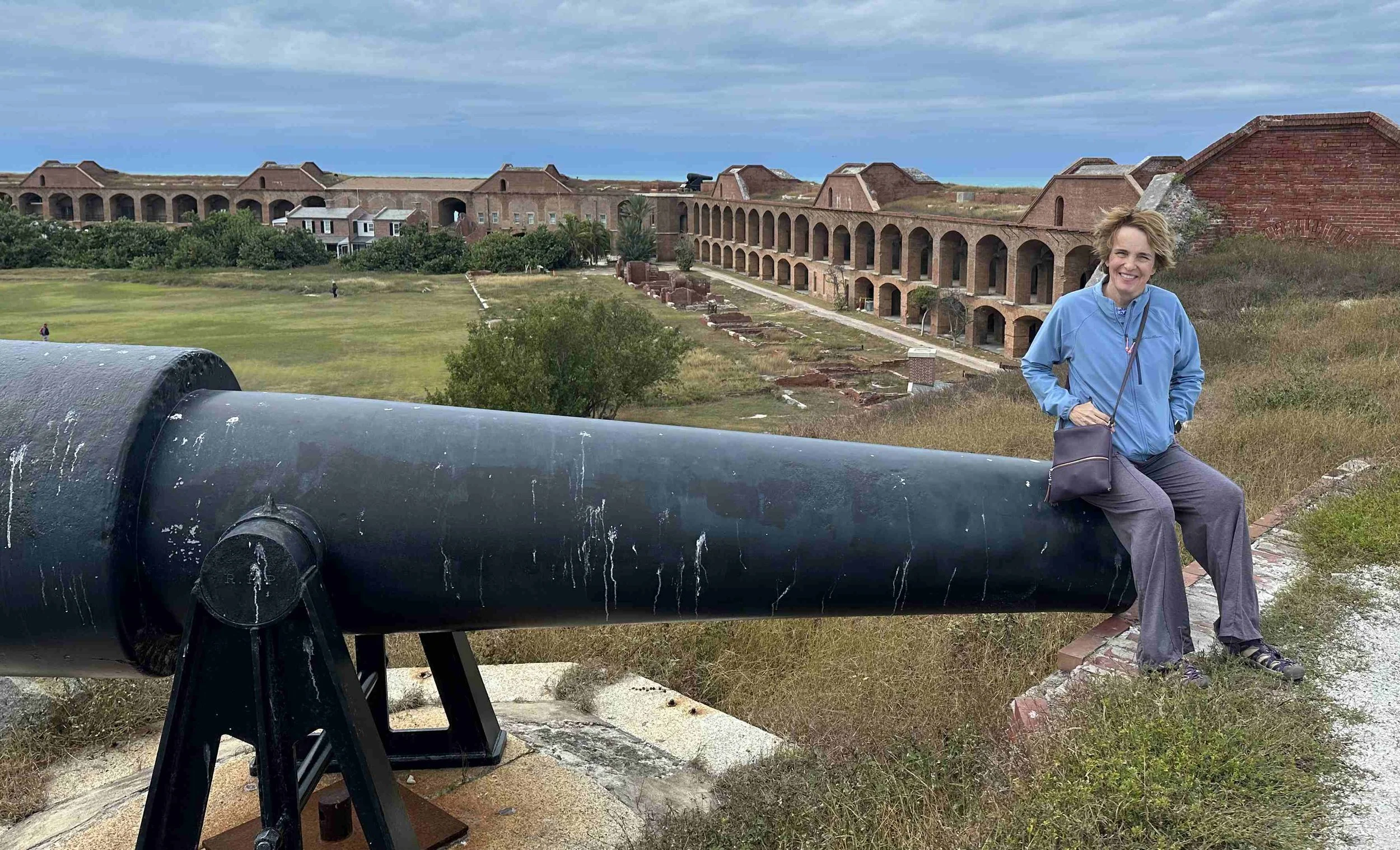
38 - Fort Jefferson was intended to hold 450 cannons to protect the US from an attack via the Gulf of Mexico. But the cannons were never fired. The only episode resembling combat came very early during the Civil War, when a rebel ship came near the Fort, and then left without incident.
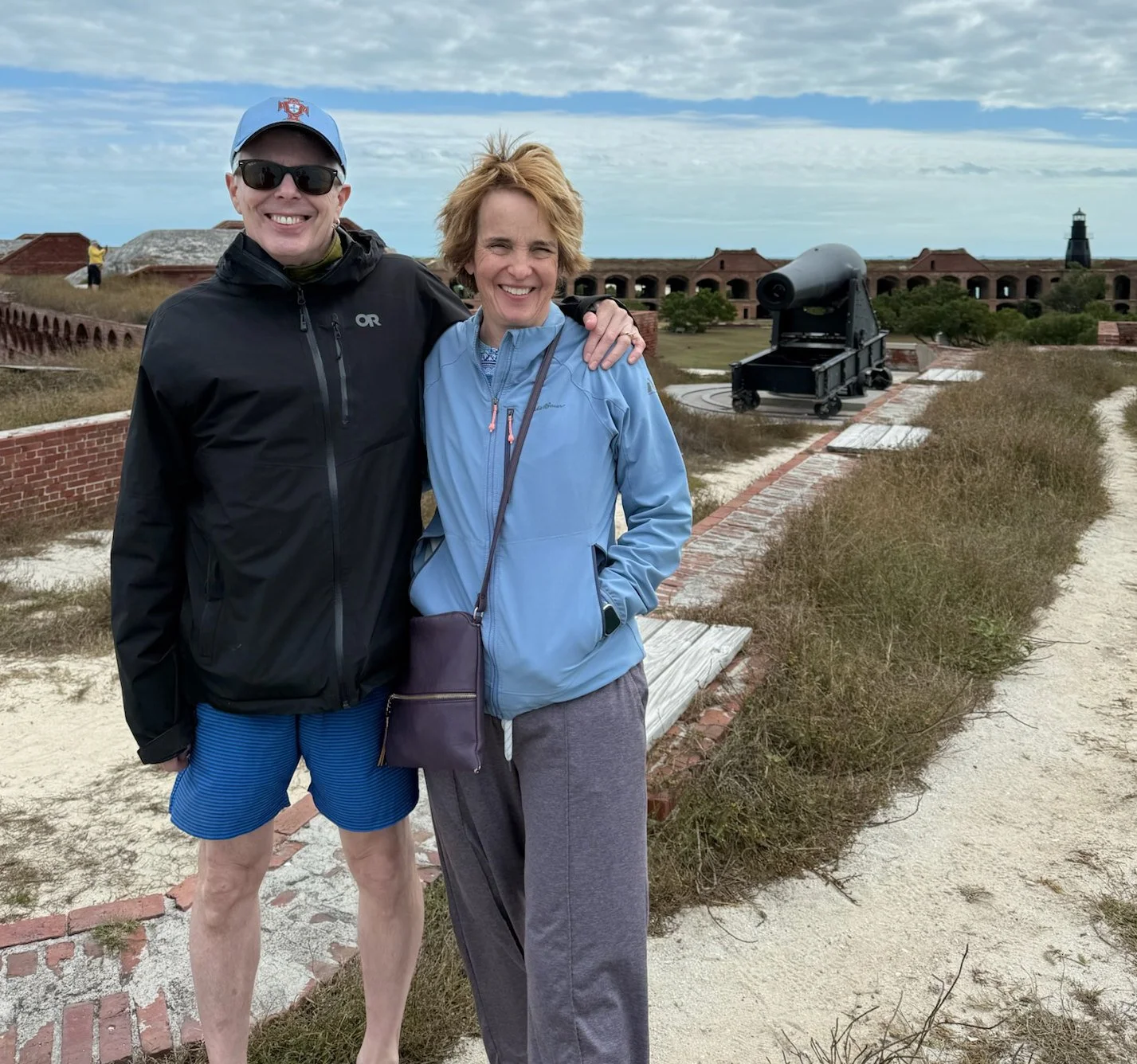
39 - Enjoying the view from the top of the Fort.
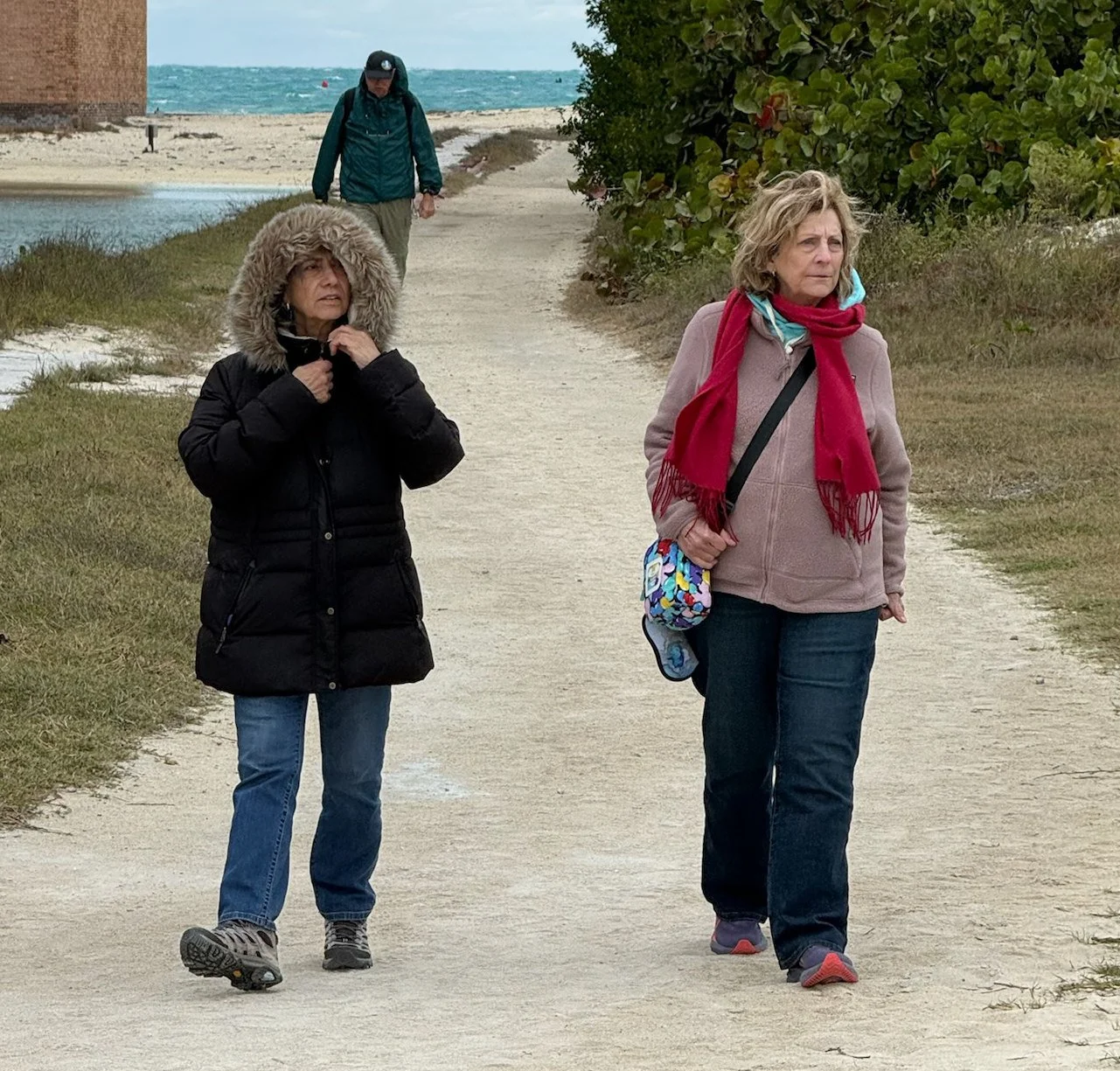
40 - In case you doubt our cold weather claims, we present Exhibit A, which Julie snapped just as we were boarding our plane to leave the Park.
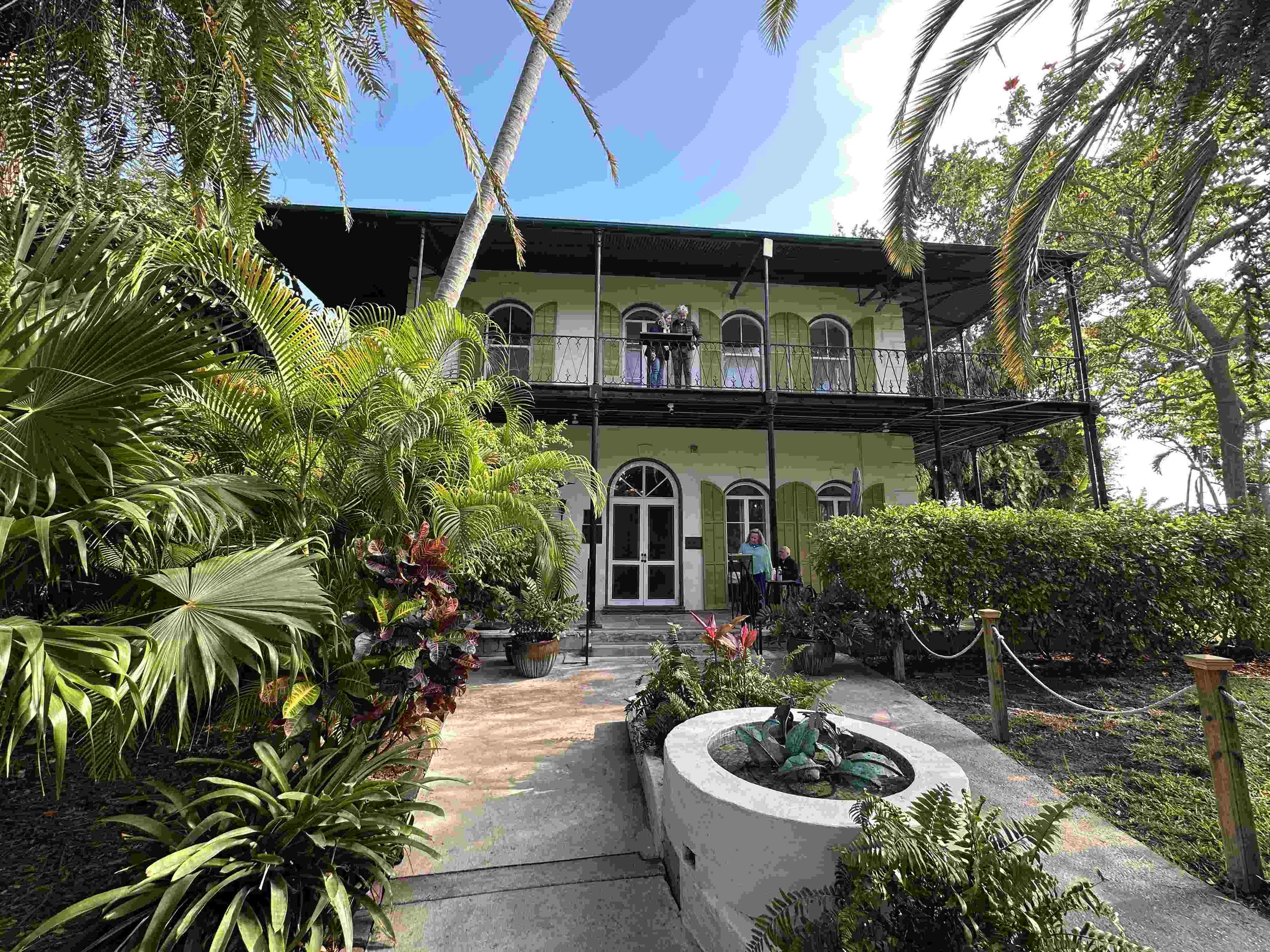
41 - We had sunny weather for our last day in Key West, which started with a visit to Ernest Hemingway's house. Hemingway. was an American novelist, short-story writer, and journalist, known for an economical, understated style. He has been romanticized for his adventurous lifestyle and outspoken, blunt public image
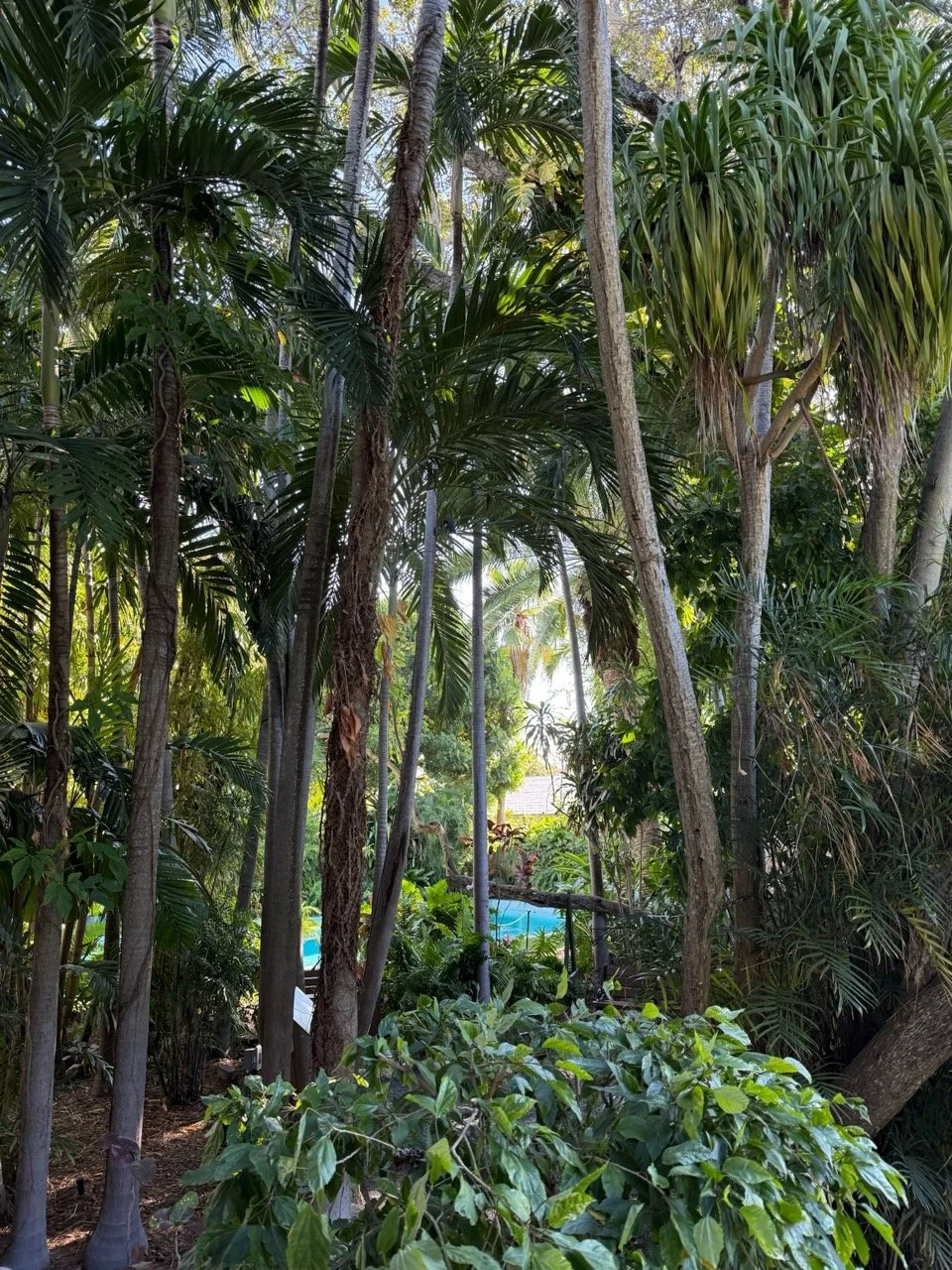
42 - The house was Hemingway's residence during the 1930's. While the house was nice, the gardens were spectacular.
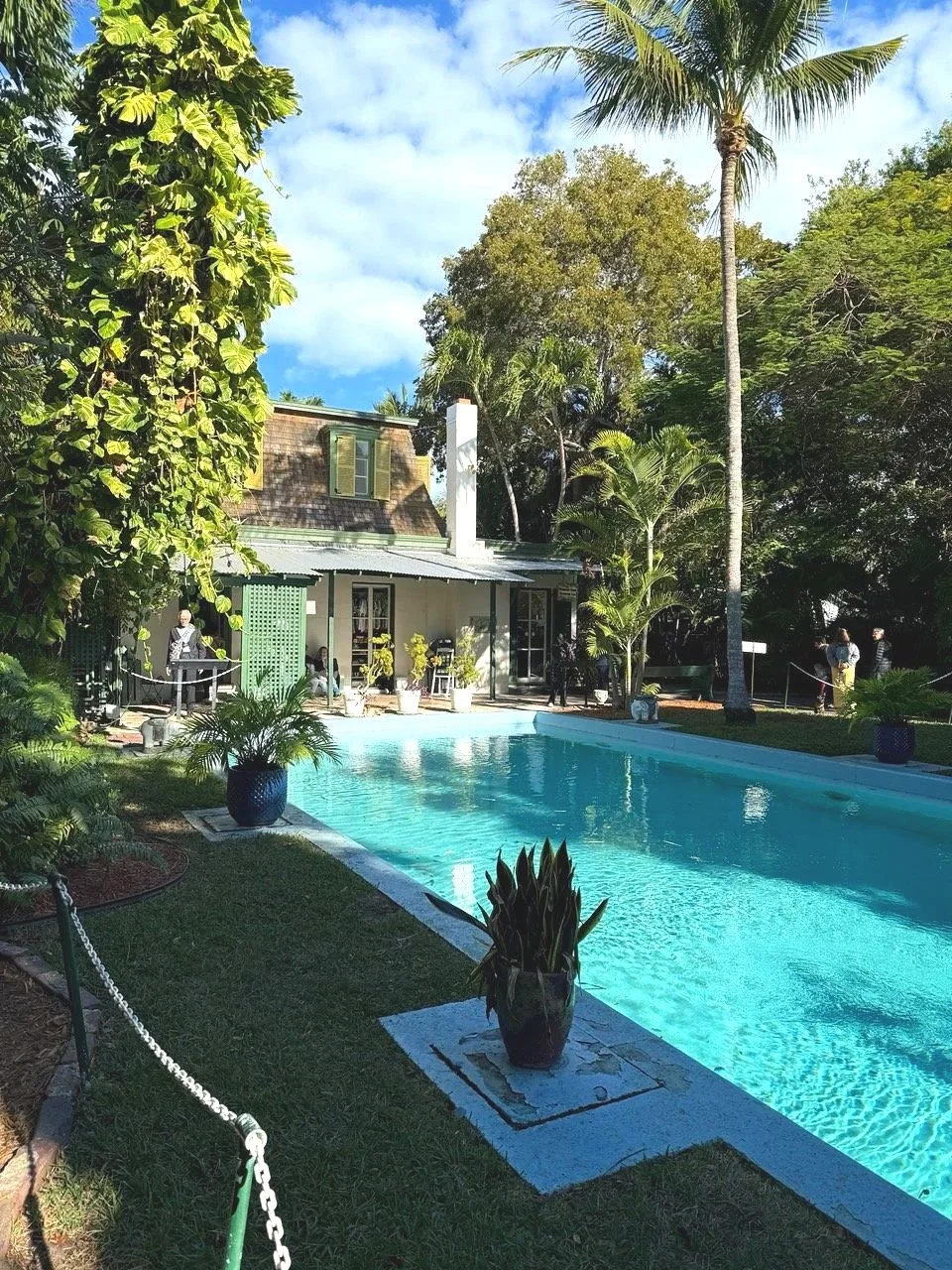
43 - While Hemingway was reporting in Spain in 1937, his wife Pauline installed a large pool on the grounds. The first swimming pool in the Florida Keys, the pool was immensely expensive. At $20,000, it was two and a half times the purchase price of the entire property.
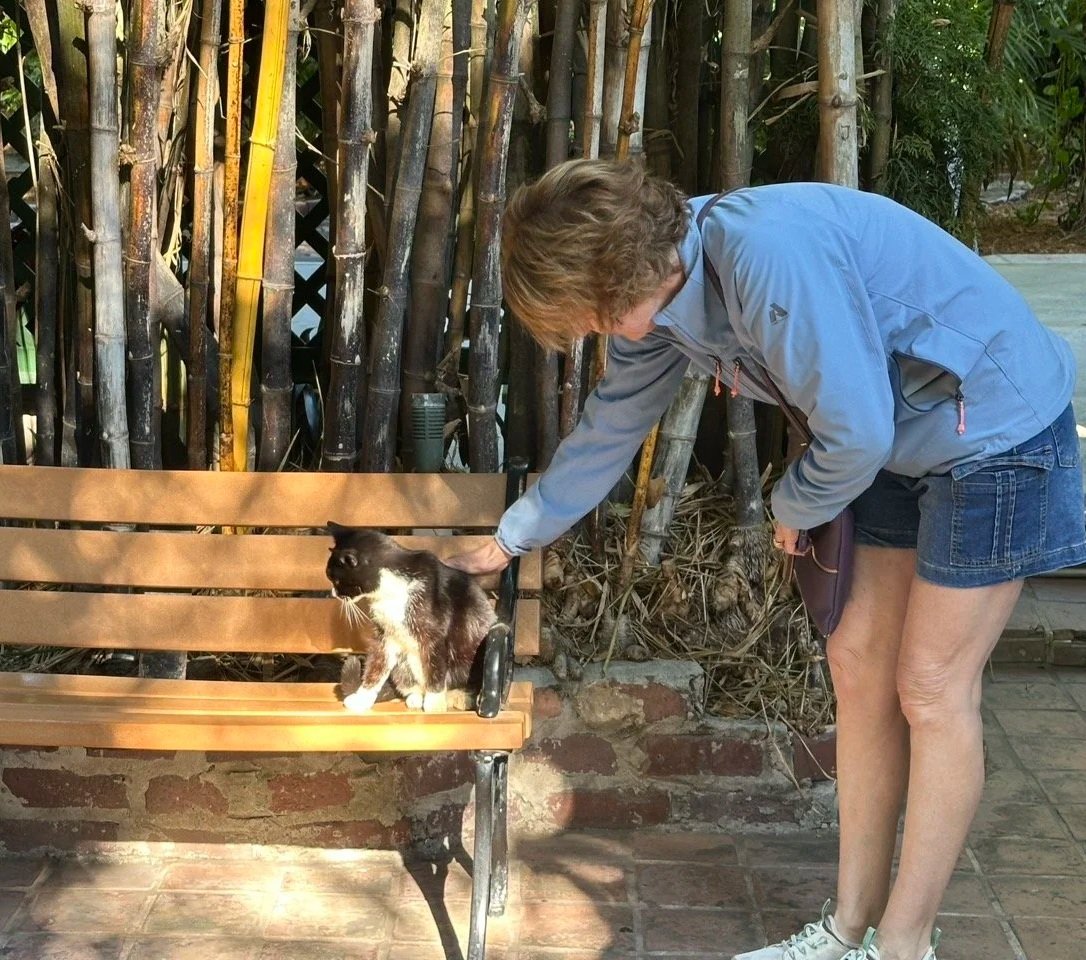
44 - The house and gardens are inhabited by about 60 cats, commonly called "Hemingway Cats." Legend has it that all cats on the property are descended from Snow White, a white six-toed cat given as a gift to the Hemingways by a sea captain.
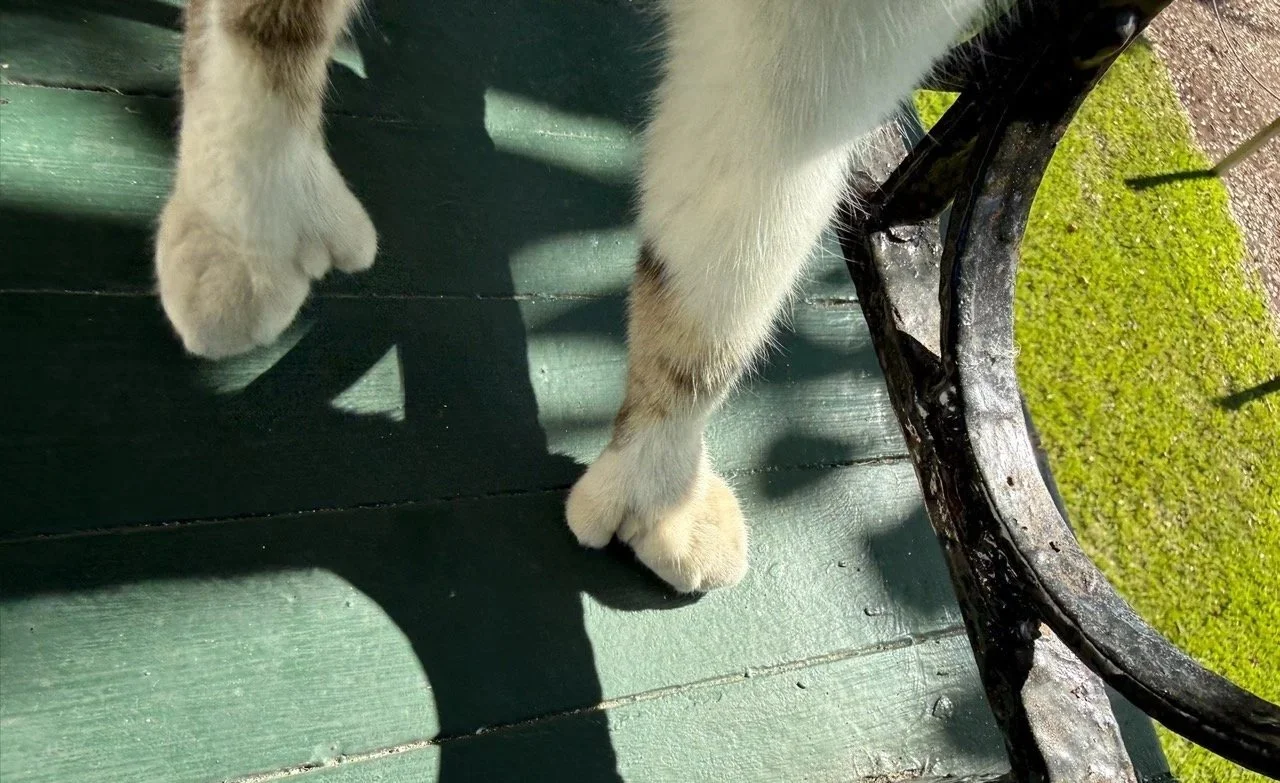
45 - About half the cats are "polydactyl," sporting six toes on each paw. Julie somehow managed to get one of those cats to model its rather odd-looking front paws!
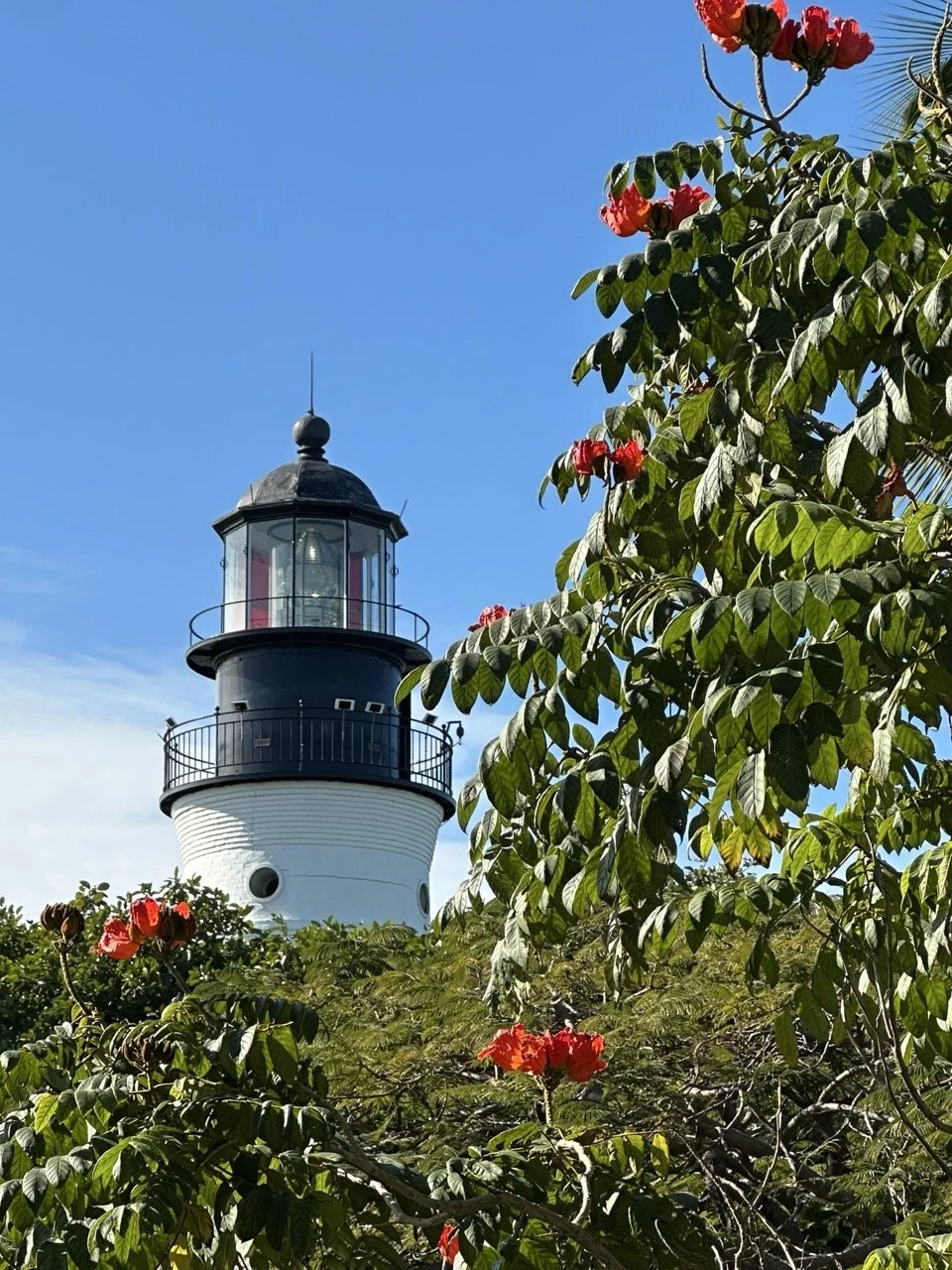
46 - The Key West lighthouse is right across the street from Hemingway's six-toed-cat house.
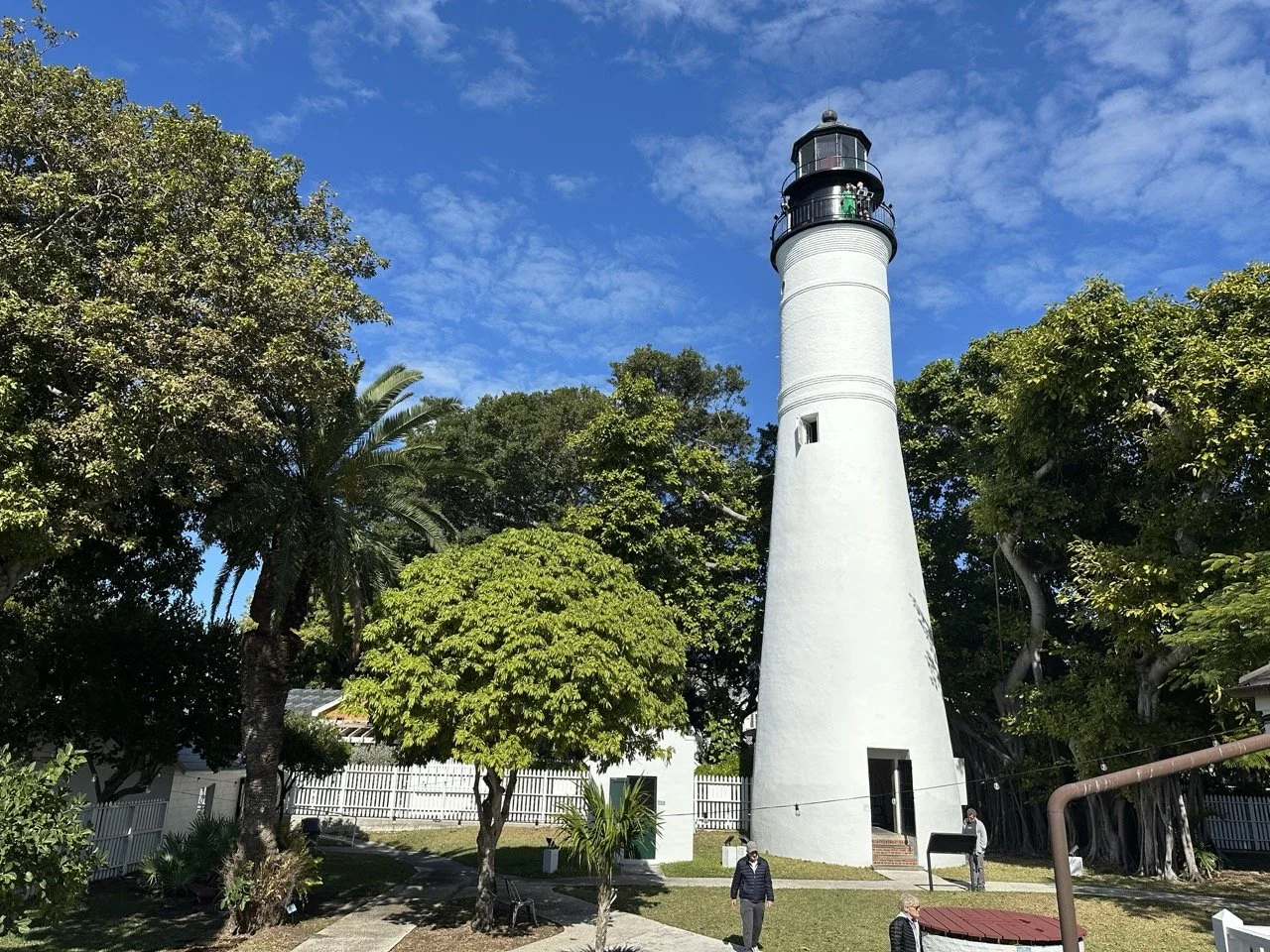
47 - In 1923, the US Navy erected a lighthouse on the beach to reduce shipwrecks on the treacherous shoals surrounding the island. That lighthouse was washed out to sea in a 1946 hurricane, so they built the current structure a mile inland.
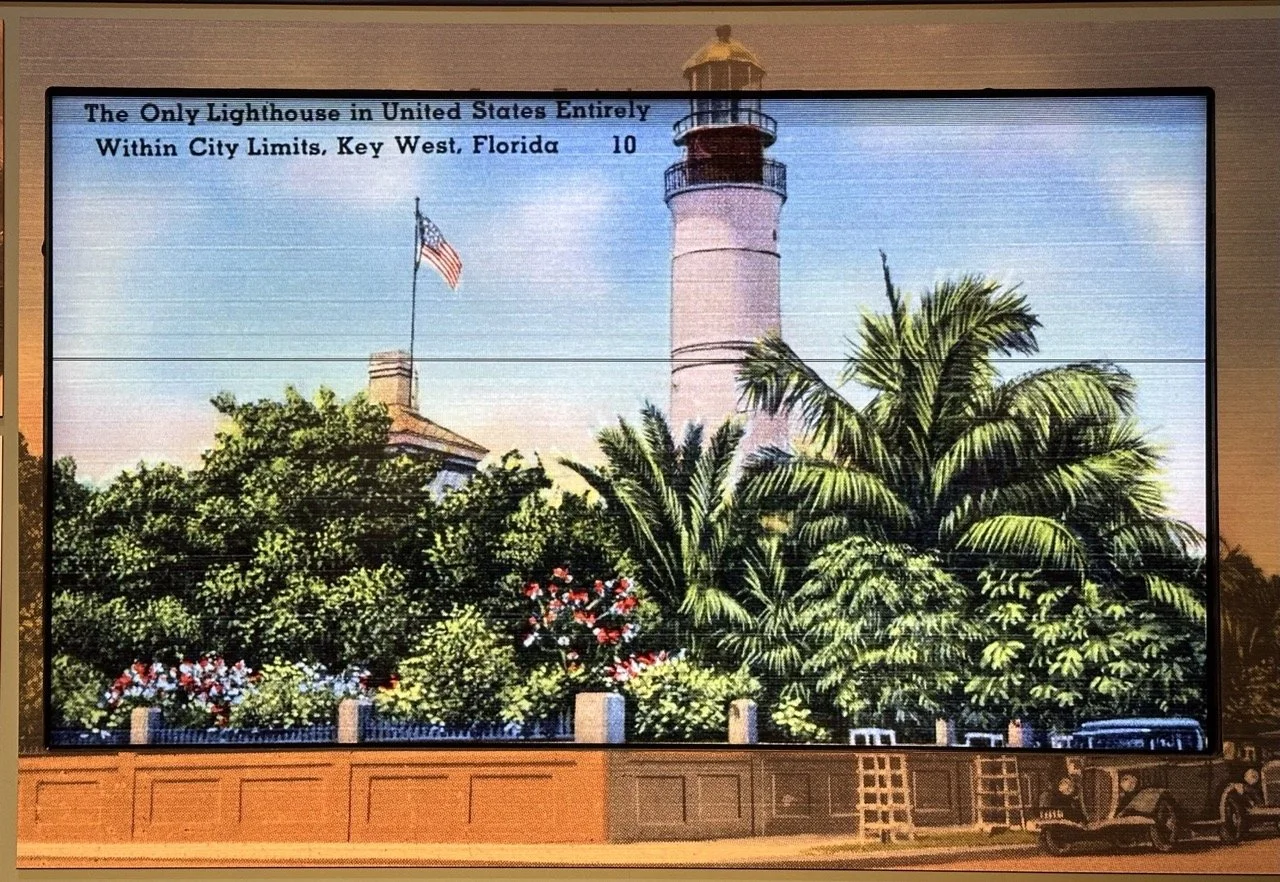
48 - A postcard proclaiming the lighthouse's rather odd claim to fame.
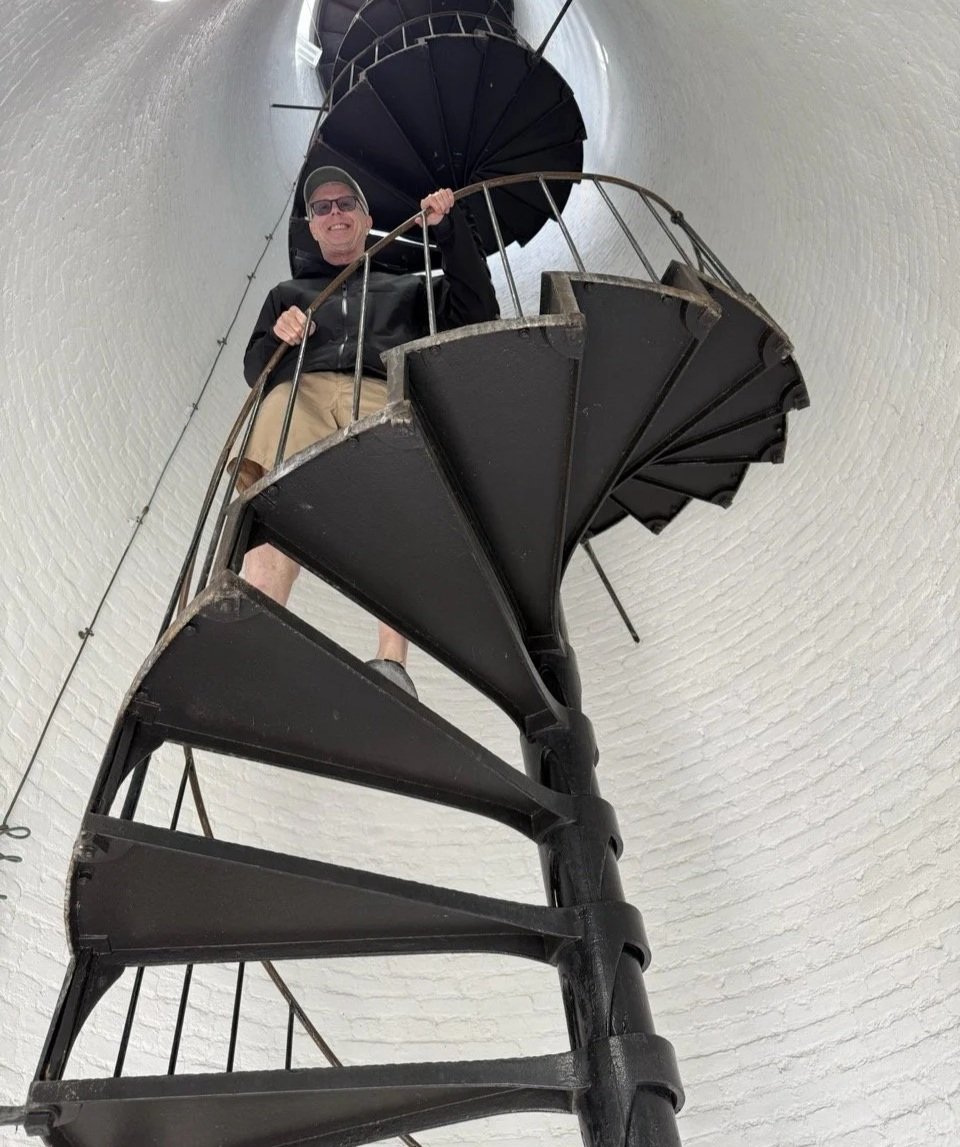
49 - Rick, going up.
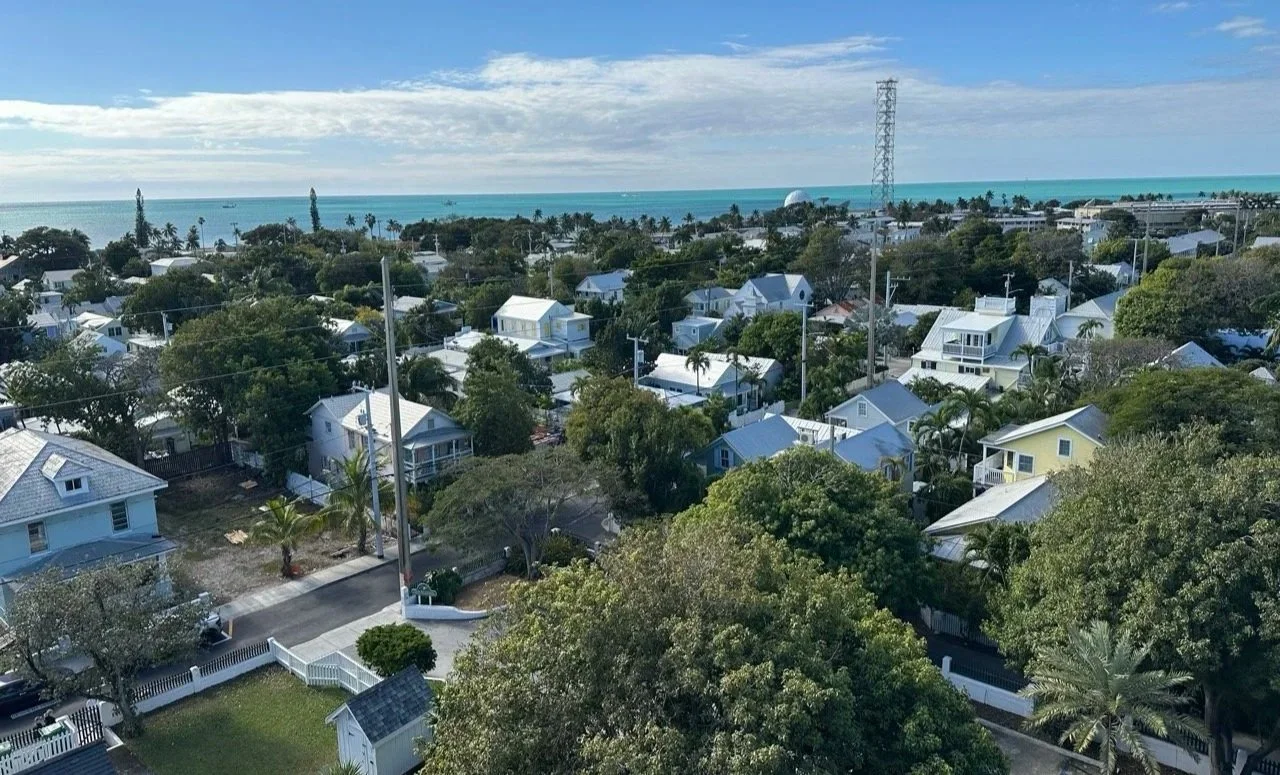
50 - The view of the west end of the island.
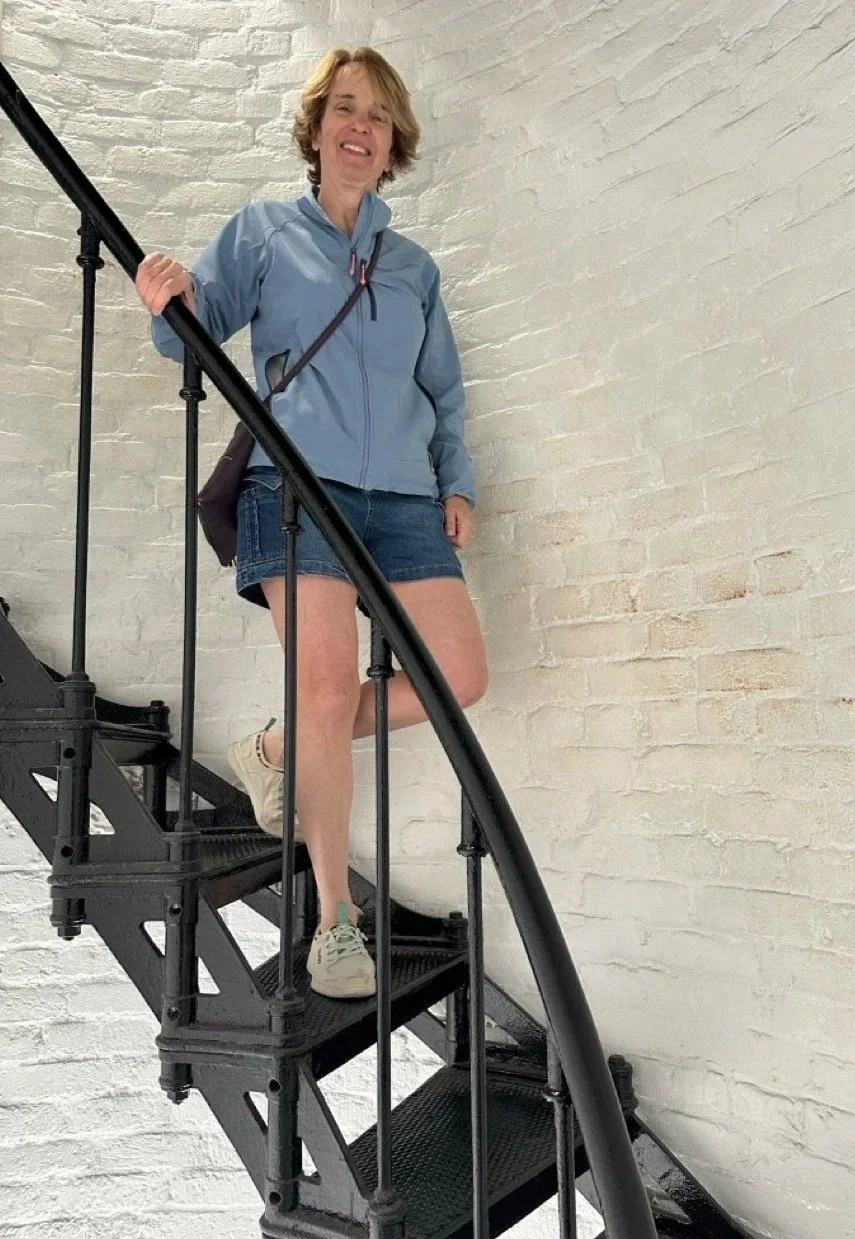
51 - Julie coming down.
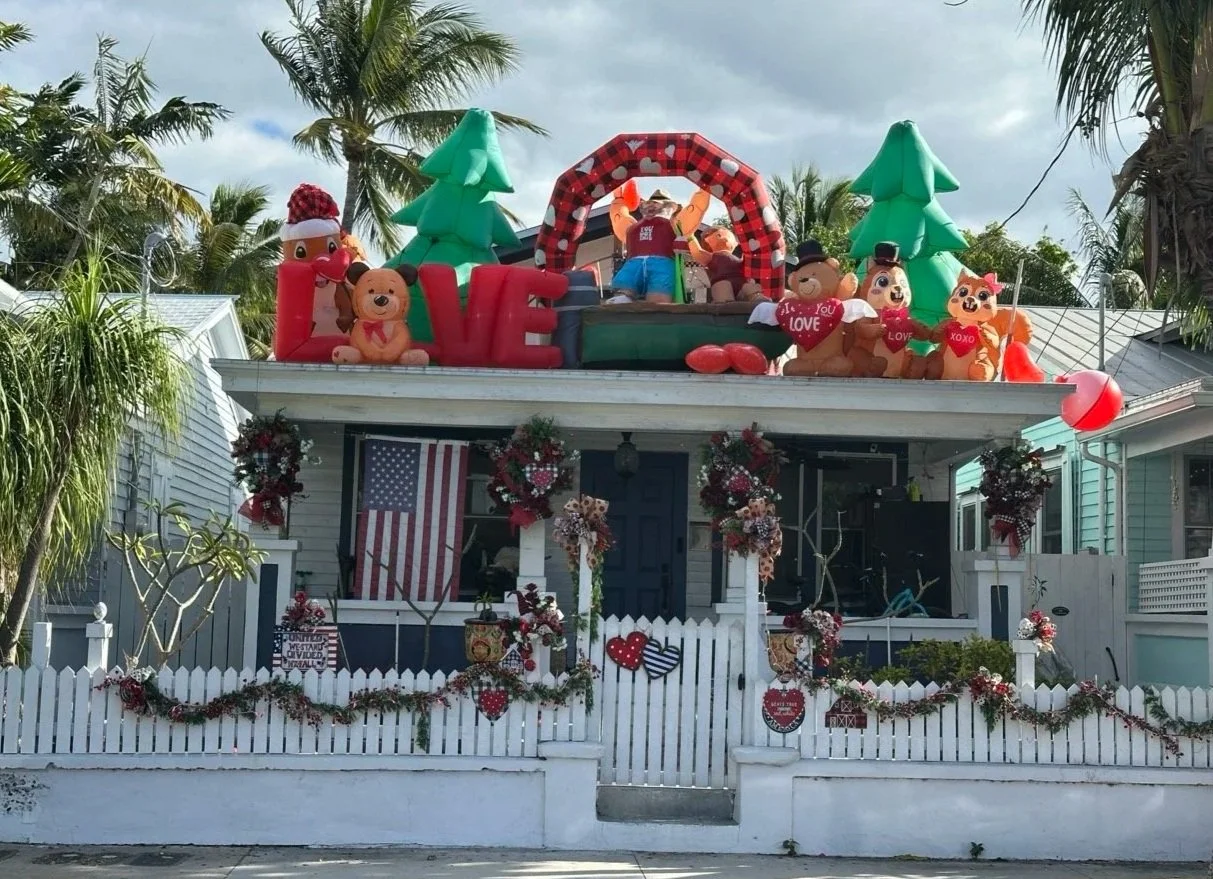
52 - We saw this house while roaming around Old Town -- sure beats spewing hate and mistrust.
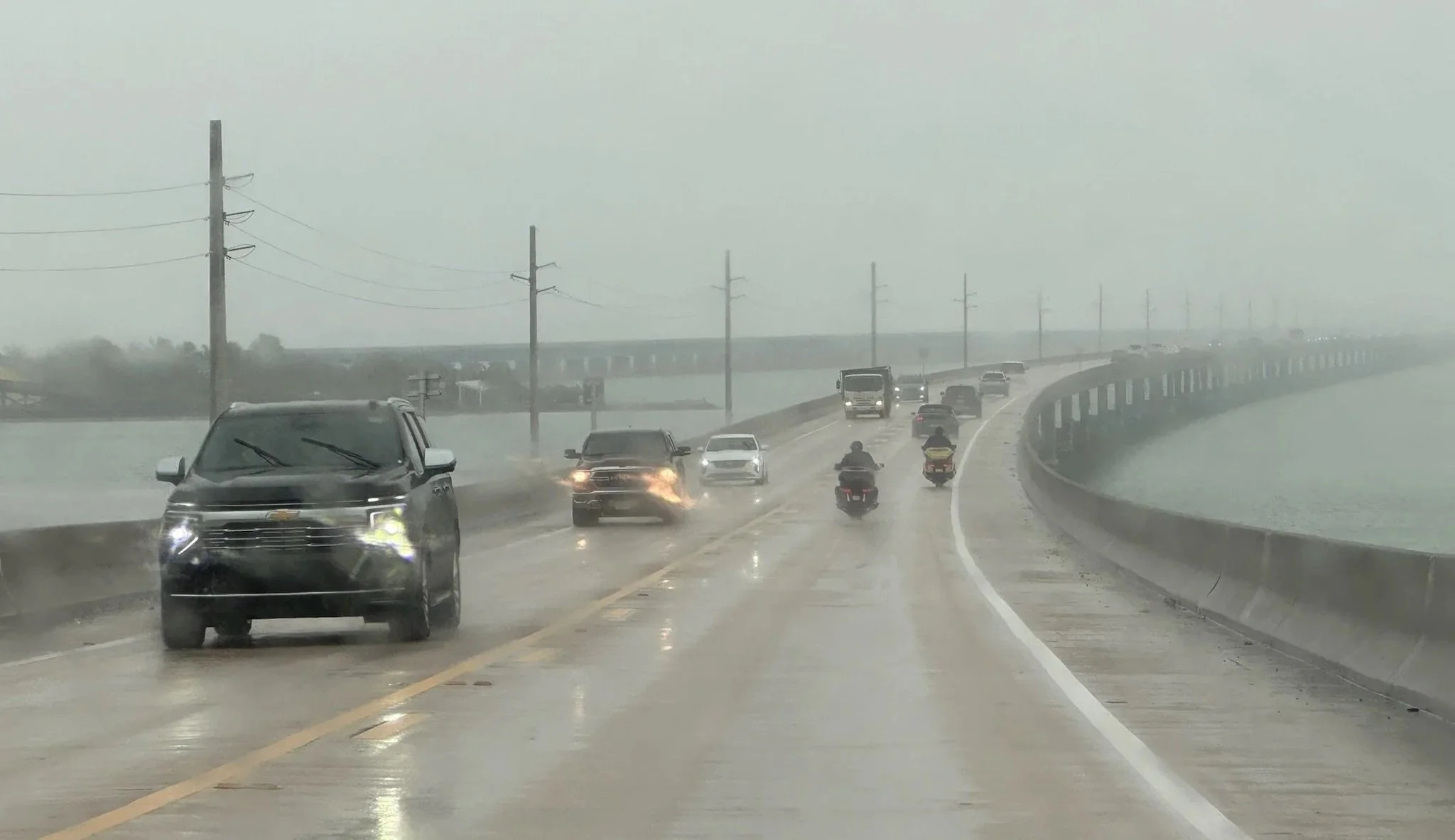
53 - The next day, we headed north to the Everglades. It was rainy, but we were in the car, so not a big deal.
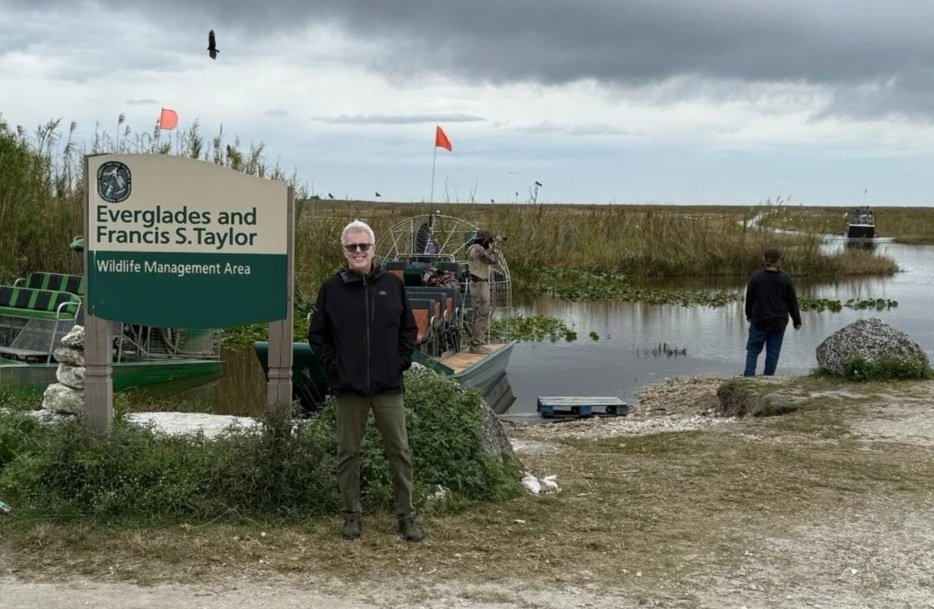
54 - Rick is rarin' to go on an Everglades airboat tour.
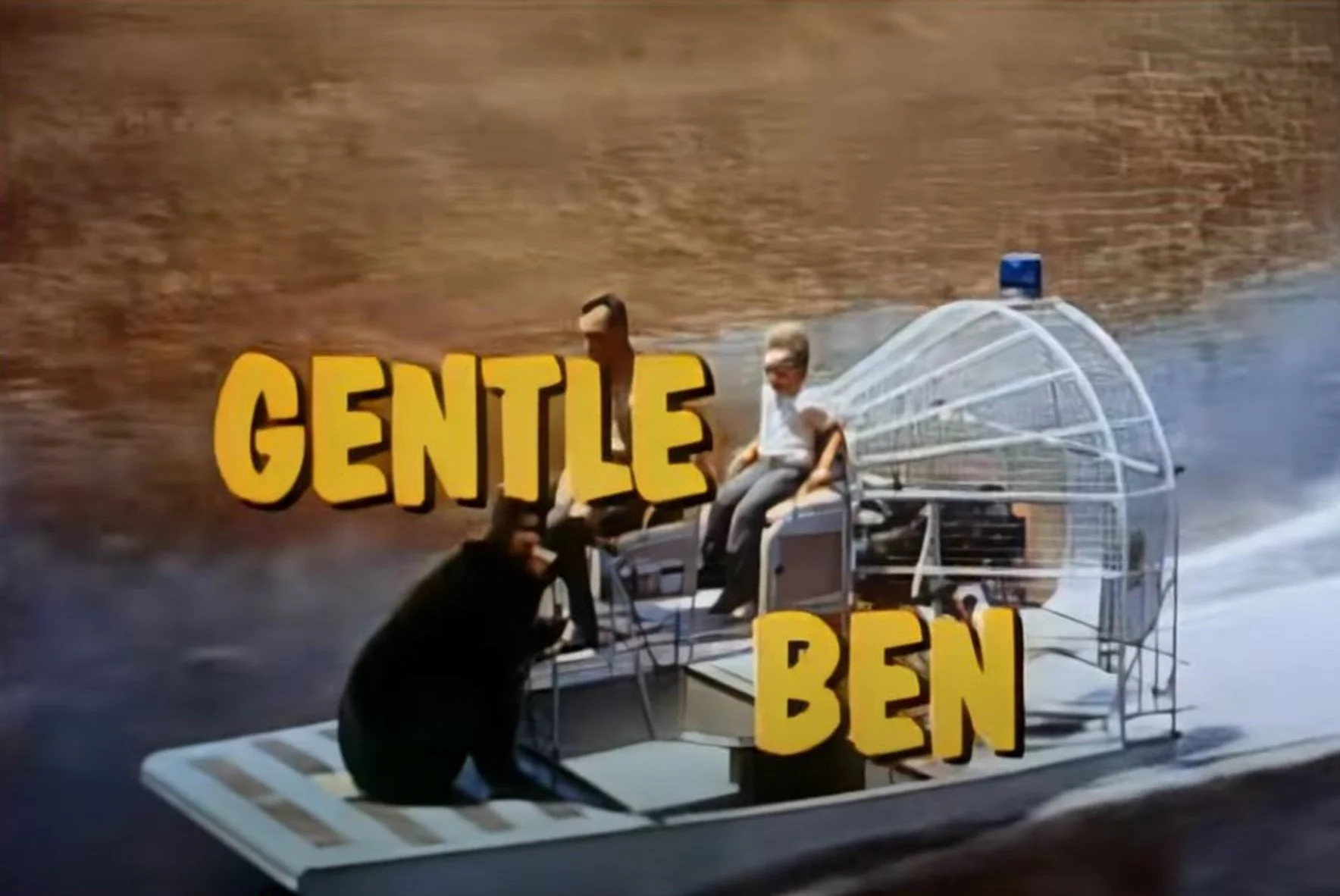
55 - He had been wanting to ride an airboat ever since watching "Gentle Ben" on TV as a kid!
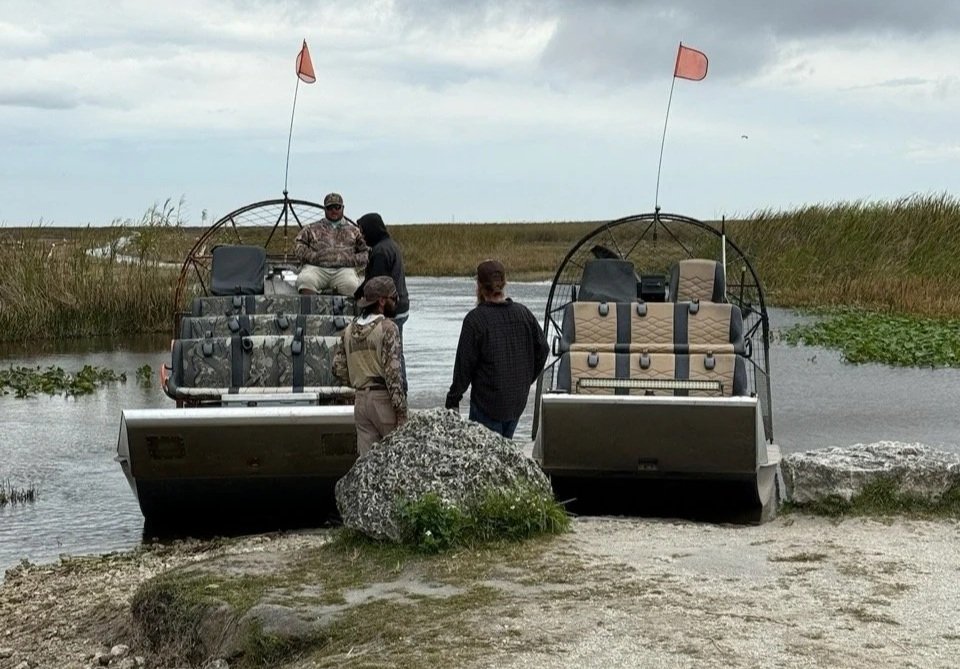
56 - Our airboat and captain, a friendly good ol' boy from the deep south, are on the left. He was a good guide with interesting stories to share.
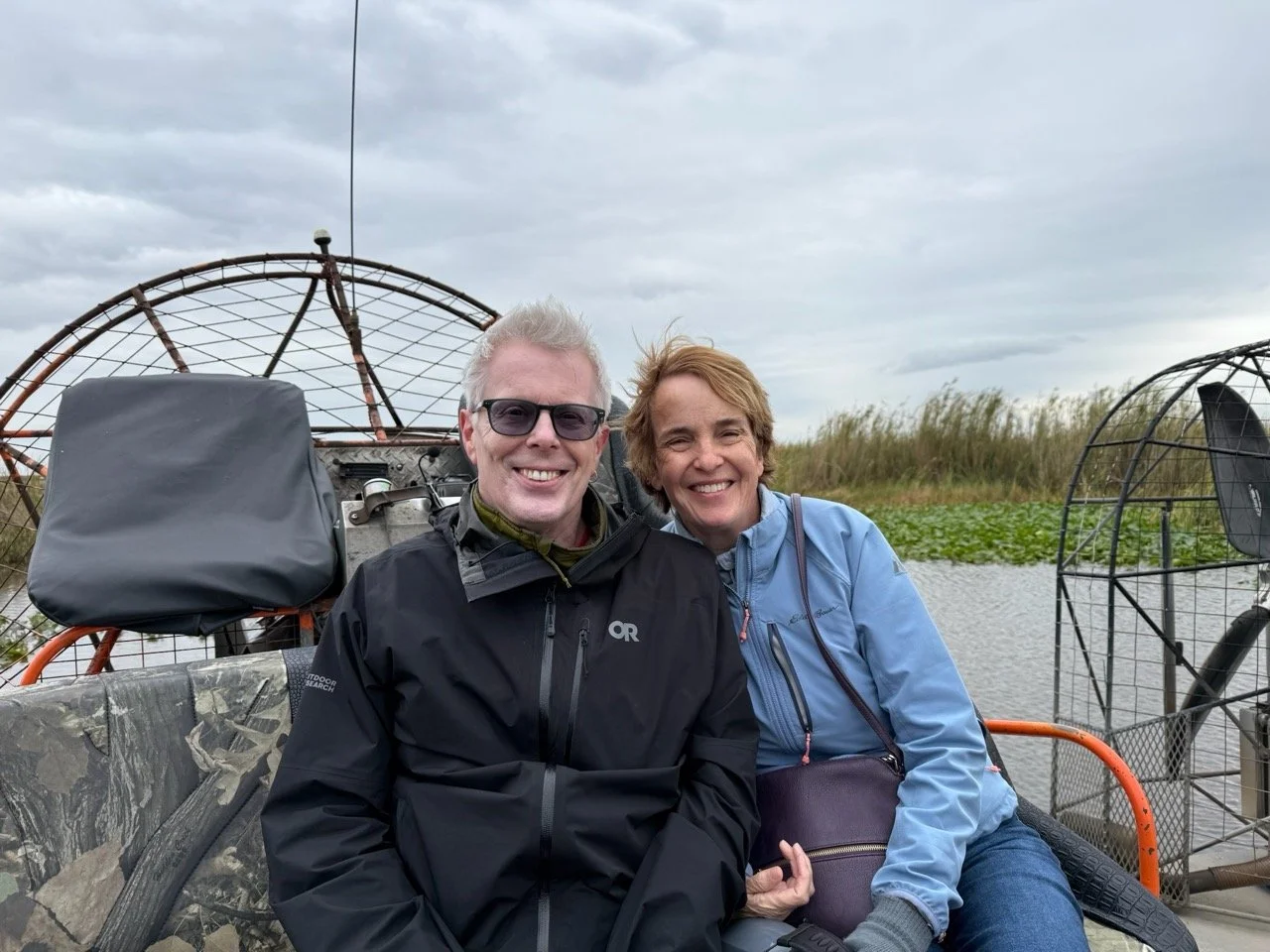
57 - Ready to go!
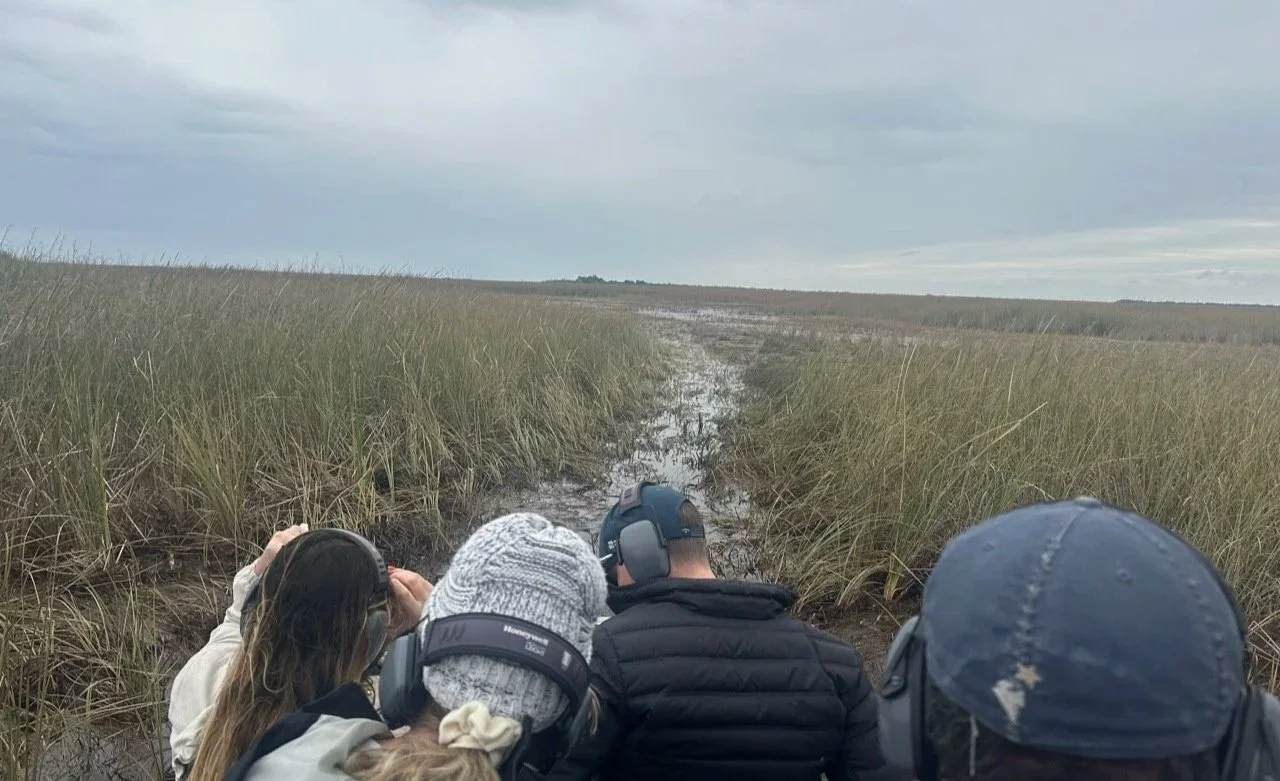
58 - And we're off! Notice that everyone is wearing hearing protection. Our airboat had a very noisy, fully exposed V8 engine on the back.
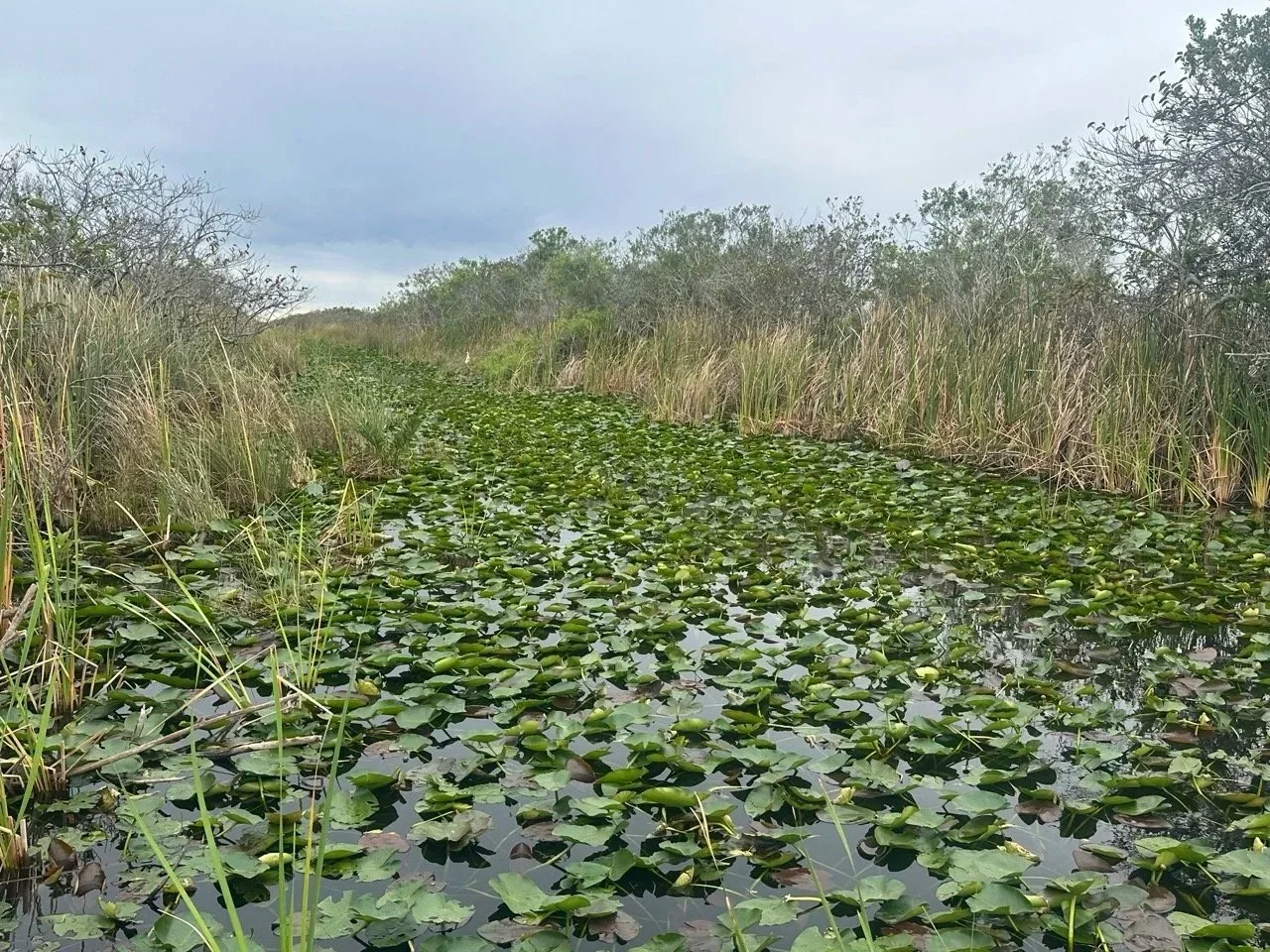
59 - Those airboats can go anywhere that has even just a shallow sheet of water. The southern part of the state is in a drought, and the water is about 2 feet lower than normal for this time of year.
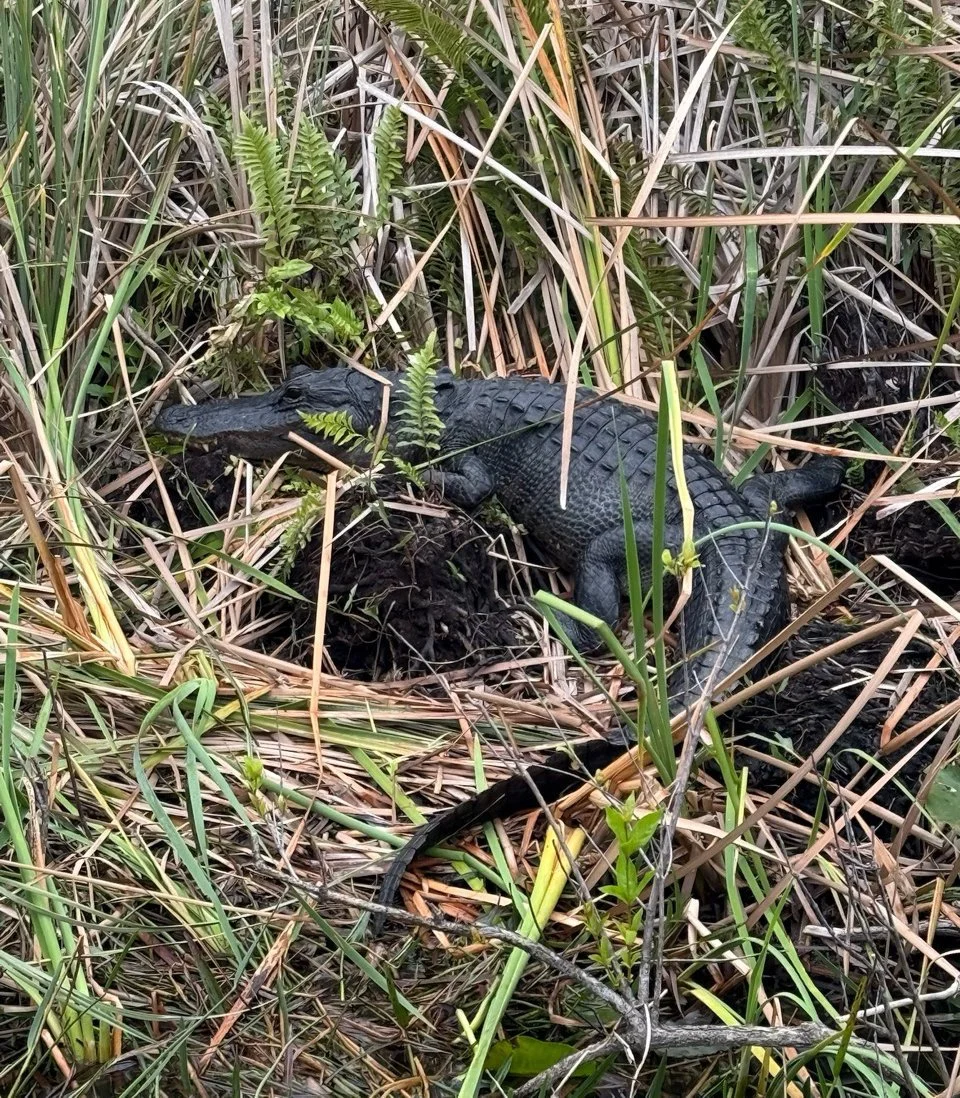
60 - We saw several gators, and they all looked like big, fake, rubber gators! Despite numerous requests, our guide would not let Julie touch one.
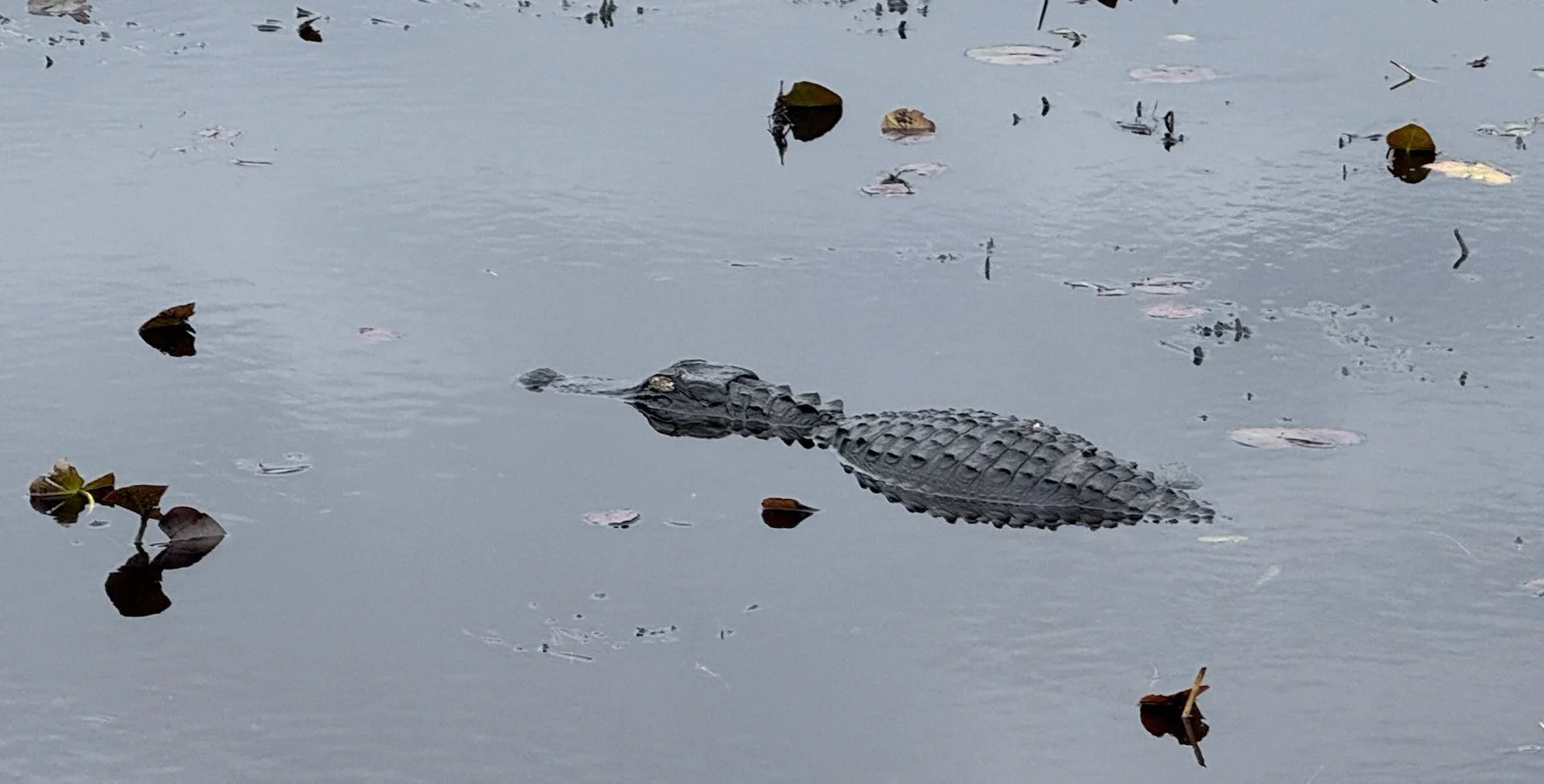
61 - Raise your hand if you want to see an eerily creepy-looking gator - yikes!!
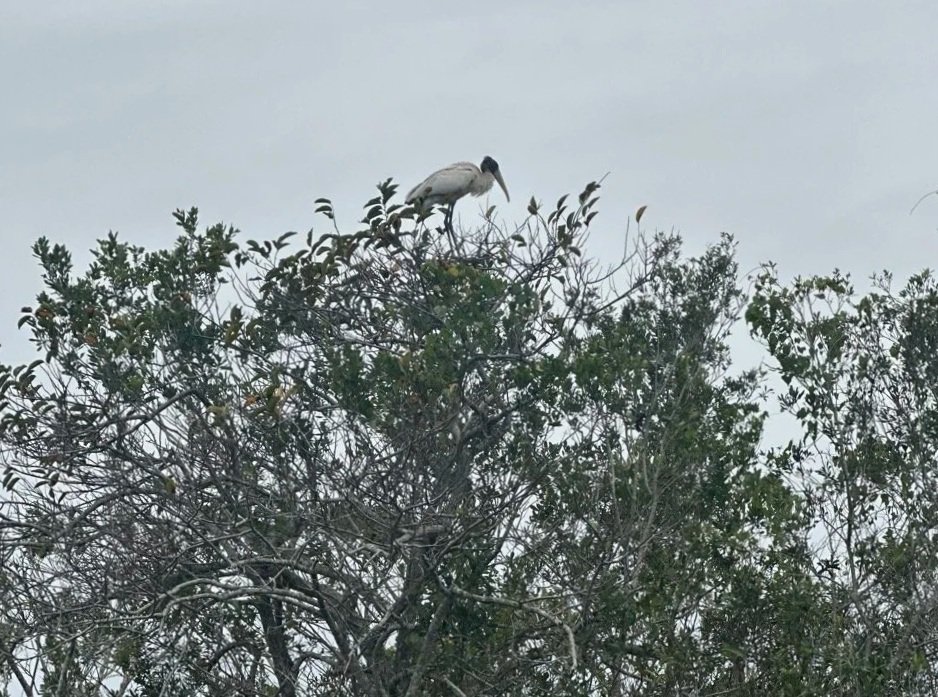
62 - We also saw some cool birds, like this stork. Unfortunately, with the cold, cloudy weather, the wildlife wasn't too active. But we still thoroughly enjoyed our airboat ride.
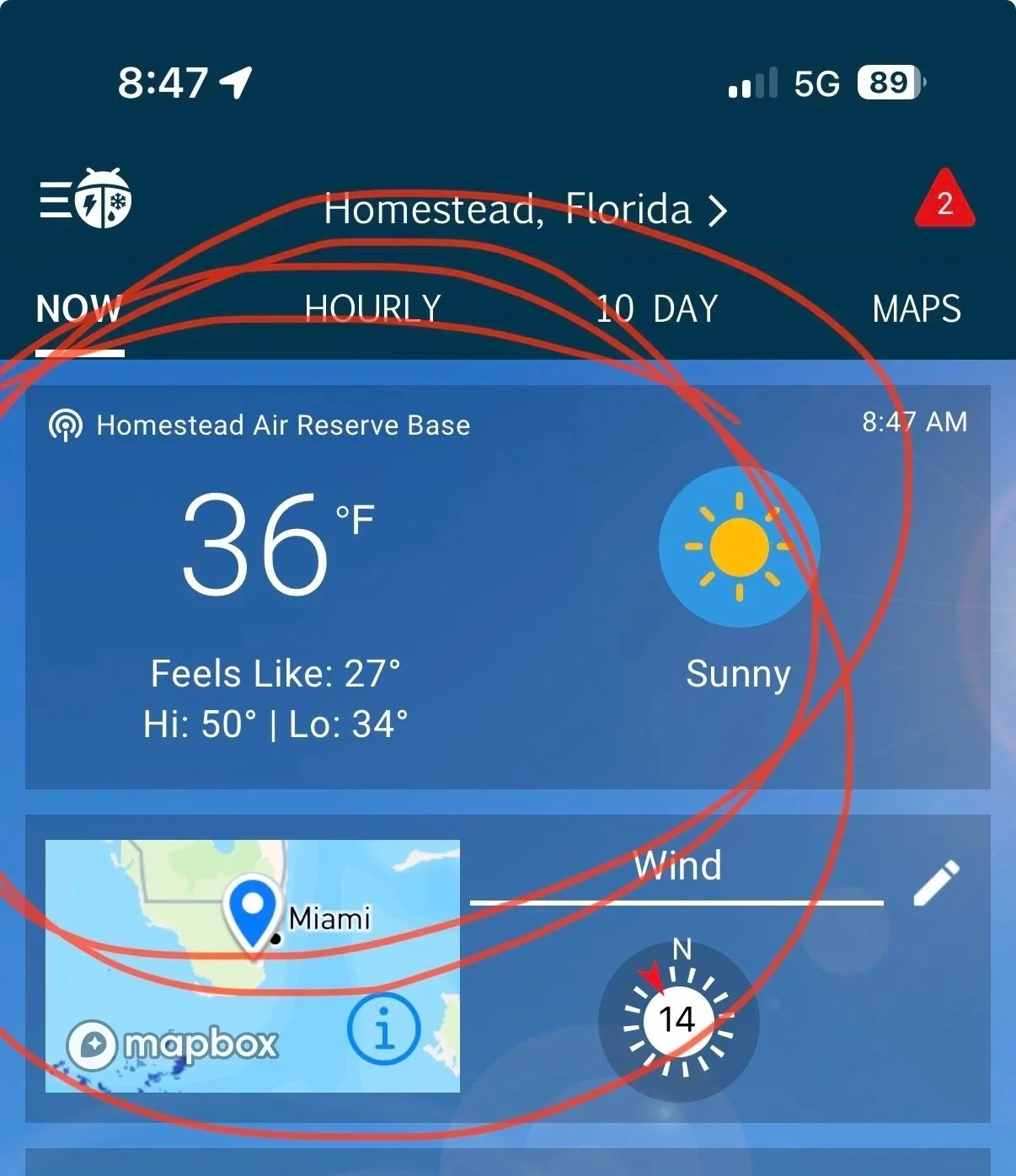
63 - The next day in the Everglades, and our last full day in Florida, was a chilly one -- but at least the sun was back out.
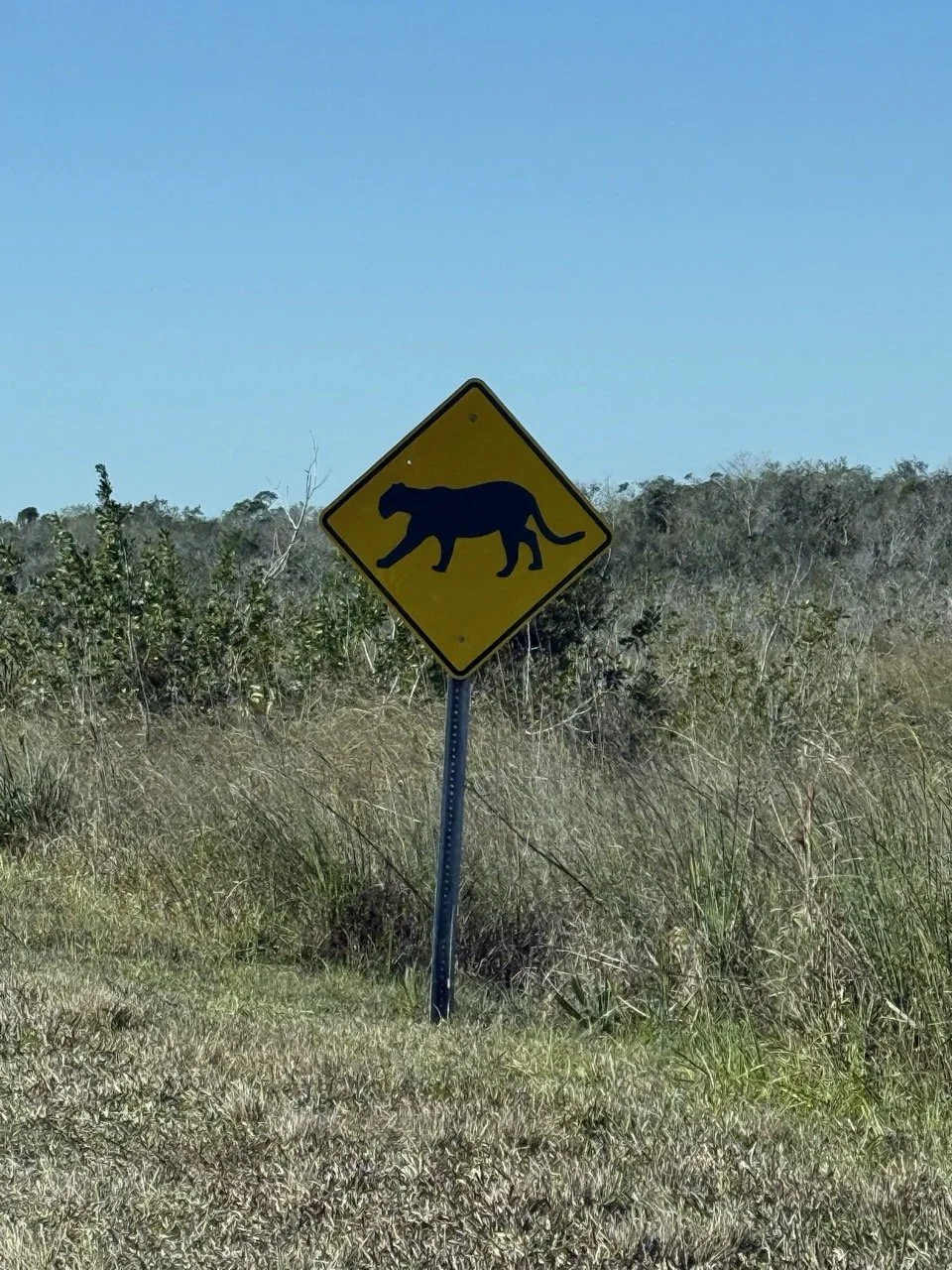
64 - When we entered the south part of the Everglades National Park, we saw a sign warning about panthers. Unfortunately, we didn't see any. They are an endangered species, and there are only about 200 in Florida.
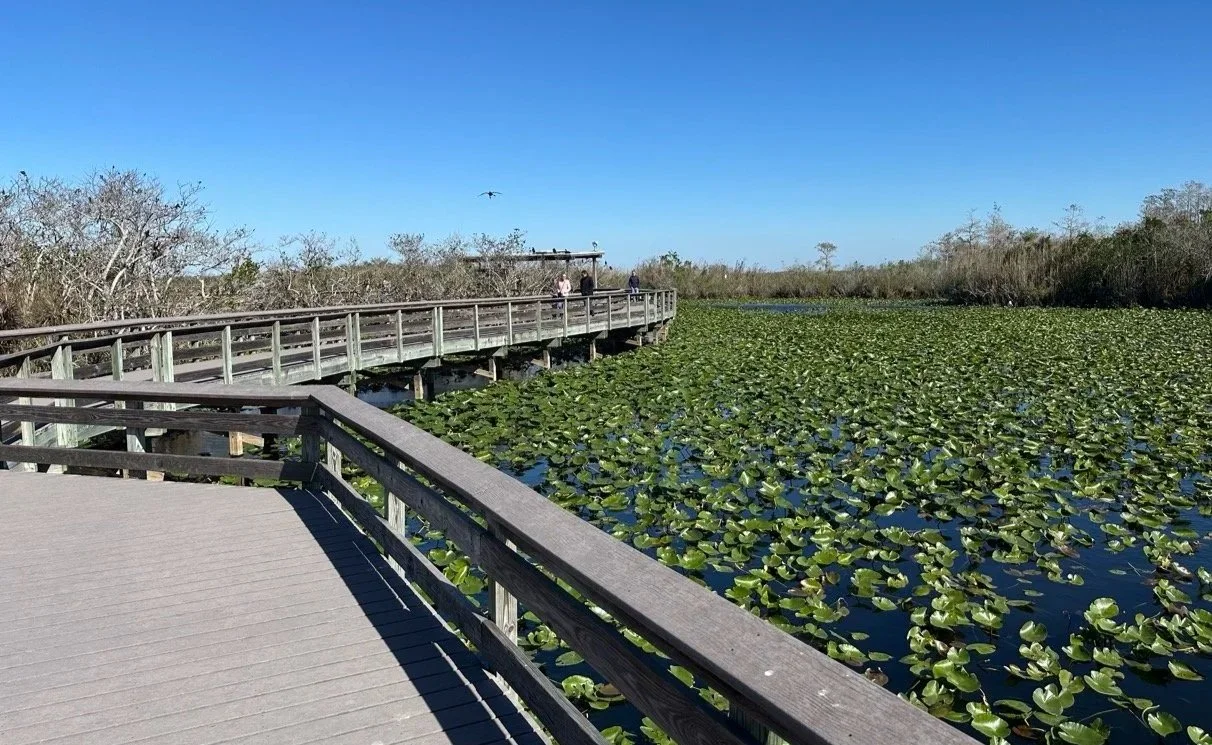
65 - First stop, hiking on the beautiful Anhinga Boardwalk Trail in the Pine Island area of the Park.
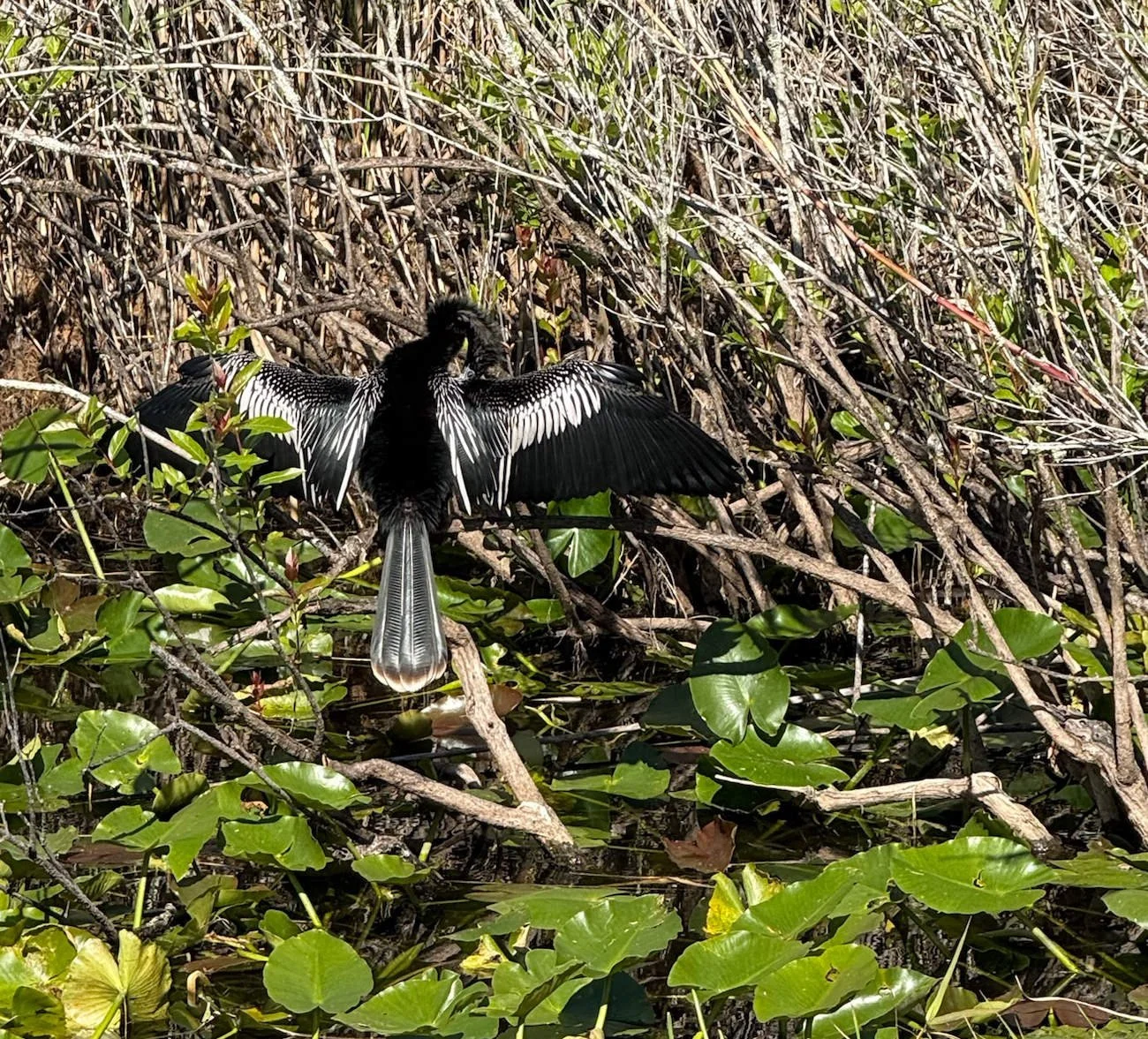
66 - We saw an Anhinga sunning itself. These diving birds are also called snakebirds or water turkeys, and are often confused for cormorants. Anhingas lack waterproof oil in their feathers, so they spend significant time perched with their wings spread to dry the feathers.
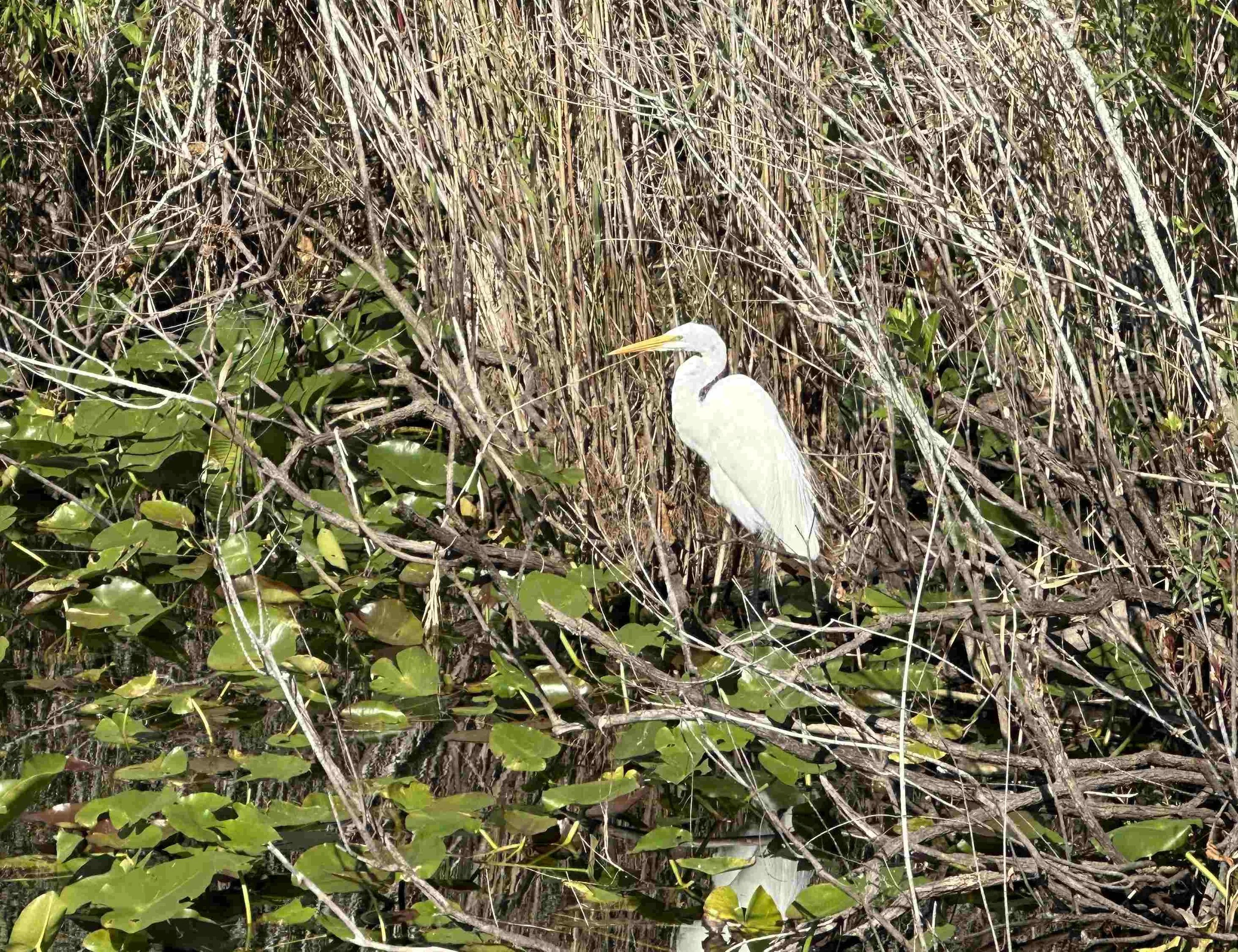
67 - We also saw a Great Egret sunning too. The Great Egret is a large wading bird, standing over 3 feet tall with a 5-foot wingspan. As the symbol of the National Audubon Society, it is a conservation success story, having recovered from near extinction in the late 1800's after being hunted for its plumes.
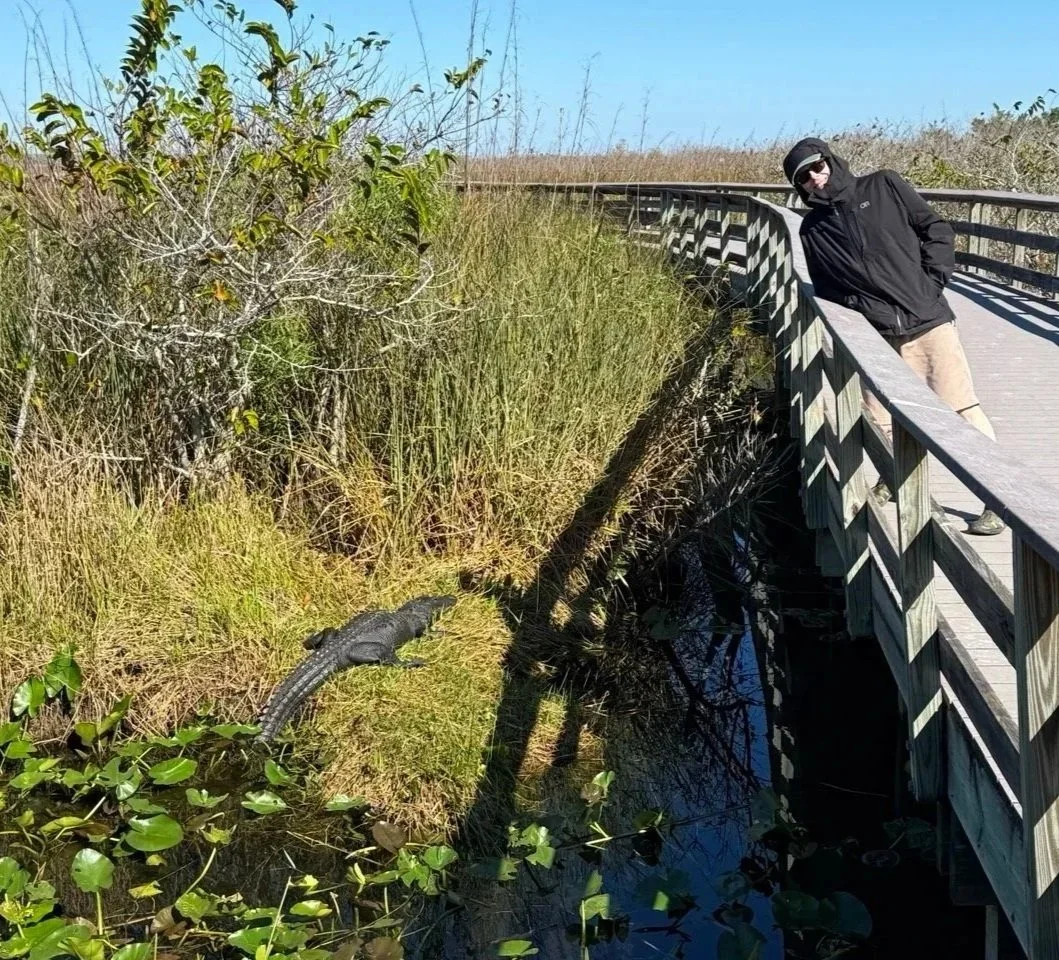
68 - We saw a gator sunning itself, with a goofy man trying to include himself in the pic.
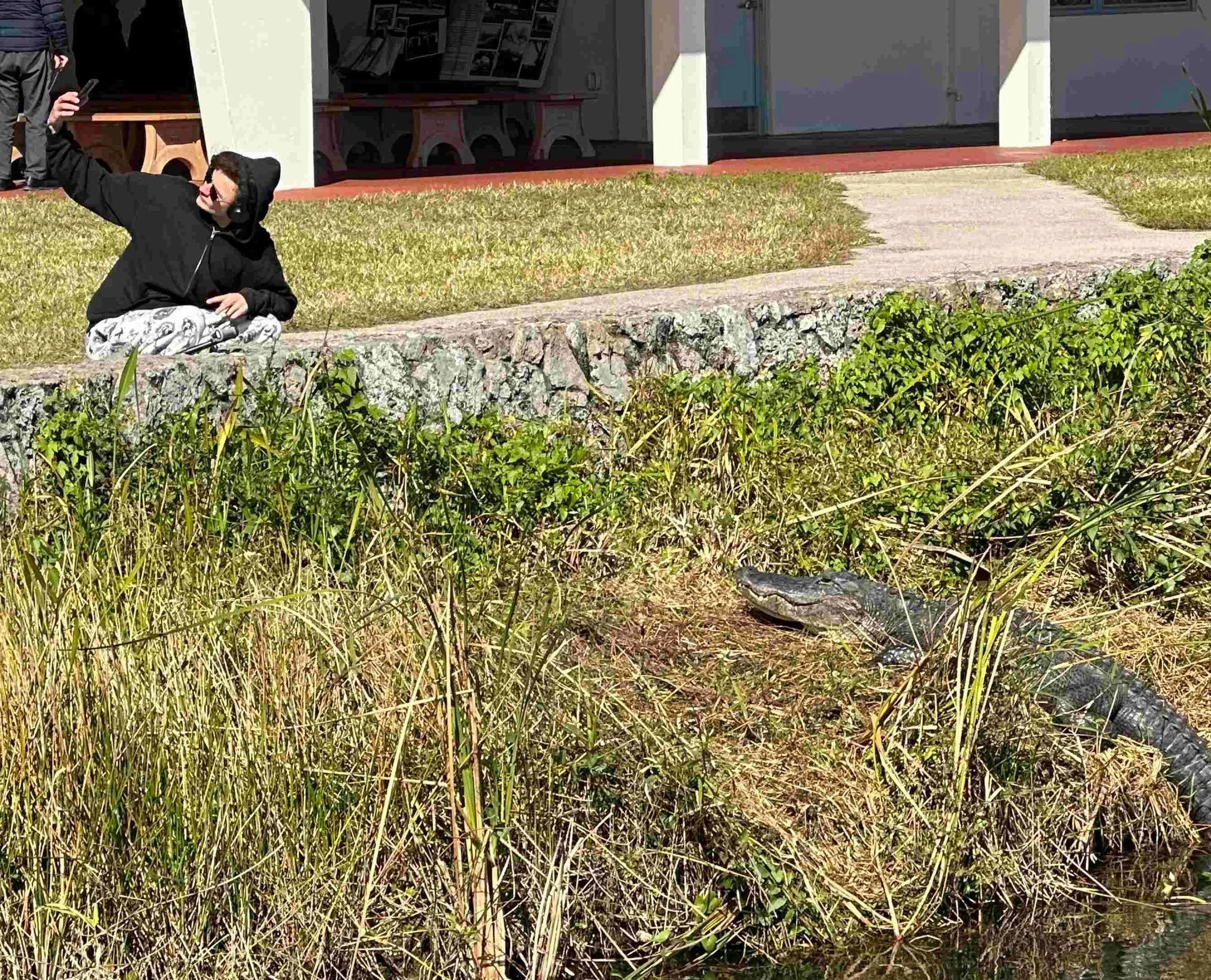
69 - And we saw this stupid person with an apparent death wish, just waiting to get ambushed. Alligators can run in short, rapid bursts on land at speeds of 11–15 mph. They rely on short-distance ambushing rather than long-distance chasing on land.
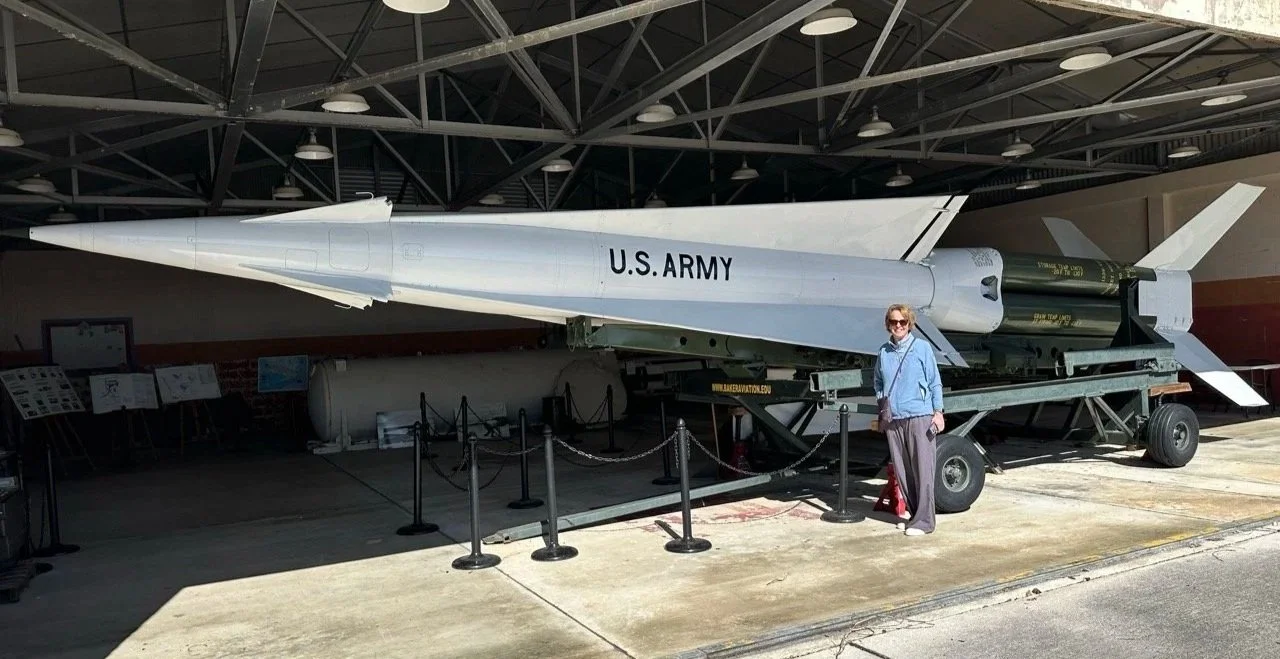
70 - There's also a Nike Missile site smack-dab in the middle of the Everglades, only 160 miles from Cuba. This was built during the 1962 Cuban Missile Crisis. Rick's dad served in the National Guard during this era, and you can read about that by clicking on this photo. (Clicking will open a new tab on your browser so you won't lose your place on this page.)
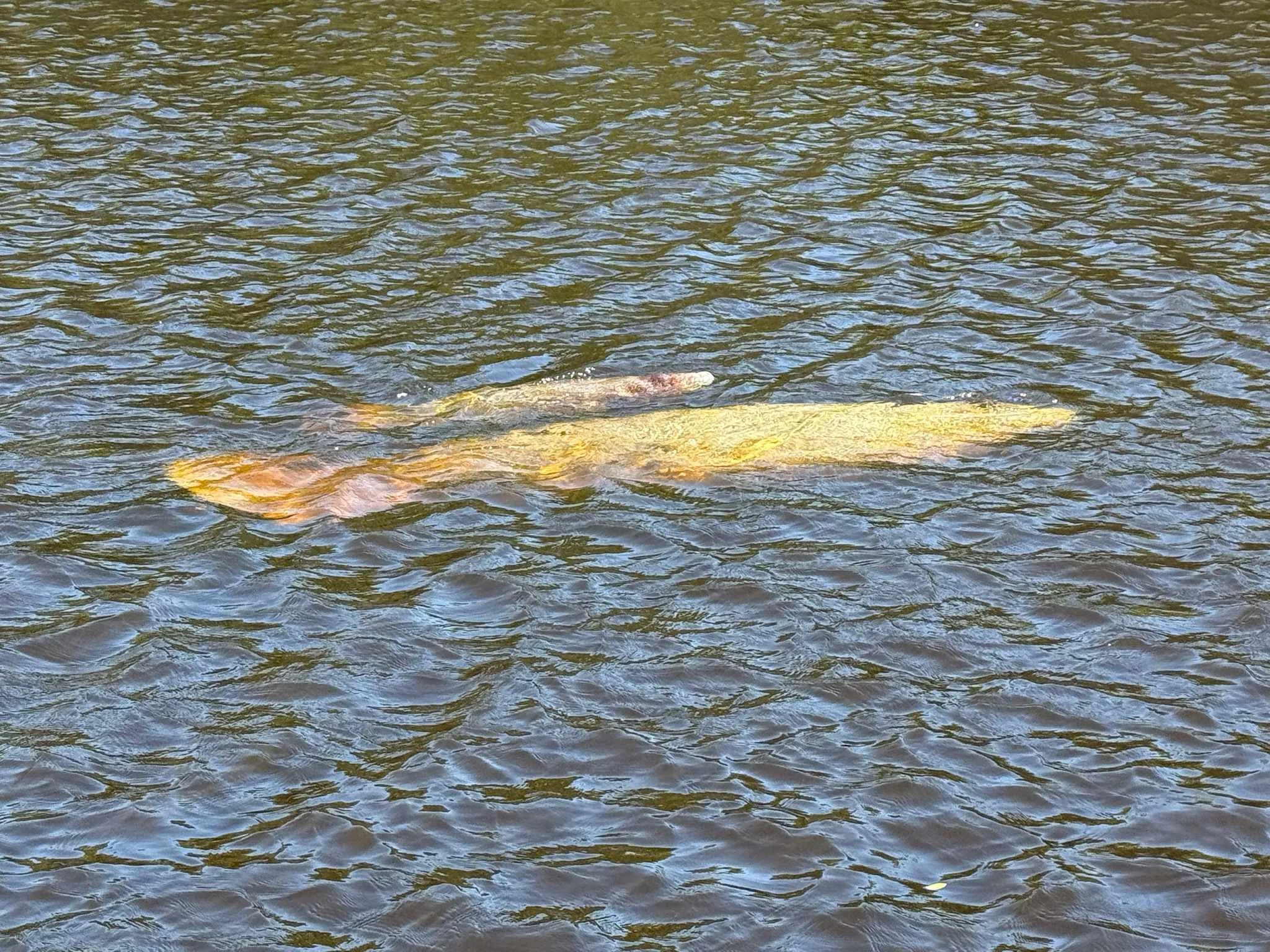
71 - We even saw the backs of a momma Manatee and her baby! These elusive creatures measure up to 13 feet long and weigh up to 1,300 pounds. The main causes of death for manatees are habitat destruction and human objects. Their slow-moving, curious nature has led to violent collisions with propeller-driven boats and ships.
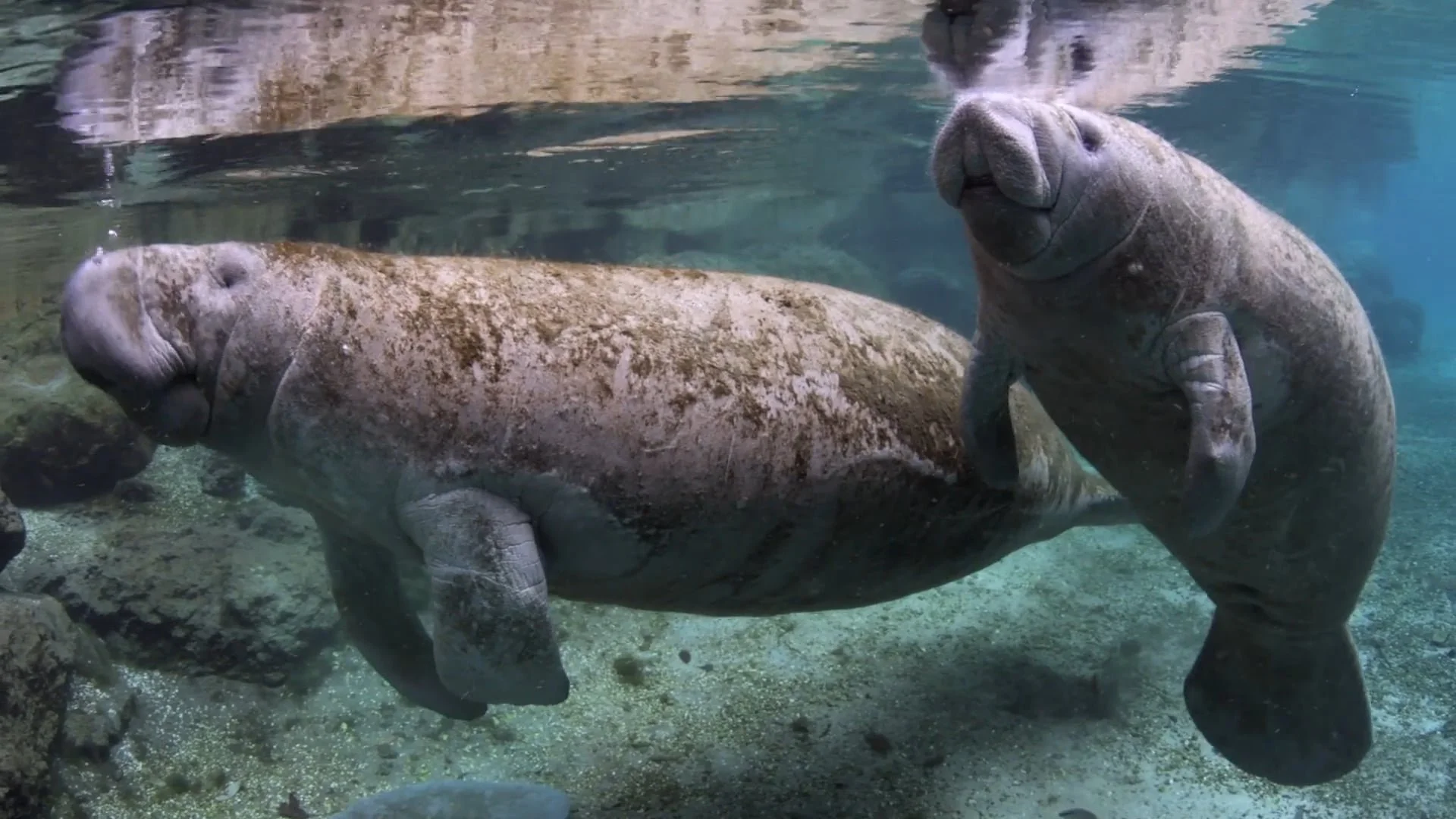
72 - Here's a photo of a momma and baby Manatee (from online) showing them underwater, so you can have the full experience.
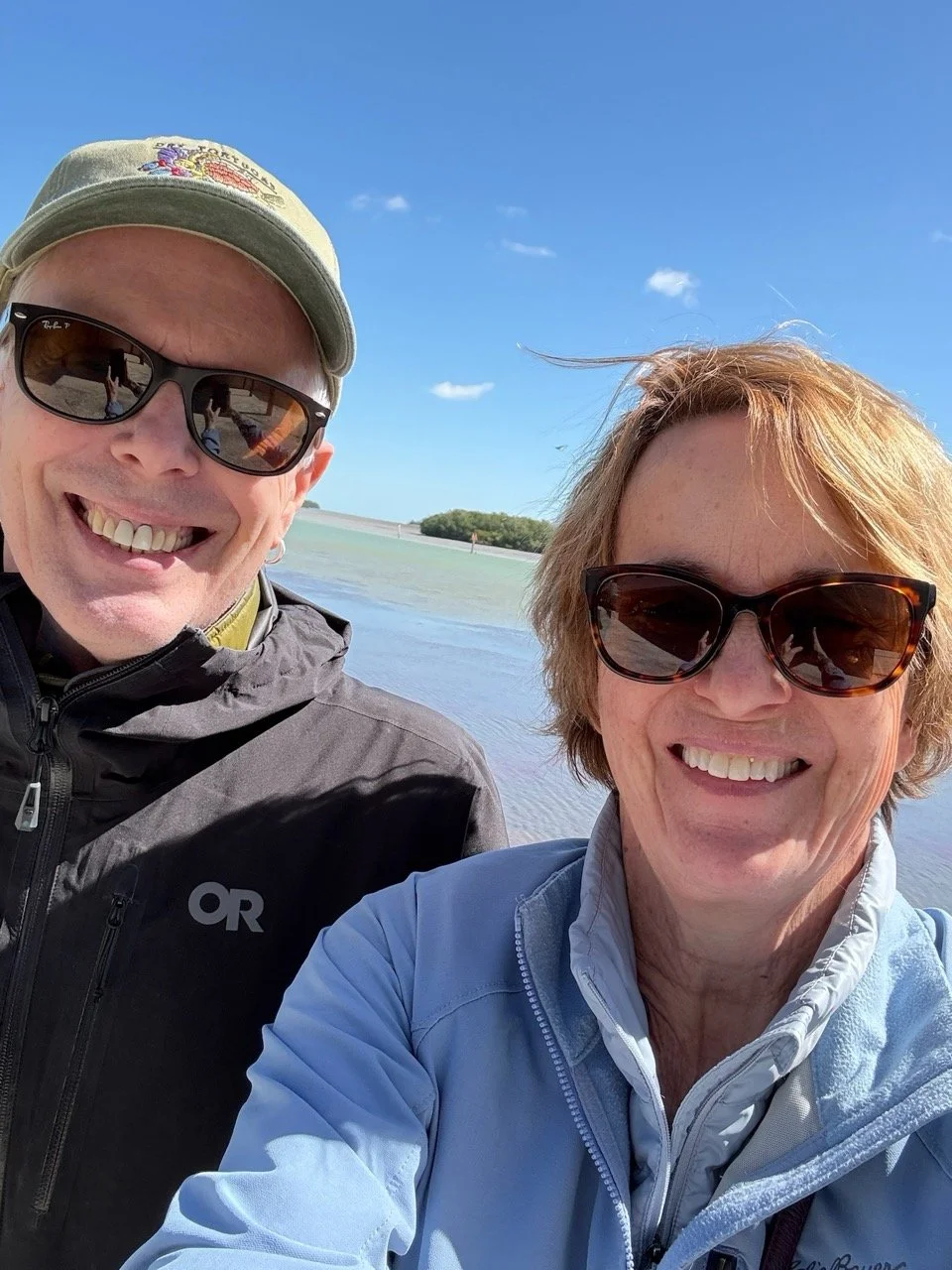
73 - Happy campers at the southernmost end of the National Park, after seeing Manatees.
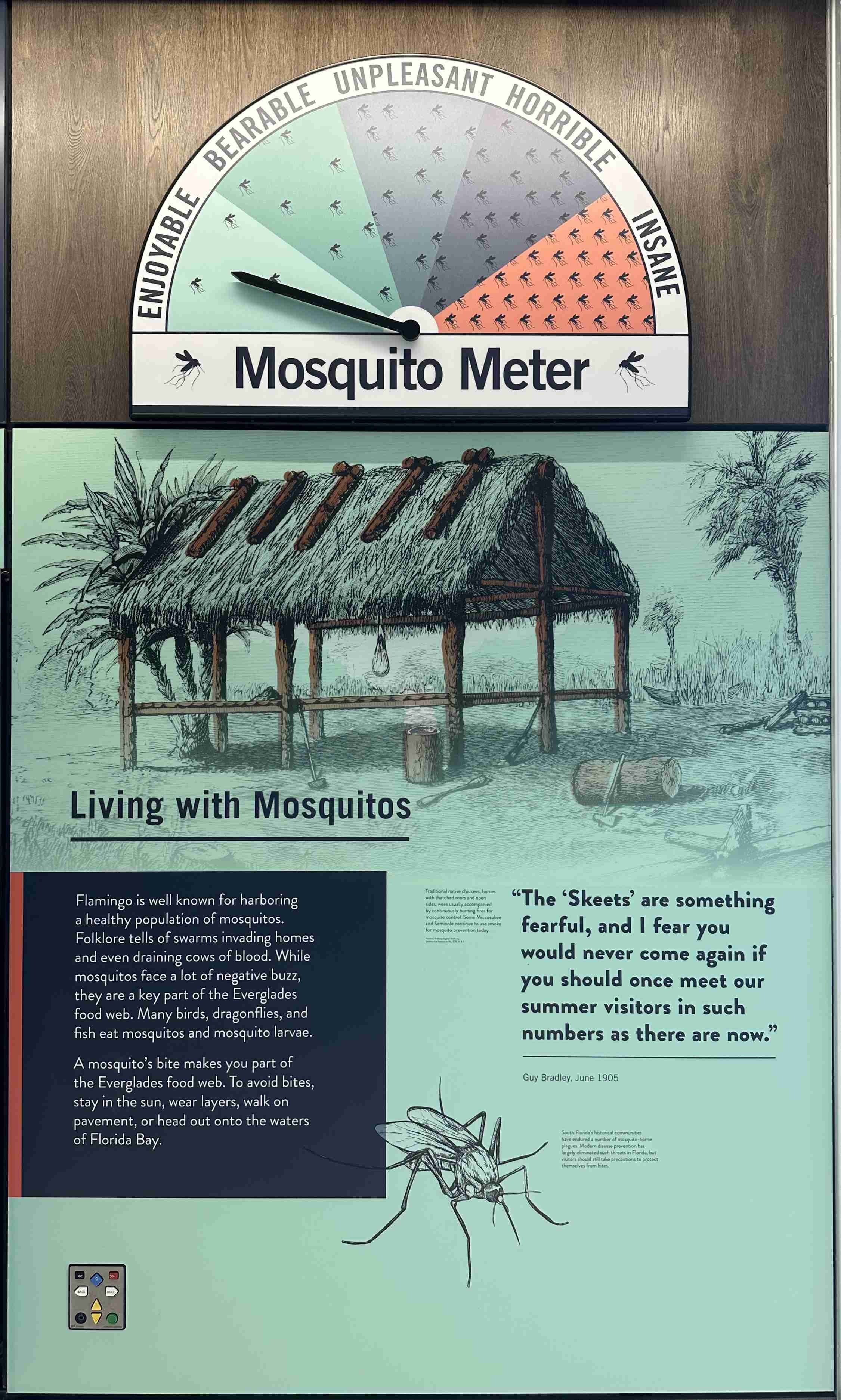
74 - This "meter" in the Visitor Center also made us happy -- happy that the weather was nice and chilly! We saw mosquito suits and hats for sale to protect people from those nasty creatures. What a nightmare it must be to experience the Everglades when the meter is pointed at INSANE!!
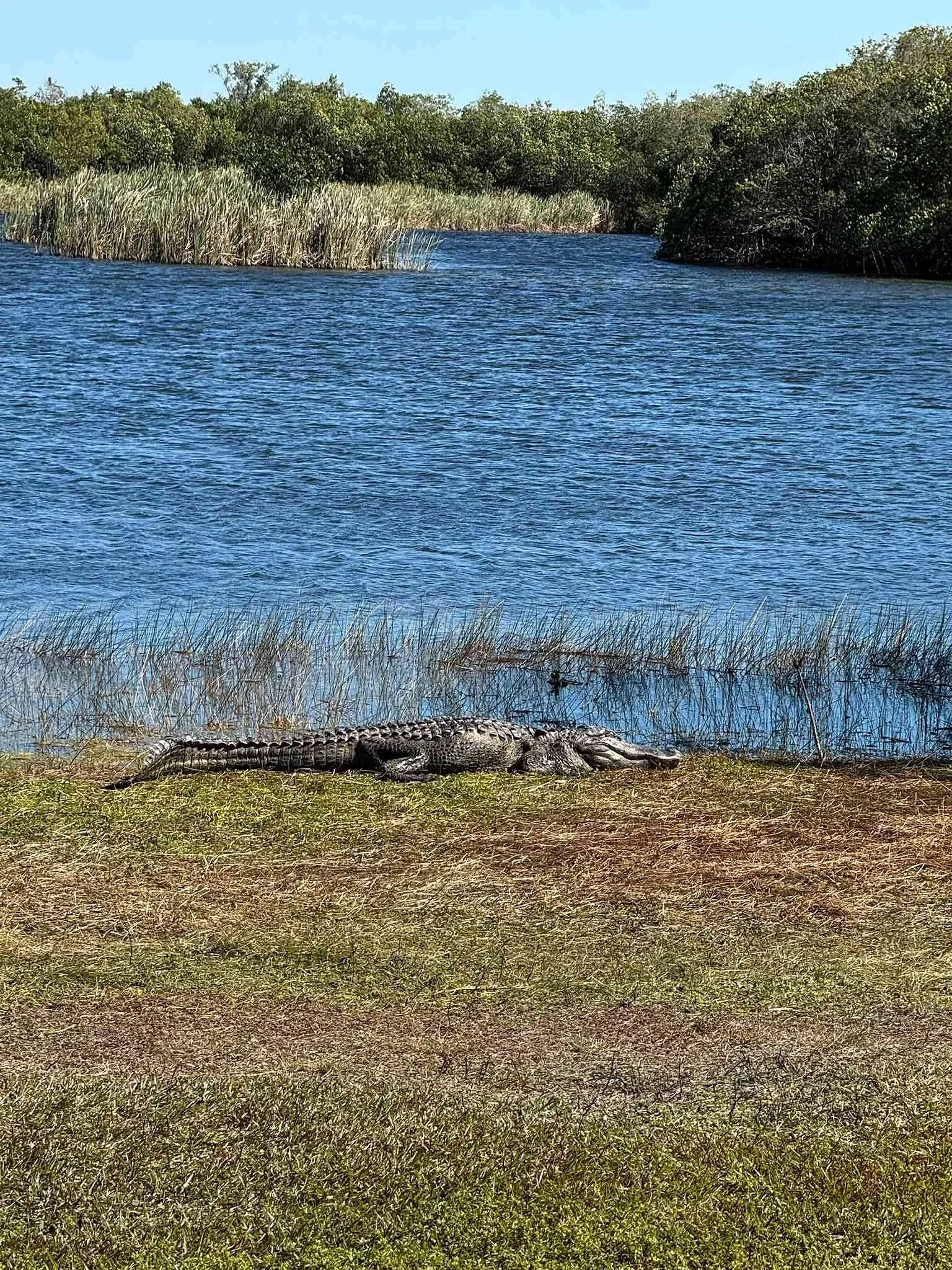
75 - A parting shot of one last alligator as we leave the Park and prepare to travel home.